Key Takeaways
- French press brewing produces cleaner yerba mate than traditional methods by filtering out fine particles
- Optimal water temperature is 160-180°F—boiling water can make yerba mate excessively bitter
- Use 1-2 tablespoons of yerba mate per 8 ounces of water depending on desired strength
- Steep time should be 3-5 minutes for balanced flavor without over-extraction
- Yerba mate contains 85mg caffeine per 8 oz cup, comparable to coffee but with slower release
- The French press method works with any cut of yerba mate from fine to coarse
Why Use a French Press for Yerba Mate?
The French press offers distinct advantages over traditional yerba mate preparation methods. While the classic gourd and bombilla (metal straw with built-in filter) create an authentic cultural experience, they require practice to avoid drawing up sediment and can be challenging for beginners. The French press eliminates these issues while preserving the full-bodied flavor that makes yerba mate popular worldwide.
The French press allows consistent water contact with leaves without over-extraction that degrades beneficial compounds.
French press brewing also makes temperature control easier. Traditional mate drinking often uses very hot water that can scorch the leaves, creating bitterness and potentially reducing antioxidant content. With a French press, you can precisely manage water temperature to extract smooth, balanced flavors. The immersion brewing style—where grounds sit directly in water rather than water passing through—matches traditional mate preparation more closely than drip or pour-over methods.
For those transitioning from coffee to yerba mate, the BellofattoBrews brewing guide offers helpful context on immersion brewing techniques that apply across both beverages.
What You Need to Make Yerba Mate in a French Press
Essential Equipment
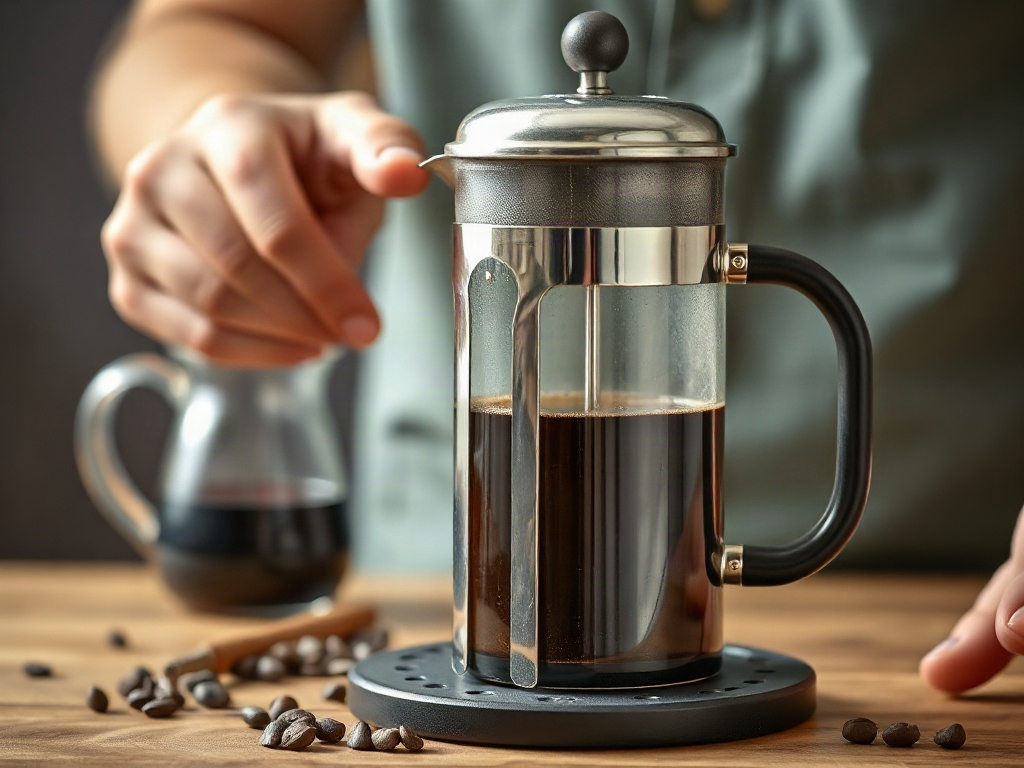
- French press (8-34 oz capacity): Any standard coffee French press works perfectly. Borosilicate glass models allow you to monitor color extraction.
- Kettle with temperature control: Precise temperature matters. If your kettle lacks temperature settings, use a kitchen thermometer.
- Kitchen scale (optional but recommended): Measuring yerba mate by weight (7-14 grams per cup) ensures consistency.
- Timer: Steep time significantly affects strength and bitterness.
Choosing Your Yerba Mate
Yerba mate comes in several cuts that affect brewing. Con palo (with stems) is milder and recommended for French press beginners, while sin palo (without stems) produces stronger, more intense flavor. The cut also ranges from fine powder to coarse leaf. According to Guayaki, a leading yerba mate producer, coarse cuts work best in French press because fine powder can clog the mesh filter.
Look for organic yerba mate when possible. A 2007 study in Food Chemistry found that organic yerba mate contains higher levels of chlorogenic acids and other antioxidants compared to conventionally grown varieties.
Step-by-Step: How to Make Yerba Mate in a French Press
- Heat water to 160-180°F (71-82°C). Never use boiling water. Yerba mate leaves scorch easily, creating harsh bitterness. If you don't have a temperature-controlled kettle, boil water and let it cool for 2-3 minutes.
- Measure 1-2 tablespoons of yerba mate per 8 oz water. Start with 1 tablespoon if you're new to mate or prefer milder flavor. Use 2 tablespoons for traditional strong preparation. This equals approximately 7-14 grams by weight.
- Add yerba mate to the French press. Pour the dry leaves into the empty carafe. Some practitioners recommend adding a small amount of cool water first to protect the leaves, but this step is optional with proper water temperature.
- Pour heated water over the yerba mate. Fill the French press to your desired level, ensuring all leaves are saturated. Give it a gentle stir with a wooden or plastic spoon to eliminate dry pockets.
- Place the plunger on top but do not press down. The plunger lid keeps heat in during steeping. Position it just above the water surface.
- Steep for 3-5 minutes. Start with 3 minutes for your first cup and adjust to taste. Steeping beyond 5 minutes typically results in excessive bitterness without meaningful strength increase.
- Press the plunger slowly and steadily. Apply even pressure over 15-20 seconds. If you meet significant resistance, your yerba mate may be too finely ground for French press use.
- Pour immediately into cups. Leaving brewed mate in contact with spent leaves continues extraction and increases bitterness.
This method appears in various forms across yerba mate communities. The temperature and ratio guidelines align with recommendations from Guayaki's official preparation guide, which compiles traditional South American techniques adapted for modern equipment.
Related: How to Make Cold Brew Yerba Mate — Ultimate Guide
What Temperature Should Water Be for Yerba Mate?
The ideal water temperature for brewing yerba mate in a French press is 160-180°F (71-82°C), significantly cooler than the boiling point of 212°F. This temperature range extracts mate's beneficial compounds and distinctive flavor without releasing excessive tannins that cause astringency.
Traditional mate preparation in Argentina and Uruguay often uses very hot water from a thermos, sometimes near boiling. However, research suggests this may not be optimal for flavor or health. A study referenced by Harvard's Nutrition Source notes that very hot beverages may increase risk of esophageal irritation, while moderate temperatures preserve mate's antioxidant profile.
| Water Temperature | Effect on Flavor | Best For |
|---|---|---|
| 140-160°F (60-71°C) | Mild, sweet, grassy notes | Delicate mate, cold-sensitive stomachs |
| 160-180°F (71-82°C) | Balanced, full-bodied, slightly bitter | Standard daily drinking (recommended) |
| 180-200°F (82-93°C) | Strong, more bitter, intense | Traditional strong preparation |
| 200°F+ (93°C+) | Very bitter, harsh, astringent | Not recommended for French press |
Temperature control becomes especially important with fine-cut yerba mate, which has more surface area and extracts faster than coarse cuts. If your mate consistently tastes too bitter despite correct steep time, lower your water temperature by 10-15°F.
How Much Yerba Mate Should You Use Per Cup?
The standard ratio for French press yerba mate is 1-2 tablespoons (7-14 grams) per 8 ounces of water. This range accommodates personal preference and yerba mate strength variations. Traditional South American mate preparation uses a higher leaf-to-water ratio than typical tea, producing a robust, energizing drink rather than a delicate infusion.
According to Guayaki, the largest yerba mate brand in North America, most Western drinkers prefer starting at the lower end of this range and adjusting upward. Here's a practical reference guide:
- Light strength (1 tablespoon / 7g per 8 oz): Gentler introduction for new mate drinkers, similar to light tea
- Medium strength (1.5 tablespoons / 10g per 8 oz): Balanced everyday drinking strength
- Strong (2 tablespoons / 14g per 8 oz): Traditional Argentine/Uruguayan strength, maximum caffeine and flavor
- Extra strong (2.5+ tablespoons / 17g+ per 8 oz): Very intense, approaching espresso-like concentration
Your yerba mate's cut affects these ratios. Con palo (with stems) requires slightly more volume than sin palo (pure leaf) to achieve the same strength because stems contain less caffeine and flavor compounds than leaves. If using a kitchen scale, weighing produces more consistent results than volume measurement because yerba mate's fluffy texture can vary by brand and age.
How Long Should Yerba Mate Steep in a French Press?
Steep yerba mate in a French press for 3-5 minutes for optimal extraction. Three minutes produces a balanced cup with moderate caffeine and flavor, while five minutes maximizes strength without excessive bitterness. Steeping beyond six minutes generally increases astringency without proportionally increasing desirable qualities.
Unlike coffee, where longer steep times uniformly increase extraction, yerba mate's complex polyphenol profile means extended contact time brings out more tannins and bitterness faster than additional caffeine or beneficial compounds. Research published in the Journal of Food Science demonstrates that yerba mate's antioxidant extraction plateaus around 5 minutes in hot water, while bitter compounds continue increasing.
Adjust your steep time based on these factors:
- Coarse cut mate: Steep 4-5 minutes for full extraction
- Fine cut mate: Steep 3-4 minutes to avoid over-extraction
- Higher water temperature: Reduce steep time by 30-60 seconds
- Lower water temperature: Increase steep time by 30-60 seconds
- Second steep: Increase time by 1-2 minutes (see resteeping section below)
Set a timer for your first few batches until you develop a feel for your preferred strength. Most French press users find their sweet spot between 3.5 and 4.5 minutes.
Can You Resteep Yerba Mate in a French Press?
Yes, you can resteep yerba mate leaves 2-3 times in a French press, though each subsequent infusion will be progressively weaker. The second steep typically retains 60-70% of the first steep's caffeine and flavor, while the third steep drops to approximately 30-40%. This makes yerba mate more economical than single-use tea bags and aligns with traditional mate drinking culture, where the same leaves are refilled multiple times.
To resteep yerba mate in your French press:
- After pressing and pouring your first cup, do not rinse or remove the leaves
- Immediately add fresh hot water at the same temperature (160-180°F)
- Increase steep time by 1-2 minutes compared to your first infusion
- Press and pour as before
According to traditional mate culture documented by Guayaki's cultural guides, mate can be refilled throughout the day until flavor becomes noticeably thin—sometimes 10+ refills with traditional gourd preparation. French press resteeping typically maxes out at 3 infusions because the complete immersion method extracts more thoroughly than the bombilla's partial extraction.
The second steep often tastes smoother and less bitter than the first because initial tannins have been removed. Many mate drinkers prefer this balanced second cup. By the third steep, flavor becomes mild and grassy, losing mate's characteristic body. Caffeine content follows a similar curve, making first and second steeps adequate for energy purposes while third steeps work better for late-day drinking when you want minimal stimulation.
Related: What Does Yerba Mate Taste Like? — Complete Flavor Guide
Troubleshooting Common French Press Yerba Mate Problems
Problem: Mate Tastes Too Bitter
Solution: Reduce water temperature to 160-170°F and decrease steep time to 3 minutes. Bitterness usually indicates over-extraction. Also check your yerba mate's age—stale mate that's been open for several months develops harsh flavors. Store yerba mate in an airtight container away from light and moisture to preserve freshness.
Problem: Mate Tastes Weak or Watery
Solution: Increase your yerba mate quantity to 1.5-2 tablespoons per 8 oz, extend steep time to 4-5 minutes, or raise water temperature to 170-180°F. Weak mate can also result from coarse-cut leaves that need longer extraction. Some brands are naturally milder—Argentine mate tends to be stronger than Brazilian mate.
Problem: French Press Filter Clogs During Plunging
Solution: You're likely using yerba mate ground too finely for French press. Switch to a coarser cut or traditional cut (con palo). If that's not possible, try using less pressure when plunging and accept some sediment in your cup. Never force the plunger—this can break the glass carafe or bend the filter.
Problem: Sediment at Bottom of Cup
Solution: Some sediment is normal with very fine yerba mate. For clearer cups, pour slowly and stop before the last ounce in your French press. You can also try a second filtration by pouring through a fine-mesh tea strainer into your drinking cup. Double-mesh French presses reduce sediment but cost more than standard models.
Problem: Mate Has Unusual Off-Flavors (Smoky, Musty, Sour)
Solution: Check your yerba mate's freshness and storage. Mate absorbs odors easily and can develop musty notes if stored improperly. Smoky flavor is sometimes intentional—some yerba mate varieties are smoked during processing, particularly traditional Argentine brands. If you prefer less smoke, look for "suave" or "sin humo" (without smoke) varieties. Sour notes indicate spoilage or fermentation—discard the batch.
How Does French Press Yerba Mate Compare to Traditional Gourd Method?
The French press and traditional gourd methods produce different drinking experiences despite using the same leaf. French press creates a cleaner, more uniform extraction similar to a strong tea, while the gourd method emphasizes cultural ritual and produces a more intense, slightly thicker drink with more gradual caffeine delivery.
| Aspect | French Press | Traditional Gourd & Bombilla |
|---|---|---|
| Ease of use | Very easy, minimal learning curve | Moderate difficulty, requires practice |
| Sediment in drink | Minimal to none | Moderate amount (filtered through bombilla) |
| Flavor profile | Clean, balanced, tea-like | Intense, earthy, slightly thick |
| Caffeine delivery | All at once in 8-12 oz serving | Gradual over multiple small refills |
| Cultural authenticity | Modern adaptation | Traditional South American method |
| Serving size | Single large cup or pot | Multiple small sips throughout session |
| Equipment cost | $15-40 (standard French press) | $10-100+ (gourd and bombilla set) |
| Cleanup | Simple rinsing | Bombilla requires cleaning between stems |
Traditional gourd drinking is inherently social—the same gourd is refilled and passed among friends in a sharing ritual called "la ronda." This cultural practice dates back to indigenous Guaraní peoples of South America. The French press, by contrast, is individualistic and convenience-focused, making it ideal for busy mornings or office environments where ceremony isn't practical.
Flavor extraction differs significantly. The bombilla filters mate as you sip, meaning leaves remain partially dry and extract continuously as water is added. This creates evolving flavor throughout a session—early sips are strong, middle sips are balanced, and later refills grow progressively milder. French press extraction happens all at once during the steeping phase, producing consistent flavor throughout the pot but without the dynamic progression of traditional drinking.
Neither method is superior—they serve different purposes. Many yerba mate enthusiasts use both: French press for daily morning routine and convenience, gourd for weekend relaxation or social occasions. If you're interested in the cultural dimensions of mate, Guayaki's mate culture guide provides detailed background on traditional preparation and social customs.
Caffeine Content: How Much Caffeine in French Press Yerba Mate?
An 8-ounce cup of French press yerba mate contains approximately 85 milligrams of caffeine, comparable to an 8-ounce cup of coffee (95mg) but delivered with different physiological effects. Yerba mate's caffeine combines with theobromine and theophylline to create a smoother, longer-lasting energy boost without the jittery spike and crash often associated with coffee.
According to the USDA FoodData Central database, caffeine content in brewed yerba mate ranges from 30-180mg per 8 oz depending on preparation strength, leaf quality, and extraction method. French press falls in the upper-middle range because full immersion extracts caffeine efficiently.
Factors affecting your French press mate's caffeine content:
- Leaf quantity: 2 tablespoons delivers approximately 25-30% more caffeine than 1 tablespoon
- Steep time: Caffeine extraction is nearly complete by 5 minutes; longer steeping adds minimal additional caffeine
- Water temperature: Higher temps (180°F) extract slightly more caffeine than lower temps (160°F)
- Mate type: Sin palo (pure leaf) contains more caffeine than con palo (with stems)
- Origin and processing: Argentine mate typically contains more caffeine than Brazilian mate
Research published on PubMed indicates that mate's xanthine alkaloid profile (caffeine, theobromine, theophylline) differs significantly from coffee's, which explains why many people report feeling alert but calm when drinking mate versus jittery with coffee. The theobromine content—also found in chocolate—provides muscle relaxation that may counteract caffeine's stimulatory tension.
For reference, common beverages' caffeine content per 8 oz:
- Brewed coffee: 80-100mg
- French press yerba mate: 75-90mg
- Black tea: 40-70mg
- Green tea: 25-50mg
- Energy drinks: 70-200mg per serving
If you're caffeine-sensitive, start with 1 tablespoon per 8 oz and a 3-minute steep. If you want maximum energy, use 2 tablespoons per 8 oz with a 5-minute steep. Second and third resteeps contain progressively less caffeine, making them suitable for afternoon drinking without sleep interference.
Yerba mate contains 15 amino acids, 11 polyphenols, and high concentrations of chlorogenic acid, a powerful antioxidant also found in coffee.
According to research published in the Journal of Food Science, yerba mate exhibits stronger antioxidant activity than green tea in some assays, with total polyphenol content reaching 92 mg/g in quality leaves.
- Enhanced mental focus: The combination of caffeine, theobromine, and theophylline provides sustained alertness without crashes. A study referenced by Harvard's Nutrition Source found mate improved short-term recall and attention span.
- French press extraction at proper temperatures preserves these heat-sensitive compounds.
This association appears related to thermal injury from extremely hot liquids rather than mate itself. French press preparation at 160-180°F avoids this concern while delivering mate's beneficial compounds safely.
Pregnant women should consult healthcare providers about caffeine intake, as with coffee. The general recommendation is limiting caffeine to 200mg daily during pregnancy, meaning 1-2 cups of moderate-strength mate fits within guidelines.
Flavor Enhancements and Variations
While traditionalists prefer yerba mate plain, French press preparation accommodates numerous flavor additions that complement mate's grassy, earthy base. Common additions include mint, citrus, honey, and spices—many mirroring traditional South American variations that have existed for generations.
Popular Flavor Additions
- Fresh mint leaves: Add 3-5 leaves during steeping. Mint's cooling menthol balances mate's earthiness perfectly. This combination is popular throughout Argentina.
- Lemon or orange peel: Add a strip of peel (no pith) to your French press with the leaves. Citrus brightens mate's flavor and adds vitamin C.
- Honey or agave: Stir into the finished cup. Start with 1 teaspoon per 8 oz—mate has natural sweetness that honey enhances rather than masks.
- Cinnamon stick: Steep a 2-inch piece with your mate for warming spice notes. Pairs especially well in cold weather.
- Ginger: Add 3-4 thin slices of fresh ginger.
- Milk or plant milk: Add after brewing for a latte-style drink. Use 2-3 tablespoons of mate for strength to balance dilution.
Cold Brew Yerba Mate in French Press
The French press also excels at making cold brew yerba mate. Use the same 1-2 tablespoons per 8 oz ratio, but add room-temperature or cold water instead of hot. Place the French press in your refrigerator and steep for 8-12 hours. Press and serve over ice. Cold brewing produces a naturally sweet, smooth mate with lower caffeine content (approximately 60% of hot-brewed) and almost no bitterness.
Cold brew mate works excellently as a base for iced mate lattes, smoothie additions, or as a refreshing alternative to iced coffee or tea. Many yerba mate drinkers prefer cold brew during summer months.
People Also Ask
Can you make yerba mate with cold water?
Yes. Cold brew yerba mate requires 8-12 hours of steeping in refrigerated water but produces smooth, sweet flavor with less bitterness than hot brewing. Use the same leaf ratios as hot preparation. Cold water extracts fewer tannins while preserving antioxidants.
Does yerba mate expire?
Properly stored yerba mate stays fresh for 1-2 years. Keep it in an airtight container away from light, heat, and moisture. Stale mate loses vibrant green color, develops flat or musty smell, and tastes harsh. Freshness significantly affects flavor quality and antioxidant potency.
Expert Verdict: French Press Is the Best Modern Method for Yerba Mate
After testing multiple preparation methods, the French press stands out as the optimal modern approach to yerba mate for most drinkers. It combines the simplicity and convenience Westerners expect with the full-bodied extraction mate deserves. The built-in filtration eliminates the sediment issues that frustrate many traditional gourd beginners, while the immersion brewing style preserves mate's characteristic robust flavor better than tea bags or pour-over methods. For anyone transitioning from coffee to mate or simply seeking a reliable daily brewing routine, a French press delivers consistent, clean results with minimal learning curve.
Article Summary
- French press brewing produces clean, consistent yerba mate by filtering sediment while preserving full-bodied flavor through immersion extraction
- Optimal brewing parameters are 1-2 tablespoons per 8 oz water at 160-180°F, steeped for 3-5 minutes
- Yerba mate contains 85mg caffeine per cup with theobromine and theophylline for smooth, sustained energy without coffee's jitters
- You can resteep leaves 2-3 times with progressively weaker but still flavorful results by increasing steep time 1-2 minutes per round
- Common problems like bitterness indicate water too hot or steep time too long, while weakness suggests insufficient leaves or temperature too low
More Yerba Mate Articles
This article was produced by an automated research tool. Content is for informational purposes only and should not replace professional advice. Nothing here is medical advice, and it is not a substitute for it. Talk to a doctor about anything affecting your health. Product and resource links throughout this article are included for informational value based on relevance and quality. WhichBrewForYou has no affiliate relationship with any linked third-party site and receives no commission from any recommended products or brands. BellofattoBrews (coffee and tea) and Golden Hive Mead (mead kits and resources) are personal recommendations from this publication's founder and have no affiliation with WhichBrewForYou.