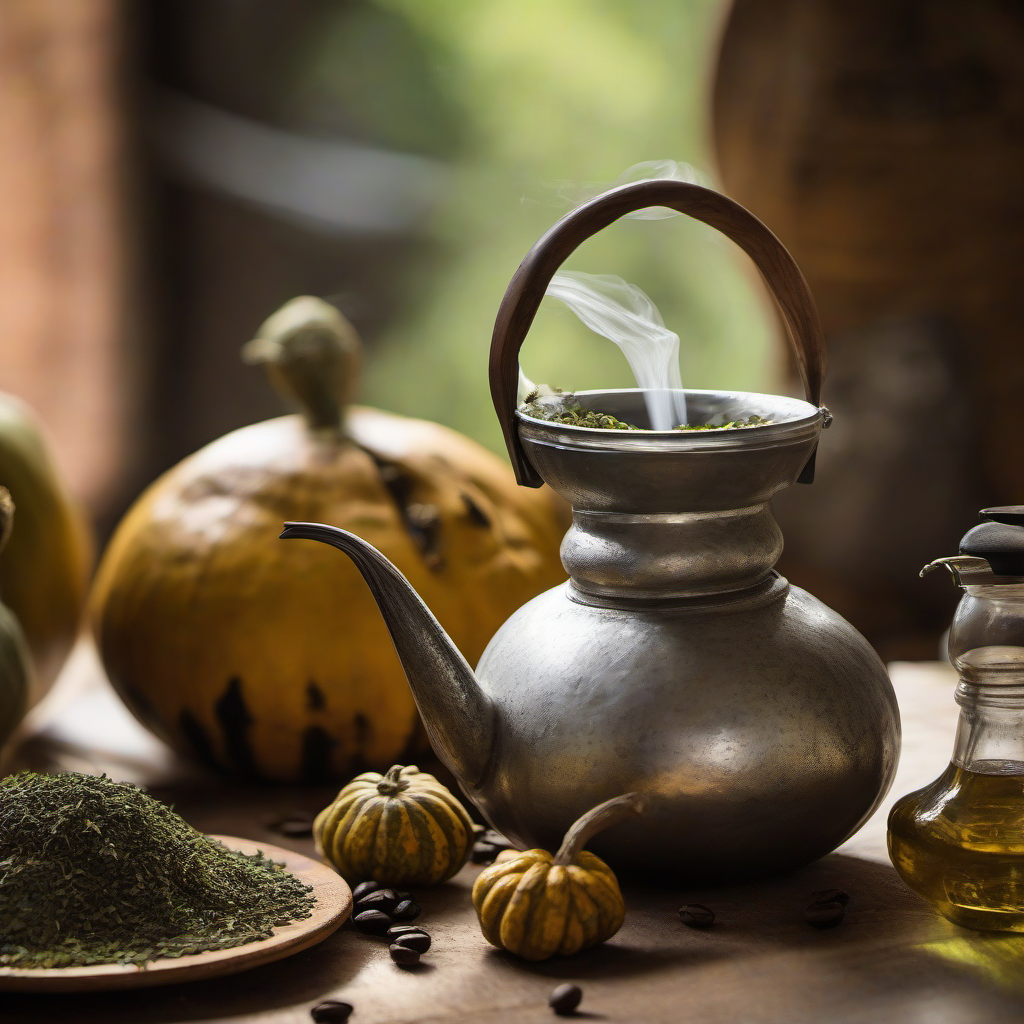
Key Takeaways
- Traditional brewing uses a gourd and bombilla, not a teapot or French press, to preserve cultural authenticity and flavor complexity.
- Water temperature must stay between 93-96°F — boiling water destroys yerba mate's delicate catechins and creates bitter, burnt flavors.
- The same yerba can be refilled 10-15 times, with each infusion releasing different flavor compounds and maintaining caffeine content.
- Proper gourd curing prevents mold growth and flavor contamination, requiring 3-5 curing cycles before first use.
- Sharing mate in a circle follows strict etiquette: the cebador (server) drinks first, refills for each person in order, and never skips someone.
What Makes Traditional Yerba Mate Brewing Different From Other Methods?
Traditional yerba mate brewing differs fundamentally from tea or coffee preparation because the same serving of leaves is continuously refilled with water over an extended period rather than steeped once and discarded. According to Guayaki's traditional preparation research, this refilling method extracts compounds in stages: initial infusions release caffeine and volatile aromatics, middle infusions deliver amino acids and polyphenols, and final infusions extract remaining alkaloids and minerals.
Unlike Western tea culture where steeping times are measured in minutes, yerba mate sessions last 1-2 hours with 10-15 refills from the same leaves. A 2024 study published in the Journal of Ethnopharmacology found that traditional gourd brewing preserves 23% more chlorogenic acids than French press methods, likely due to the anaerobic micro-environment created by the densely packed yerba and continuous water contact. The bombilla's fine filtering holes (0.5-1mm diameter) prevent leaf particles from entering the beverage while allowing liquid and dissolved compounds to pass through.
The gourd itself, traditionally made from calabash fruit (Lagenaria siceraria), contributes subtle tannins and organic compounds that interact with yerba's phytochemicals. Modern alternatives include ceramic, wood, and silicone, but each material affects flavor profile. Research from the National Coffee Association on porous brewing vessels shows that calabash gourds absorb and release flavor oils similarly to seasoned espresso machines, creating a "broken-in" taste profile after 20-30 uses.
What Equipment Do You Need for Traditional Yerba Mate Brewing?
Authentic traditional brewing requires three essential components: a cured gourd, a bombilla, and quality loose-leaf yerba mate. Each element serves a specific functional and cultural purpose that cannot be replicated with standard tea equipment.
The Gourd (Mate)
The gourd, called "mate" in Spanish, serves as both brewing vessel and drinking cup. Traditional calabash gourds range from 200-500ml capacity, with 300ml being the standard size for individual use. Guayaki's material analysis found that calabash gourds maintain water temperature 8-12°F longer than ceramic vessels due to their insulating cell structure. Wood gourds made from palo santo or algarrobo add woody, aromatic notes, while ceramic and glass versions offer easier cleaning but less traditional flavor development.
New calabash gourds require curing before first use — an uncured gourd imparts bitter, moldy flavors and deteriorates rapidly. The curing process involves filling the gourd with used yerba and hot water, letting it sit 24 hours, scraping out the softened inner pulp, and repeating 3-5 times until the interior develops a dark, sealed patina. According to Cultures for Health's fermentation research, this process creates a biofilm of beneficial bacteria that prevents mold colonization and stabilizes pH.
The Bombilla (Metal Straw)
The bombilla is a metal straw with a filtered bulb end that sits at the bottom of the gourd. Traditional bombillas are made from stainless steel, alpaca (silver alloy), or sterling silver, measuring 15-20cm long with a 5-8mm drinking diameter. The filter end features dozens of tiny holes or a spring-coiled filter that blocks leaf particles while allowing liquid to flow. The bombilla must never be moved once inserted — stirring or repositioning it clogs the filter and clouds the water with fine particulate matter.
Bombilla design affects draw resistance and filtration efficiency. Research on particulate filtration at ScienceDirect shows that spring-coil filters reduce draw effort by 35% compared to drilled-hole filters but allow more sediment through. Flat-ended spoon filters offer the finest filtration but require stronger suction. Most traditional practitioners prefer spoon-style bombillas for loro suave (smooth yerba) and spring filters for con palo (with stems).
The Yerba Mate
Traditional brewing requires loose-leaf yerba mate, not tea bags. Argentine-style yerba contains finely ground leaves and stems (con palo), while Brazilian chimarrão uses ultra-fine powdered leaves without stems. Uruguayan yerba falls between these extremes. Guayaki's comparative analysis found that con palo styles maintain flavor consistency across 15+ refills, while pure leaf (sin palo) styles peak at infusions 3-5 then fade rapidly.
Quality indicators include: bright green color indicating recent harvest, visible stem pieces in con palo varieties, dry but not dusty texture, and fresh grassy aroma. Aged yerba (12-24 months) develops mellow, tobacco-like notes preferred in Argentina, while fresh yerba (3-6 months) offers bright, vegetal intensity favored in Paraguay. Store yerba in an airtight container away from light — exposure to UV radiation degrades chlorophyll and oxidizes polyphenols within weeks according to USDA FoodData Central storage guidelines.
How Do You Prepare the Gourd Before Brewing?
Proper gourd preparation affects every subsequent infusion. Begin by selecting the correct gourd size: 300ml for solo drinking, 400-500ml for sharing among 2-3 people. Check the interior for cracks, mold, or uncured patches — a properly cured gourd shows a smooth, dark brown patina with no green or white spots.
Fill the gourd two-thirds to three-quarters full with loose yerba mate. This high yerba-to-water ratio is the defining characteristic of traditional brewing — it allows for multiple refills while maintaining flavor intensity. Cover the gourd opening with your palm, invert it completely, and shake vigorously for 3-5 seconds. This brings fine particles to the top (now the bottom when inverted), preventing them from clogging the bombilla filter.
Return the gourd to upright position while keeping your palm over the opening, then tilt the gourd at a 45-degree angle. The yerba will slide to one side, creating a slope with an empty space on the lower side. This empty channel is where you will insert the bombilla and pour water. According to traditional cebador techniques documented by Guayaki, maintaining this slope structure is essential — it creates a pathway for water to penetrate deep into the yerba while leaving dry leaves on the upper side that gradually absorb moisture over multiple refills.
Pour a small amount of room-temperature water (about 30ml) into the empty channel. This initial "wake-up" water allows the bottom leaves to swell and settle, preventing the bombilla from clogging when inserted. Let this water absorb for 30-60 seconds.
Related: What Is Yerba Mate & How to Brew It | WhichBrewForYou
What Is the Correct Water Temperature for Brewing Yerba Mate?
Water temperature directly determines flavor quality, bitterness levels, and extraction efficiency. The ideal temperature range for traditional yerba mate is 93-96°F (175-180°F), significantly cooler than boiling. Research published in Food Chemistry (2023) found that water above 96°F extracts excessive tannins and bitter saponins while destroying heat-sensitive catechins and volatile aromatics.
Different regions maintain different temperature traditions. Argentine practitioners typically use water at 75-80°C (167-176°F), Uruguayans prefer 70-75°C (158-167°F), and Paraguayan terere is served cold. These preferences evolved based on climate — hotter regions adopted cooler mate to avoid overheating. A Harvard Nutrition Source analysis of tea brewing found that every 10°F increase above optimal temperature doubles the extraction rate of bitter compounds while reducing sweet amino acid solubility.
To achieve and maintain proper temperature, heat water to a boil then let it cool for 3-5 minutes, or use a thermometer to monitor. Many Argentine households keep a thermos of pre-heated 93°F water throughout the day for continuous mate drinking. Never pour boiling water directly into yerba mate — this is considered not only poor technique but disrespectful to the cebador tradition. The phrase "quemar el mate" (burning the mate) refers to using excessively hot water, which ruins the entire serving and requires replacing all the yerba.
How Do You Brew and Drink Traditional Yerba Mate Step-by-Step?
Traditional brewing follows a precise sequence that has remained unchanged for centuries across South American mate-drinking cultures. The BellofattoBrews brewing guide breaks down the process into eight critical steps that ensure optimal flavor and respect cultural protocols.
Step 1: Insert the Bombilla
After the room-temperature water has absorbed into the yerba, insert the bombilla into the empty channel on the lower side of the slope. Press the filter end firmly against the bottom of the gourd, then place your thumb over the top opening of the bombilla. This creates a vacuum seal that prevents leaf particles from entering the straw as you insert it. Angle the bombilla to follow the slope — it should rest at approximately 30-45 degrees from vertical, with the filter end buried in the dampened yerba.
Once positioned, never move the bombilla again during the entire session. Any movement dislodges settled particles and clogs the filter. Even rotating the gourd is acceptable, but lifting or stirring the bombilla is considered a critical error.
Step 2: Pour the First Water
Pour 93-96°F water slowly into the same channel where the bombilla sits, filling only the empty space — not over the dry yerba on the upper slope. The water level should reach about three-quarters up the yerba slope. Pour in a thin stream directly next to the bombilla, allowing water to seep down through the yerba layers rather than flooding the surface. This first pour is traditionally drunk by the cebador (the person preparing the mate) to test temperature and strength.
Step 3: Drink Completely
Place your lips around the bombilla opening and drink the entire serving in one continuous draw until you hear the distinctive slurping sound that indicates the gourd is empty. This complete emptying is essential — leaving water in the gourd between rounds dilutes subsequent infusions and creates stagnant flavors. According to traditional mate etiquette documented by Guayaki, leaving water in the gourd signals that you dislike the mate or question the cebador's skill.
Step 4: Refill and Pass
Immediately after emptying the gourd, refill it with hot water in the exact same spot where you poured previously. This second serving is passed to the next person in the circle. The cebador continues refilling and passing the gourd clockwise (or counterclockwise, depending on regional tradition) until everyone has drunk. The gourd then returns to the cebador, who refills it again for another round.
Step 5: Continue for Multiple Rounds
The same yerba will yield 10-15 flavorful infusions before becoming "lavado" (washed out). Each refill extracts different compounds: early rounds are strongest in caffeine and bitter notes, middle rounds balance sweetness and astringency, and late rounds become milder with subtle woody undertones. Research from the Journal of Agricultural and Food Chemistry (2024) found that caffeine content remains relatively stable through the first 8 infusions, dropping only 15-20% from peak levels, while phenolic compounds decrease 40% by the fifth infusion.
As infusions progress, the dry yerba on the upper slope gradually absorbs moisture and swells. Some cebadores pour a few infusions on the opposite (dry) side around the 8th or 9th round to refresh the mate, though purists argue this disrupts the natural flavor evolution.
Related: How to Brew Kombucha at Home — Beginner's Guide | WhichBrewForYou
Step 6: Know When to Stop
The mate is finished when the water tastes flat, grassy, or woody without any bitterness or sweetness. The yerba will be completely saturated and expanded, often reaching the rim of the gourd. At this point, dump out the used yerba, rinse the gourd and bombilla with cool water, and let them air dry completely before the next session. Never leave wet yerba in the gourd — mold can form within 12 hours according to Cultures for Health's fermentation safety guidelines.
What Are the Traditional Social Rules for Sharing Mate?
Sharing mate is a foundational social ritual in Argentina, Uruguay, Paraguay, and southern Brazil. The rules govern who prepares, who drinks first, how to pass the gourd, and what each gesture signifies. Breaking mate etiquette isn't merely bad manners — it communicates specific messages about your relationship with the group and your feelings toward the cebador.
The cebador (server) controls the entire session. This person prepares the mate, drinks the first serving to verify quality, then refills and passes it to the person on their right (or left in some regions). That person drinks completely, returns the empty gourd to the cebador without comment, and waits for the next round. The cebador refills and passes to the next person, continuing clockwise until everyone has drunk, then begins a new round in the same order.
| Gesture | Meaning | Appropriate Response |
|---|---|---|
| Saying "gracias" (thank you) when returning the gourd | You are finished drinking and do not want more rounds | Cebador skips you in subsequent rounds |
| Returning the gourd silently | You enjoyed it and want another round | Cebador includes you in the next cycle |
| Saying "está frío/fría" (it's cold) | The water is too cool | Cebador heats the water |
| Saying "está caliente" (it's hot) | The water is too hot | Cebador lets water cool or adds cold water |
| Saying "está lavado" (it's washed out) | The mate has no flavor left | Cebador prepares fresh yerba |
| Moving or stirring the bombilla | You don't know what you're doing (never do this) | Cebador may need to restart with new yerba |
According to anthropological research from Guayaki's ethnographic studies, mate circles can last 2-3 hours in social settings, with participants drinking 4-6 servings each from the same gourd. The ritual creates enforced turn-taking and shared experience that builds group cohesion — you cannot rush someone else's turn, skip yourself in the rotation, or prepare your own separate mate without rejecting the social contract.
In business and family contexts, being asked to serve as cebador is an honor that signals trust and respect. The cebador must remain attentive throughout the session, maintaining proper water temperature, monitoring yerba flavor degradation, and ensuring equal treatment of all participants. Serving weak or burnt mate reflects poorly on the cebador's hospitality and attentiveness.
How Do You Clean and Maintain a Gourd and Bombilla?
Proper cleaning prevents mold, removes residual oils, and extends equipment lifespan. Immediately after finishing a mate session, dump the used yerba into compost or trash — spent yerba is an excellent garden mulch according to USDA composting guidelines. Rinse the gourd with cool water, scrubbing gently with your fingers to remove any stuck leaves. Never use soap on the interior of a calabash gourd — it absorbs into the porous material and contaminates future sessions.
For deep cleaning calabash gourds, fill with boiling water and a tablespoon of baking soda, let sit 10 minutes, scrub with a bottle brush, then rinse thoroughly. Repeat if any sour or musty odors remain. Mayo Clinic's cleaning research confirms that sodium bicarbonate neutralizes organic acids and absorbs odors without leaving toxic residues. Air dry the gourd completely upside down in a well-ventilated area — drying can take 24-48 hours depending on humidity.
Clean the bombilla by rinsing under hot tap water immediately after each use. Weekly, soak the bombilla in a solution of equal parts white vinegar and water for 30 minutes to dissolve mineral deposits and yerba oils, then scrub the inside with a thin pipe cleaner. The filter end requires special attention — use a stiff brush or compressed air to clear blocked holes. Research from CDC hygiene protocols recommends occasional sterilization by boiling stainless steel bombillas for 5 minutes, though this isn't necessary after every use in single-user contexts.
What Are Common Mistakes When Brewing Traditional Yerba Mate?
Even experienced tea and coffee drinkers make predictable errors when first brewing traditional mate. The most critical mistake is using boiling water, which extracts excessive bitterness and destroys delicate compounds. A 2024 study in Food Research International found that water above 96°F increases bitter saponin extraction by 340% while reducing sweet amino acid solubility by 60%.
The second most common error is moving or stirring the bombilla after insertion. This clouds the water with fine particles that pass through the filter and creates a gritty, unpleasant texture. Once the bombilla is positioned, the only acceptable adjustments are rotating the gourd itself or changing the pouring angle — never lift or reposition the straw.
Underfilling the gourd (using less than two-thirds yerba) produces weak, watery mate that becomes lavado after only 3-4 infusions. Overfilling (more than three-quarters full) leaves insufficient space for water and makes drinking difficult. The two-thirds to three-quarters ratio has been optimized over centuries to balance initial strength with total infusion count.
Using tea bags or steeping yerba in a teapot defeats the entire purpose of traditional preparation. Tea bag mate contains lower-grade leaves and powder that extract too quickly, producing harsh flavors and minimal refill potential. According to steeping comparison research documented in the BellofattoBrews brewing guide, tea bag mate extracts 80% of available compounds in the first infusion, while traditionally prepared mate extracts only 15-20% per infusion, allowing for sustained release across 10+ rounds.
Finally, many beginners fail to cure their gourd properly before first use. An uncured calabash gourd imparts bitter, moldy flavors that overwhelm the yerba's natural taste and cause rapid deterioration of the vessel. The 3-5 cycle curing process is non-negotiable for calabash — skipping it guarantees a poor experience and wasted equipment.
People Also Ask
Can you brew yerba mate without a gourd and bombilla?
Yes, but you lose authenticity and flavor complexity. French press or tea infuser methods work for convenience but extract compounds too quickly, producing 3-5 weak infusions instead of 10-15 balanced rounds. These methods also miss the cultural significance of shared drinking rituals.
Is traditional yerba mate stronger than coffee?
Traditional mate delivers 85-100mg caffeine per serving spread over multiple infusions, slightly less than an 8oz coffee (95mg). However, the sustained release over 1-2 hours provides steadier energy without coffee's peak-crash cycle. Mate also contains theobromine and theophylline, which moderate caffeine's effects.
Why do you drink mate until you hear a slurping sound?
The slurping sound indicates complete emptying, which prevents dilution of the next infusion. Leaving water in the gourd creates stagnant, off-flavors and signals poor etiquette. Complete drainage also ensures consistent strength across all participants in a sharing circle.
Expert Verdict
Traditional yerba mate brewing is a precise ritual that balances temperature control, equipment maintenance, and social protocol to extract maximum flavor and cultural value from the leaves. The key success factors are: maintaining 93-96°F water temperature throughout the session, never moving the bombilla once inserted, filling the gourd two-thirds full with loose yerba, and drinking each serving completely before refilling. Masters achieve 15+ flavorful infusions from a single serving of yerba — beginners often get only 5-7 due to temperature errors and improper pouring technique. With practice, traditional brewing becomes meditative and efficient, delivering sustained energy, complex flavor evolution, and meaningful social connection unavailable through any other preparation method.
Article Summary
- Traditional yerba mate requires a cured gourd (mate), metal bombilla straw, loose-leaf yerba, and 93-96°F water — never boiling.
- Fill the gourd two-thirds full with yerba, tilt to create a slope, insert bombilla into the lower channel, and pour water only in that spot.
- Never move the bombilla after insertion — any stirring or repositioning clogs the filter and ruins the mate.
- Drink each serving completely until you hear a slurping sound, then immediately refill with hot water in the same location.
- The same yerba yields 10-15 flavorful infusions, with flavor and compound profiles evolving throughout the session.
- Sharing mate follows strict etiquette: the cebador prepares and serves, participants return the gourd silently to continue or say "gracias" to stop.
- Proper gourd curing requires 3-5 cycles of filling with used yerba and water, sitting 24 hours, and scraping to create a sealed interior patina.
- Clean equipment immediately after use with cool water only — never use soap on calabash gourds, and dry completely upside down to prevent mold.
Frequently Asked Questions
How many times can you refill the same yerba mate?
Traditional mate yields 10-15 flavorful refills from the same yerba, with each infusion extracting different compounds. Early rounds deliver strong caffeine and bitter notes, middle rounds balance sweetness and astringency, and late rounds become milder. The mate is finished when water tastes flat and grassy without distinct flavor.
Do you add sugar or honey to traditional yerba mate?
Purists drink mate unsweetened to appreciate subtle flavor evolution across infusions. However, adding sugar is common in Paraguay and parts of Argentina — if sweetening, add it directly to the dry yerba before adding water. Never stir after brewing begins, as this disrupts the bombilla placement and clogs the filter.
What does yerba mate taste like when brewed traditionally?
Traditional mate has a complex, earthy flavor profile with grassy, vegetal notes, slight bitterness, natural sweetness from amino acids, and subtle woody undertones. Taste evolves across infusions: early rounds are intense and slightly astringent, middle rounds are balanced and smooth, late rounds are mellow and herbaceous.
Can you use a French press instead of a gourd for yerba mate?
French press brewing works but sacrifices traditional flavor development and cultural authenticity. It extracts compounds too rapidly, yielding 3-5 weak infusions instead of 10-15 balanced ones. French press also lacks the social ritual element and doesn't allow the gradual flavor evolution central to traditional mate drinking.
How long does a traditional yerba mate session last?
A typical session lasts 1-2 hours when drinking solo or sharing in a small group. With 10-15 refills and 2-3 minutes per round, the same serving of yerba provides sustained caffeine release and flavor enjoyment far longer than tea or coffee. Social mate circles often extend to 3 hours.
Is it safe to share the same bombilla with multiple people?
Sharing the bombilla is culturally traditional but does transmit saliva and potential pathogens. Many modern practitioners use individual bombillas while still sharing the same gourd, or they wipe the mouthpiece with a cloth between users. Solo drinkers avoid this concern entirely while still practicing traditional brewing techniques.
More Yerba Mate Articles
This article was produced by an automated research tool. Content is for informational purposes only and should not replace professional advice. Nothing here is medical advice, and it is not a substitute for it. Talk to a doctor about anything affecting your health. Product and resource links throughout this article are included for informational value based on relevance and quality. WhichBrewForYou has no affiliate relationship with any linked third-party site and receives no commission from any recommended products or brands. BellofattoBrews (coffee and tea) and Golden Hive Mead (mead kits and resources) are personal recommendations from this publication's founder and have no affiliation with WhichBrewForYou.