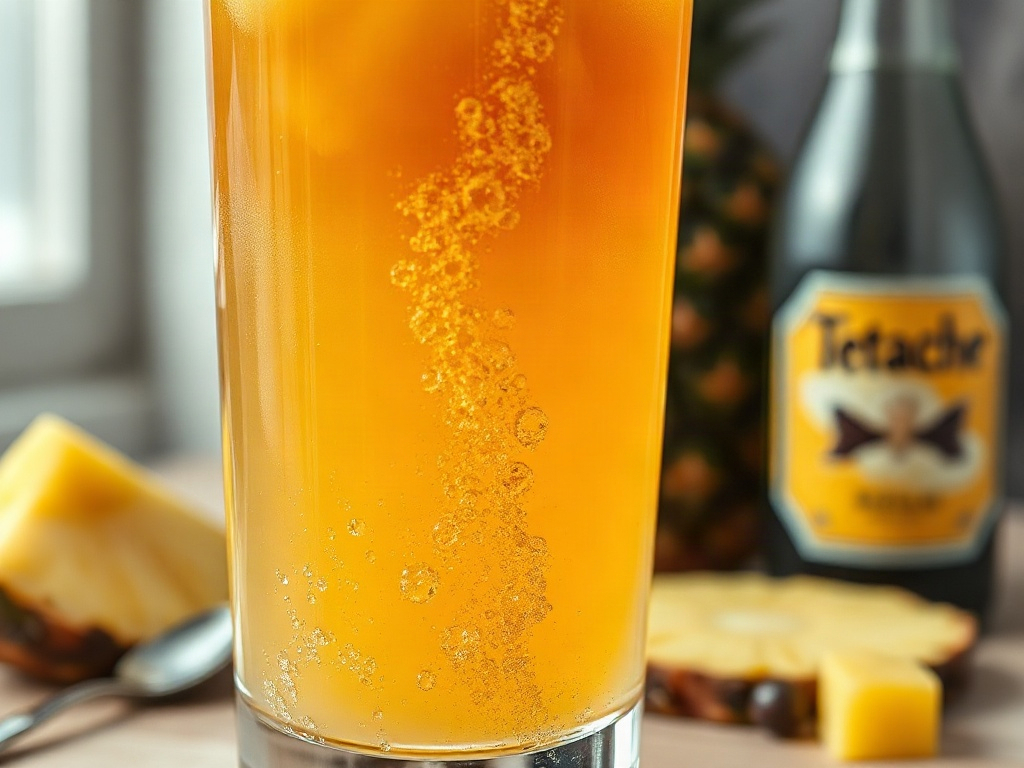
Tepache becomes fizzy through secondary fermentation in sealed bottles. After the initial 2-3 day fermentation in an open vessel, the naturally occurring yeasts and bacteria continue to produce carbon dioxide. When you transfer tepache to airtight bottles with a small amount of fermentable sugar, the CO₂ cannot escape and dissolves into the liquid, creating carbonation. The amount of fizziness depends on fermentation time, temperature, sugar content, and bottle seal quality.
Key Takeaways
- Secondary fermentation in airtight bottles creates natural carbonation in tepache
- 12-48 hours of bottle conditioning at 68-75°F produces optimal carbonation levels
- Adding 1-2 teaspoons of sugar per 16 oz bottle accelerates bubble development
- Flip-top bottles or crown-capped bottles retain carbonation better than screw-caps
- Burping bottles daily prevents over-carbonation and potential bottle explosions
- Refrigeration stops fermentation and locks in achieved carbonation levels
What Makes Tepache Naturally Carbonated?
Tepache is a traditional Mexican fermented beverage made from pineapple rinds, unrefined cane sugar, and spices. The carbonation in tepache results from wild yeast fermentation, specifically Saccharomyces and Candida species naturally present on pineapple skins. These microorganisms consume sugars and produce carbon dioxide and trace amounts of alcohol as metabolic byproducts.
During primary fermentation in an open or loosely covered vessel, most CO₂ escapes into the air. According to traditional Mexican brewing methods documented by chef Rick Bayless, the transformation to a fizzy beverage happens during secondary fermentation when tepache is transferred to sealed containers. The trapped carbon dioxide dissolves into the liquid under pressure, creating the characteristic effervescence.
The fermentation process also produces organic acids that lower pH to 3.0-3.8, creating an environment where carbonation remains stable. Research published in Food Microbiology journals shows that the symbiotic relationship between yeasts and lactic acid bacteria in tepache creates both carbonation and the beverage's distinctive tangy-sweet flavor profile.
How Primary Fermentation Prepares Tepache for Carbonation
Before achieving fizziness, tepache must complete its primary fermentation phase. This initial stage typically lasts 24-72 hours at room temperature and establishes the microbial population needed for carbonation.
Setting Up Primary Fermentation
Place pineapple rinds and cores in a non-reactive vessel—glass or food-grade plastic works best. Add piloncillo, brown sugar, or white sugar at a ratio of ½ to 1 cup per 2 liters of water. Cinnamon sticks, cloves, or allspice can be added for traditional flavor complexity. Cover the vessel with cheesecloth or a loose lid to allow gas escape while preventing contamination.
Primary fermentation is complete when tepache tastes pleasantly tart, slightly sweet, and shows visible bubbling at the surface. The liquid typically changes from clear to cloudy with a golden-amber hue. At this stage, the active yeast population is at its peak—the perfect condition for bottle carbonation.
When to Bottle for Carbonation
Timing matters significantly. Bottling too early, before sufficient yeast development, results in flat tepache. Bottling too late, after most sugars are consumed, leaves inadequate fuel for CO₂ production. The optimal bottling window occurs when tepache still retains mild sweetness but has developed noticeable acidity—typically after 36-48 hours at 70-75°F.
The Science of Secondary Fermentation and Carbonation
Secondary fermentation transforms still tepache into a sparkling beverage through a controlled continuation of the fermentation process. When tepache is transferred to airtight bottles, the biochemical production of CO₂ continues, but the gas cannot escape.
According to Henry's Law of gas solubility, carbon dioxide dissolves into liquid proportionally to the pressure above it. In a sealed bottle, CO₂ pressure builds from approximately 0 PSI to 15-45 PSI depending on fermentation time and temperature. This dissolved CO₂ remains stable until the bottle is opened, when rapid pressure drop causes gas to come out of solution as bubbles.
| Bottle Conditioning Time | Expected PSI | Carbonation Level | Bubble Characteristics |
|---|---|---|---|
| 12 hours | 5-10 PSI | Light | Gentle fizz, small bubbles |
| 24 hours | 15-25 PSI | Medium | Moderate effervescence |
| 36 hours | 25-35 PSI | High | Vigorous bubbles |
| 48+ hours | 35-50+ PSI | Very High | Champagne-level, risk of gushing |
Temperature directly affects fermentation rate and CO₂ production. At 68-72°F, yeast activity proceeds steadily, producing reliable carbonation. Above 78°F, fermentation accelerates dramatically, creating risk of over-carbonation. Below 65°F, yeast becomes sluggish and carbonation develops slowly or incompletely.
Step-by-Step Method to Make Tepache Fizzy
Achieving perfect carbonation requires attention to bottling technique, sugar management, and environmental control. Follow this proven process for consistently fizzy results.
Equipment You Need
- Flip-top glass bottles (Grolsch-style) or crown-capped bottles with caps and capper
- Fine mesh strainer or cheesecloth
- Funnel
- Measuring spoons
- Labels or marker for dating bottles
Avoid screw-top bottles designed for water or juice—these lack the structural integrity and seal quality needed to safely contain fermentation pressure. Beer bottles, champagne bottles, or purpose-built kombucha bottles work excellently.
Bottling Process for Maximum Carbonation
- Strain the tepache: Pour primary-fermented tepache through a fine mesh strainer to remove pineapple solids, spices, and sediment. Some brewers prefer leaving a small amount of sediment as it contains active yeast, but excessive solids can create inconsistent carbonation.
- Add priming sugar: For each 16-ounce bottle, add 1-2 teaspoons of white sugar, brown sugar, or 1 tablespoon of fruit juice. This provides fresh fermentable material for yeast to convert into CO₂. Dissolve sugar in a small amount of tepache before adding to ensure even distribution.
- Fill bottles: Using a funnel, fill each bottle to within 1-2 inches of the top. This headspace allows room for CO₂ expansion and prevents excessive pressure buildup.
- Seal immediately: Cap bottles tightly. With flip-tops, ensure the gasket is clean and properly seated. With crown caps, apply firm even pressure with a bottle capper.
- Label and date: Mark each bottle with the bottling date and planned refrigeration date. This prevents confusion when managing multiple batches.
- Store upright: Keep bottles at room temperature (68-75°F) away from direct sunlight. Excessive heat accelerates fermentation unpredictably.
The Burping Technique
Burping—briefly opening bottles to release excess pressure—is a safety measure that prevents bottle bombs. Starting 12 hours after bottling, open each bottle slightly until you hear gas escape, then reseal immediately. This technique, recommended by fermentation experts at Cultures for Health, allows you to monitor carbonation progress and prevent dangerous over-pressurization.
Burp bottles daily during the conditioning period. When opening produces a satisfying hiss and you feel resistance, carbonation is developing properly. If opening creates explosive foam or projectile liquid, carbonation has proceeded too far—refrigerate immediately.
How Sugar Content Controls Carbonation Levels
The amount and type of sugar added at bottling directly determines final carbonation intensity. Yeast converts approximately 2 grams of sugar into 1 gram of CO₂. This predictable relationship allows precise carbonation control.
Sugar Calculation for Different Carbonation Levels
For light carbonation similar to lightly sparkling water, add ½ teaspoon sugar per 16 oz bottle. For medium carbonation comparable to commercial sodas, use 1-1.5 teaspoons. For high carbonation approaching champagne levels, add 2 teaspoons. Never exceed 2.5 teaspoons per 16 oz as this creates bottle bomb risk.
Different sugars ferment at varying rates. Simple sugars (white sugar, dextrose) ferment rapidly, producing carbonation within 12-24 hours. Complex sugars (brown sugar, piloncillo) ferment more slowly, requiring 24-48 hours. Fruit sugars from added juice contribute both fermentable material and flavor complexity.
Alternative Carbonation Boosters
Instead of refined sugar, consider these natural options:
- Fresh pineapple juice: 1-2 tablespoons per bottle adds sugar plus pineapple enzymes that enhance flavor
- Agave nectar: ½ teaspoon per bottle for mild carbonation with traditional Mexican flavor
- Honey: ½-1 teaspoon per bottle—use unpasteurized honey for additional wild yeasts
- Dried fruit: 2-3 raisins or 1 small piece of dried mango per bottle provides slow-release sugars
Related: How Long Does Tepache Take to Ferment — Complete Guide
Temperature Management for Predictable Fizziness
Ambient temperature is the single most controllable variable affecting carbonation speed and intensity. Professional brewers maintain strict temperature control to achieve batch-to-batch consistency.
The ideal bottle conditioning temperature for tepache is 70-72°F. At this range, yeast ferments steadily, producing 15-25 PSI carbonation in 24-36 hours. According to research in Applied Microbiology journals, each 10°F temperature increase approximately doubles fermentation rate.
Temperature Troubleshooting
If your kitchen runs cool (62-67°F), extend bottle conditioning to 48-72 hours and consider adding slightly more priming sugar. Check bottles every 12 hours as cold fermentation is unpredictable. If your space runs warm (76-80°F), reduce priming sugar by 25%, check bottles every 8 hours, and refrigerate as soon as moderate carbonation develops.
Seasonal temperature swings significantly impact carbonation. Summer batches carbonate faster and risk over-pressurization. Winter batches require longer conditioning. Maintaining a fermentation area with stable temperature—such as an interior closet or insulated cabinet—produces the most reliable results.
How Long to Carbonate Tepache
Carbonation timeline varies based on yeast vitality, sugar content, temperature, and desired fizziness. Most tepache reaches drinkable carbonation between 24-48 hours of bottle conditioning.
Test carbonation level by carefully opening one bottle after 12 hours. If opening produces minimal sound and no bubbles form when poured, reseal and wait another 12 hours. When you hear a distinct hiss upon opening and see fine bubbles rising after pouring, carbonation is light but present. When opening requires deliberate force and tepache forms a foamy head when poured, carbonation is medium to high—refrigerate all bottles immediately.
Visual and Auditory Carbonation Indicators
Experienced tepache brewers assess carbonation without opening bottles by observing subtle signs. Bottles under pressure develop a very slight outward bulge in flip-top gaskets. When gently tapped, highly carbonated bottles produce a higher-pitched ring than flat bottles. Tilting a carbonated bottle creates visible bubble streams clinging to the glass interior.
These indicators develop with practice but provide valuable feedback without releasing built-up CO₂. The most reliable method remains daily test-opening of one bottle from the batch until desired carbonation is reached, then refrigerating all remaining bottles.
Bottle Selection and Safety Considerations
Improper bottle choice is the leading cause of tepache-related accidents. Not all glass bottles can safely withstand fermentation pressure. Standard wine bottles, thin decorative bottles, and most screw-top bottles will shatter or fail under the 30-50 PSI generated by vigorous fermentation.
Use only bottles specifically designed for pressurized beverages: flip-top bottles with rubber gaskets and wire bails, crown-cap beer bottles, or purpose-made fermentation bottles rated for 60+ PSI.
Bottle Capacity and Carbonation Relationship
| Bottle Size | Headspace Needed | Priming Sugar | Conditioning Time |
|---|---|---|---|
| 12 oz (355ml) | 1 inch | ¾ tsp | 18-30 hours |
| 16 oz (473ml) | 1.5 inch | 1-1.5 tsp | 24-36 hours |
| 25 oz (750ml) | 2 inches | 2 tsp | 30-48 hours |
| 32 oz (1L) | 2 inches | 2.5 tsp | 36-60 hours |
Smaller bottles carbonate faster because the sugar-to-liquid ratio is higher and CO₂ saturation occurs more quickly. Larger bottles require longer but produce more stable, finer carbonation. Never fill bottles more than 85% full—inadequate headspace prevents proper gas dissolution and dramatically increases explosion risk.
Preventing Bottle Bombs
Bottle explosions occur when internal pressure exceeds bottle structural limits. According to American Homebrewers Association safety guidelines, follow these rules to prevent dangerous failures:
- Never use bottles with chips, cracks, or scratches
- Store conditioning bottles in a cooler, bin, or cabinet that would contain glass shards if failure occurs
- Never condition bottles in direct sunlight or above 78°F
- Burp bottles daily to monitor and relieve pressure
- Refrigerate immediately when desired carbonation is reached
- When opening highly carbonated bottles, point away from face and open slowly over a sink
Troubleshooting Flat or Over-Carbonated Tepache
Carbonation problems have identifiable causes and solutions. Understanding fermentation science allows diagnosis and correction.
Why Tepache Stays Flat
If tepache shows no carbonation after 48 hours of bottle conditioning, several factors may be responsible. Insufficient residual yeast is the most common cause—if primary fermentation proceeded too long or tepache was filtered too thoroughly, the yeast population may be inadequate for secondary fermentation.
Solution: Add a pinch of active dry champagne yeast or wine yeast to each bottle along with priming sugar. These specialized yeasts tolerate the acidic environment and reliably produce carbonation. Alternatively, add 1-2 tablespoons of actively fermenting tepache from a fresh batch to inoculate bottles with vigorous yeast.
Priming sugar may have been insufficient or unevenly distributed. If you added sugar directly to bottles without dissolving it first, some bottles may have received more than others. Always dissolve priming sugar in a small amount of tepache before distributing to bottles, or create a priming solution by dissolving total sugar in ½ cup tepache and dividing evenly.
Temperature below 65°F significantly slows or halts yeast activity. Move bottles to a warmer location (70-75°F) and extend conditioning time to 72-96 hours. Yeast becomes dormant in cold but revives when warmed.
Why Tepache Over-Carbonates
Excessive carbonation manifests as gushing when bottles are opened, uncontrollable foaming, and aggressive bubbling that causes half the contents to spill. Over-carbonation results from too much priming sugar, too-warm storage, or excessive conditioning time.
Immediate solution: Refrigerate all bottles to halt fermentation. Open bottles slowly in a sink, releasing pressure in stages. Pour over ice to reduce bubbling. Over-carbonated tepache is safe to drink but wastes product through spillage.
Prevention: Reduce priming sugar by 25% on the next batch. Condition at 68-70°F instead of warmer. Begin testing carbonation at 18 hours instead of waiting 24+. Some pineapples harbor more aggressive yeast strains—if repeated batches over-carbonate despite controlled technique, reduce sugar further and refrigerate earlier.
Inconsistent Carbonation Between Bottles
When bottles from the same batch show varying carbonation levels, uneven sugar distribution or temperature variation is responsible. Bottles stored near heat sources (stovetops, sunny windows, heating vents) carbonate faster than bottles in cooler areas.
Solution: Store all bottles together in a location with uniform temperature. Create a priming solution instead of adding sugar directly to individual bottles. Agitate the strained tepache gently before bottling to ensure yeast is evenly suspended throughout the liquid.
People Also Ask
Can you force carbonate tepache with a SodaStream?
Yes, tepache can be force-carbonated using a SodaStream or CO₂ system. Chill tepache thoroughly first, then carbonate to desired level. Force carbonation provides instant bubbles but lacks the subtle flavor development that occurs during natural bottle conditioning. The carbonation also dissipates more quickly than naturally fermented CO₂.
Is carbonated tepache alcoholic?
Tepache contains trace alcohol from yeast fermentation, typically 0.5-2% ABV depending on fermentation time and sugar content. Highly carbonated tepache that has fermented longer may reach 2-3% ABV. This is significantly lower than beer (4-6% ABV) but higher than kombucha (0.5% ABV).
Does tepache continue fermenting in the refrigerator?
Fermentation continues in refrigeration but at an extremely slow rate—approximately 10-15% of room temperature speed. Carbonation remains stable for 2-3 weeks refrigerated. After this period, tepache may become more acidic and less sweet as residual fermentation slowly proceeds.
Expert Verdict
The most reliable method to make tepache fizzy is bottle conditioning with 1-1.5 teaspoons sugar per 16 oz bottle, stored at 70-72°F for 24-36 hours, with daily pressure checks. This approach balances safety, predictability, and quality carbonation. Use flip-top bottles for convenience or crown-cap bottles for maximum seal integrity. Refrigerate immediately when carbonation reaches desired level to prevent over-pressurization. The traditional method of natural bottle fermentation produces superior bubble quality and flavor complexity compared to force carbonation, with fine persistent bubbles similar to champagne rather than the large aggressive bubbles of industrial soda.
Summary
- Tepache becomes fizzy through secondary fermentation when bottled in airtight containers with residual or added sugar, allowing yeast to produce trapped carbon dioxide that dissolves into the liquid under pressure.
- Optimal carbonation occurs with 1-1.5 teaspoons priming sugar per 16 oz bottle, stored at 70-72°F for 24-36 hours, with daily burping to monitor pressure and prevent over-carbonation.
- Use only pressure-rated bottles designed for carbonated beverages—flip-top bottles with rubber gaskets or crown-cap beer bottles—never thin glass, screw-top, or decorative bottles that may shatter.
- Flat tepache results from insufficient yeast, inadequate sugar, or cold temperatures; over-carbonation results from excess sugar, warm storage, or extended conditioning without refrigeration.
- Refrigeration immediately halts fermentation and stabilizes carbonation at the achieved level, preventing continued CO₂ production and maintaining quality for 2-3 weeks.
Frequently Asked Questions
How fizzy should tepache be?
Tepache should have light to moderate carbonation—similar to lightly sparkling water or young champagne. When poured, it should produce fine persistent bubbles and a gentle hiss when opened, but not gush or foam excessively. The carbonation should enhance the drinking experience without overwhelming the pineapple and spice flavors.
Can I carbonate tepache without adding extra sugar?
Yes, if primary fermentation is stopped early while residual sugar remains. Bottle tepache after 24-30 hours of primary fermentation when it still tastes noticeably sweet. The existing sugar will fuel carbonation. This method produces lighter, less predictable carbonation but works for low-sugar preferences.
What happens if I forget to refrigerate carbonated tepache?
Tepache will continue fermenting and building pressure. After 3-5 days at room temperature, bottles may become dangerously over-pressurized and risk explosion. The tepache will also become increasingly sour and alcoholic as fermentation proceeds. If bottles have been left unrefrigerated for over 48 hours, open very carefully outdoors or over a sink.
How long does carbonated tepache last in the fridge?
Properly carbonated and refrigerated tepache maintains quality for 2-3 weeks. Carbonation slowly diminishes over time and flavor becomes more acidic as fermentation continues at refrigerated temperatures. For best taste and bubble quality, consume within 10 days of refrigeration. Tepache remains safe to drink as long as it smells and tastes pleasant.
Can I use plastic bottles to carbonate tepache?
Use only PET plastic bottles specifically designed for carbonated beverages, such as commercial soda bottles. These bottles are rated for pressure and have appropriate caps. Never use standard water bottles or thin disposable bottles. Glass bottles designed for pressure are safer and more reliable than plastic for home fermentation.
Why did my tepache bottles explode?
Bottle explosions result from excessive internal pressure caused by over-fermentation, inappropriate bottles, or inadequate headspace. Common causes include too much priming sugar, warm storage temperatures above 78°F, extended conditioning beyond 48 hours without burping, or using bottles not rated for pressure. Always use proper bottles, monitor pressure daily, and refrigerate when carbonation develops.
More Tepache Articles
This article was produced by an automated research tool. Content is for informational purposes only and should not replace professional advice. Nothing here is medical advice, and it is not a substitute for it. Talk to a doctor about anything affecting your health. Product and resource links throughout this article are included for informational value based on relevance and quality. WhichBrewForYou has no affiliate relationship with any linked third-party site and receives no commission from any recommended products or brands. BellofattoBrews (coffee and tea) and Golden Hive Mead (mead kits and resources) are personal recommendations from this publication's founder and have no affiliation with WhichBrewForYou.