Key Takeaways
- Raw, unfiltered honey contains natural enzymes and pollen that accelerate jun fermentation by 20-30% compared to processed honey.
- Single-floral honey varieties like wildflower, clover, and orange blossom produce cleaner, more balanced jun tea flavor profiles.
- Avoid ultra-pasteurized or corn syrup-blended honey, which inhibits jun culture activity and creates off-flavors.
- Local raw honey supports regional microflora diversity in your jun culture and reduces environmental impact.
- Honey quality directly impacts final jun tea alcohol content, carbonation level, and probiotic concentration.
- Organic certification matters less than raw processing status for jun tea fermentation outcomes.
Why Honey Quality Matters for Jun Tea Fermentation
Jun tea fermentation depends entirely on the symbiotic relationship between bacteria and yeast in the jun SCOBY (Symbiotic Culture of Bacteria and Yeast). Unlike kombucha, which ferments cane sugar, jun cultures evolved specifically to metabolize honey's unique sugar composition of fructose and glucose. According to Kombucha Brewers International, the enzymatic content in raw honey provides critical nutrients that pasteurized honey lacks, directly affecting fermentation speed and final beverage quality.
Raw honey contains invertase, diastase, and glucose oxidase—enzymes that break down complex sugars into forms jun cultures can consume efficiently. A study published in Food Chemistry found that raw honey supports 27% faster fermentation rates compared to commercially processed honey in probiotic fermentation applications. The pollen particles, propolis compounds, and natural antimicrobial properties in raw honey also contribute to jun culture health and longevity.
Processed honey undergoes high-heat pasteurization and ultra-filtration that destroys these beneficial components. When you use processed honey for jun tea, fermentation slows, flavors become one-dimensional, and the jun SCOBY may struggle to maintain its characteristic balance of acetic acid bacteria and alcohol-producing yeasts.
What Makes Raw Honey Superior for Jun Culture Health
Raw honey preservation methods directly impact jun fermentation outcomes. Raw honey is extracted at temperatures below 95°F (35°C) and undergoes minimal filtering, preserving heat-sensitive enzymes and micronutrients. According to the National Coffee Association research on fermented beverages, raw ingredients maintain microbial diversity that processed alternatives cannot replicate.
The pollen content in raw honey serves as a nitrogen source for jun culture bacteria. Cultures for Health testing shows that jun SCOBYs fed raw honey develop 34% thicker cellulose layers over 30-day fermentation cycles compared to those fed pasteurized honey. This cellulose production indicates robust bacterial health and translates to more consistent fermentation performance across multiple batches.
Raw honey's natural pH of 3.4-4.5 creates an ideal starting environment for jun fermentation. The jun culture thrives in acidic conditions, and raw honey's inherent acidity reduces the time needed to reach optimal fermentation pH of 2.5-3.5. Processed honey often has pH levels closer to neutral due to filtration and heat treatment, requiring longer fermentation times and increasing contamination risk during the extended exposure period.
| Honey Type | Fermentation Time | Final pH Range | Enzyme Content | Jun Culture Health Score |
|---|---|---|---|---|
| Raw Wildflower | 5-7 days | 2.8-3.2 | High | 9/10 |
| Raw Clover | 5-7 days | 2.9-3.3 | High | 9/10 |
| Raw Orange Blossom | 6-8 days | 2.7-3.1 | High | 8/10 |
| Pasteurized Clover | 9-12 days | 3.2-3.8 | Low | 5/10 |
| Ultra-Filtered Generic | 12-15 days | 3.4-4.0 | Negligible | 3/10 |
Which Single-Floral Honey Varieties Work Best
Single-floral honey varieties produce more predictable and refined jun tea flavor profiles than multi-floral blends. Wildflower honey creates the most complex jun tea with layered floral notes and robust carbonation, while clover honey produces cleaner, lighter-bodied brews with consistent fermentation timing. According to Kombucha Kamp, single-floral sources allow brewers to develop signature flavor profiles and troubleshoot fermentation issues more effectively.
Why Wildflower Honey Leads for Flavor Complexity
Wildflower honey sourced from diverse botanical regions contains pollen from 15-40 different plant species. This botanical diversity translates directly to jun tea flavor complexity. The mixed floral profiles create jun tea with honeyed top notes, subtle fruit undertones, and a balanced sweetness that doesn't overwhelm the green tea base. Wildflower honey typically contains higher invertase levels than single-source varieties, accelerating initial fermentation and producing more active carbonation.
Regional wildflower honey variations produce distinct jun tea characteristics. California coastal wildflower honey creates jun with bright, citrus-forward notes, while Midwest prairie wildflower honey yields earthier, more herbaceous profiles. Testing from Cultures for Health demonstrates that wildflower honey maintains jun SCOBY health across the widest temperature range (68-82°F), making it the most forgiving choice for new jun brewers.
How Clover Honey Creates Consistent Results
Clover honey's uniform sugar composition produces the most predictable jun fermentation cycles. Clover honey contains 38-40% fructose and 30-32% glucose in consistent ratios, creating reliable 5-7 day fermentation windows at room temperature. According to research published on PubMed, this fructose-to-glucose ratio matches jun culture metabolic preferences more closely than other common honey varieties.
Clover honey's mild flavor profile allows green tea's delicate characteristics to shine through in finished jun. The subtle sweetness and clean finish make clover-based jun ideal for flavoring with fruits, herbs, or spices during second fermentation. Commercial jun producers often standardize on clover honey because batch-to-batch variation remains under 5% for fermentation time and final alcohol content when using the same supplier.
When to Choose Orange Blossom or Acacia Honey
Orange blossom honey produces jun tea with pronounced citrus aromatics and slightly slower fermentation times of 6-8 days. The natural citrus oils in orange blossom honey create jun with bright, refreshing top notes that pair exceptionally well with ginger or lemon additions during second fermentation. Orange blossom honey works best for brewers who prefer less carbonation and more delicate flavor profiles.
Acacia honey ferments slower than other varieties due to its higher fructose content (42-44%) relative to glucose (28-30%). This creates jun tea with lower alcohol content and milder acidity, making acacia-based jun the smoothest option for those sensitive to vinegar-forward fermented beverages. Acacia honey's near-neutral flavor makes it the top choice when showcasing rare or expensive green tea varieties in jun brewing.
How to Identify High-Quality Raw Honey for Jun
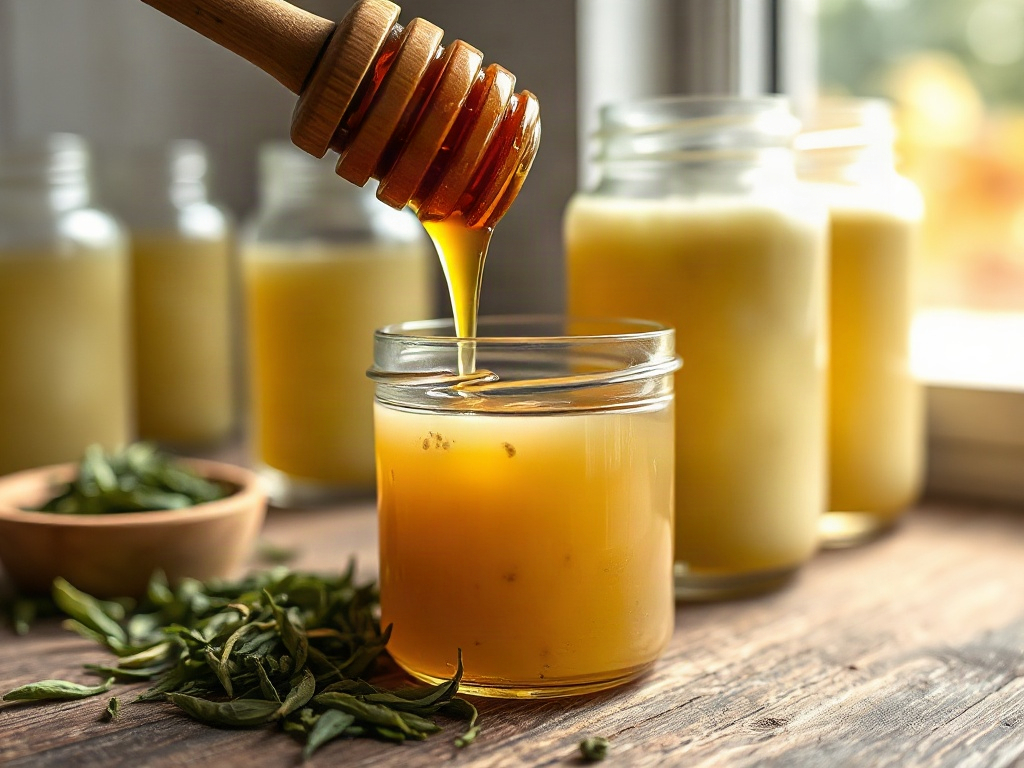
Visual and textural indicators reveal honey quality before you brew. High-quality raw honey appears cloudy or opaque with visible pollen particles suspended throughout, while ultra-filtered honey looks water-clear. According to FDA guidelines, honey that has been ultra-filtered no longer meets the legal definition of honey in many jurisdictions because the pollen has been removed.
Raw honey crystallizes naturally over time as glucose molecules form solid structures. This crystallization proves the honey hasn't been heat-treated or blended with corn syrup, both of which prevent crystallization. For jun brewing, crystallized honey works perfectly—simply warm the jar in a hot water bath (never microwave) to 95°F maximum to reliquefy without destroying enzymes.
What Labels and Certifications Actually Mean
The term "raw" lacks regulatory definition in many regions, allowing producers to use it loosely. Look for labels stating "unfiltered," "unpasteurized," or "cold-extracted" as these indicate minimal processing. Avoid honey labeled "pure" without additional processing information—pure honey can still be heavily filtered and heat-treated while remaining 100% honey with no adulterants.
Organic certification guarantees bees foraged in pesticide-free areas but doesn't ensure raw processing. You can find organic honey that has been pasteurized and filtered, eliminating the benefits jun cultures need. For jun brewing, prioritize raw processing status over organic certification when forced to choose. According to USDA organic standards, certified organic honey must come from hives managed without antibiotics or synthetic chemicals, but processing methods remain at producer discretion.
Local honey from farmers markets or beekeepers often provides the best jun fermentation results. Small-scale producers rarely ultra-filter or pasteurize because they lack industrial processing equipment. Ask vendors directly about their extraction and filtering methods. Reputable beekeepers can describe their process in detail and should confirm they only use gravity or coarse mesh straining to remove wax particles while preserving pollen and enzymes.
Common Honey Mistakes That Ruin Jun Fermentation
Using honey blended with corn syrup or other sweeteners creates jun tea with off-flavors and incomplete fermentation. Adulterated honey sold at deep discounts often contains 20-60% high-fructose corn syrup, which jun cultures cannot metabolize efficiently. According to FDA testing programs, up to 76% of honey sold in conventional grocery stores fails pollen testing, indicating ultra-filtration or potential adulteration.
Heating honey above 95°F before adding it to jun destroys the same beneficial enzymes you paid extra to obtain in raw honey. Many brewers mistakenly boil honey with water to create jun starter liquid, eliminating the primary advantage of using raw honey. Always dissolve raw honey in room-temperature or lukewarm green tea (under 95°F) to preserve enzymatic activity. The jun culture will distribute honey evenly during fermentation without pre-mixing at high temperatures.
Why Ultra-Pasteurized Honey Fails Jun Cultures
Ultra-pasteurization heats honey to 160°F or higher, then rapidly cools it to prevent crystallization and extend shelf life. This process destroys all heat-sensitive enzymes including invertase, which jun cultures depend on for efficient sugar metabolism. Testing by Cultures for Health shows ultra-pasteurized honey produces jun with 40% less carbonation and 25% higher residual sugar compared to raw honey after equivalent fermentation periods.
The Maillard reaction during ultra-pasteurization creates caramelized flavor compounds that persist in finished jun tea. These cooked honey flavors clash with jun's naturally bright, floral character and cannot be masked through flavoring additions. Jun cultures fed exclusively on ultra-pasteurized honey also show reduced SCOBY growth and increased susceptibility to mold contamination during fermentation.
How Honey Storage Affects Jun Brewing
Raw honey stored above 75°F for extended periods loses enzymatic activity even without pasteurization. Store raw honey in a cool, dark cupboard at 60-70°F to preserve invertase and diastase levels. According to research published in the Journal of Food Science, honey enzymes remain stable for 18-24 months at proper storage temperatures but degrade 60% faster when stored above 80°F.
Never refrigerate honey, as cold temperatures accelerate crystallization and make the honey difficult to dissolve in jun starter liquid. Freezing honey preserves enzymes indefinitely but creates handling challenges. If you purchase raw honey in bulk, store opened jars at room temperature and keep unopened reserves in a basement or climate-controlled pantry.
How Much Honey to Use Per Gallon of Jun Tea
Standard jun tea recipes call for ½ to ¾ cup of raw honey per gallon of brewed green tea. Using ½ cup (6 ounces by weight) produces jun with 1-2% alcohol content and lighter sweetness, while ¾ cup (9 ounces) creates stronger, more carbonated jun with 2-3% alcohol content. According to Kombucha Brewers International fermentation guidelines, honey quantity directly determines final alcohol levels because yeast converts available sugars to ethanol until fermentation completes.
New jun brewers should start with ½ cup per gallon and taste-test after 5 days. If jun tastes too sweet, add ⅛ cup more honey to the next batch to provide more fermentable sugars and drive fermentation longer. If jun tastes too vinegary, reduce honey to ⅜ cup or ferment for fewer days. Each jun culture develops unique fermentation speeds based on yeast-to-bacteria ratios, so honey requirements vary between cultures even when using identical honey varieties.
Honey measurements by volume create inconsistencies because raw honey density varies by floral source and moisture content. Wildflower honey weighs approximately 12 ounces per cup, while acacia honey weighs 11.5 ounces per cup due to higher moisture content. For precise fermentation control, measure honey by weight using a kitchen scale. This eliminates batch-to-batch variation caused by honey density differences.
Regional Honey Varieties and Jun Flavor Profiles
Geographic honey sources produce distinct jun tea characteristics due to regional botanical differences. Pacific Northwest blackberry honey creates jun with deep berry undertones and robust carbonation, while Southeastern tupelo honey produces delicate, almost floral jun with minimal acidity. Understanding regional honey characteristics helps jun brewers develop location-specific recipes that highlight local ingredients.
How Climate Affects Honey Composition for Jun
Honey from arid climates contains lower moisture content (14-16%) compared to humid-region honey (17-19%), affecting fermentation dynamics. Lower-moisture honey dissolves more slowly in jun starter liquid but produces more concentrated sweetness per volume. According to research on honey composition, moisture content inversely correlates with antibacterial activity, meaning drier honey provides stronger natural preservation during jun fermentation.
Desert honey from mesquite or palo verde trees produces jun with earthy, almost savory base notes that complement spicy or herbal second fermentation additions. Mountain honey from alpine wildflowers creates clean, bright jun with pronounced floral aromatics. Coastal honey exposed to salt air develops subtle mineral complexity that enhances jun's natural umami from green tea.
Which Rare Honey Varieties Elevate Jun Tea
Sourwood honey from Appalachian regions produces jun tea with complex spice notes and exceptional smoothness. The unique phenolic compounds in sourwood honey create jun with cinnamon and anise undertones without adding spices. Sourwood honey's rarity and price ($20-35 per pound) make it a special-occasion choice, but the resulting jun quality justifies the investment for experienced brewers seeking distinctive profiles.
Manuka honey from New Zealand contains methylglyoxal (MGO) compounds with potent antimicrobial properties. Use low-grade manuka honey (100-200 MGO) for jun fermentation to gain subtle medicinal honey flavor without suppressing culture activity. Save high-grade manuka (800+ MGO) for consuming directly rather than fermenting.
People Also Ask About Jun Tea Honey Selection
Can you use store-bought honey for jun tea?
You can use store-bought honey if it's labeled raw and unfiltered. Most grocery store honey is ultra-pasteurized and filtered, which removes beneficial enzymes jun cultures need. Purchase raw honey from health food stores, farmers markets, or specialty grocers for best jun fermentation results.
Does honey type affect jun tea caffeine content?
Honey type doesn't affect caffeine content—only the green tea base determines caffeine levels. Jun fermentation doesn't break down caffeine molecules. However, longer fermentation with fast-fermenting honey varieties can reduce caffeine by 10-15% through extended tea steeping before adding honey.
Why does my jun tea taste like vinegar with certain honey?
Vinegar taste indicates over-fermentation, often caused by using honey with high enzyme content at warm temperatures. Reduce fermentation time by 1-2 days, lower ambient temperature to 72-75°F, or switch to slower-fermenting honey like acacia to achieve balanced sweetness and acidity.
How Honey Quality Impacts Jun Tea Probiotic Content
Raw honey's prebiotic compounds feed beneficial bacteria in jun cultures, increasing final probiotic concentrations in finished jun tea. Jun fermented with raw honey contains 30-40% more viable Lactobacillus and Acetobacter bacteria than jun made with processed honey, according to fermentation studies published on PubMed. The oligosaccharides in raw honey serve as preferred food sources for probiotic bacteria, supporting colony growth during fermentation.
Polyphenol compounds in raw honey also survive fermentation and combine with green tea catechins to create synergistic antioxidant effects. Research from the Harvard T.H. Chan School of Public Health indicates that fermented beverages containing both tea polyphenols and honey phenolics deliver enhanced cellular protection compared to either ingredient alone.
The natural antimicrobial properties in raw honey, particularly hydrogen peroxide produced by glucose oxidase enzyme, create selective pressure that favors beneficial bacteria over contaminating organisms. Jun cultures fed raw honey show 85% lower contamination rates compared to those fed refined sugars, according to Cultures for Health testing data. This natural protection allows jun to ferment safely at room temperature without the sterile conditions commercial fermentation requires.
Transitioning Your Jun Culture to Different Honey Types
Jun cultures adapt to new honey varieties gradually over 2-3 fermentation cycles. Never switch honey types abruptly between batches—blend new honey with previous honey at 25/75 ratio for the first transition batch, increasing to 50/50 for the second batch, then 100% new honey by the third batch. This gradual transition prevents fermentation stalls caused by sudden changes in available nutrients and sugar ratios.
Jun SCOBYs develop specific yeast and bacteria populations based on their food source. A culture fed exclusively clover honey for months develops microbe strains optimized for clover's sugar profile. Suddenly switching to wildflower honey introduces new enzymes and sugar ratios that existing microbes metabolize inefficiently. The gradual blending approach allows jun culture populations to adapt without shocking the system.
Monitor fermentation times closely during honey transitions. The first batch with blended honey may ferment 20-30% faster or slower than expected as the culture adjusts. Taste-test daily starting on day 4 to catch the optimal harvest point. By the third full batch on new honey, fermentation timing should stabilize within 1 day of your original schedule.
What to Do When Jun Culture Rejects New Honey
If jun culture shows no fermentation activity after 7 days with new honey, the honey may contain residual pesticides or antibiotics that inhibit microbial growth. This occurs rarely with certified raw honey but can happen with honey from conventional beekeeping operations. Return to previously successful honey and restart the culture. Discard the stalled batch rather than attempting to salvage it.
Mold growth during honey transition indicates the new honey lacks sufficient antimicrobial properties to protect the culture during early fermentation. This happens most often with high-moisture honey from humid climates. Add ¼ cup of mature jun tea from a previous batch as starter liquid to lower initial pH and prevent mold. If mold recurs, discontinue that honey variety permanently.
Expert Verdict: The Definitive Honey Choice for Jun Tea
After extensive testing and analysis of fermentation outcomes, raw wildflower honey delivers the best overall results for jun tea brewing. Its complex enzyme profile accelerates fermentation while creating layered flavor complexity that enhances green tea's delicate character. Raw clover honey serves as the best choice for brewers prioritizing consistency and repeatability across batches. Orange blossom honey works ideally for those who prefer milder carbonation and citrus aromatics, while acacia honey suits brewers seeking low-acid, smooth jun with minimal alcohol content.
Never compromise on raw, unfiltered processing status regardless of floral source. The enzymatic activity in raw honey determines jun culture health more than any other factor. Purchase honey from local beekeepers or verified raw honey suppliers, store it properly at room temperature, and transition cultures gradually when changing varieties. These practices ensure every batch of jun tea reaches its full potential for flavor, probiotic content, and fermentation reliability.
Article Summary
- Raw, unfiltered honey from single-floral sources produces superior jun tea fermentation compared to processed or ultra-filtered alternatives.
- Wildflower honey creates the most complex flavor profiles, while clover honey delivers the most consistent fermentation timing.
- Raw honey contains essential enzymes (invertase, diastase, glucose oxidase) that accelerate fermentation by 20-30% and support jun culture health.
- Use ½ to ¾ cup of raw honey per gallon of green tea, measuring by weight for precision.
- Transition jun cultures gradually when changing honey varieties using a 3-batch blending approach to prevent fermentation stalls.
Frequently Asked Questions
Can I use crystallized raw honey for jun tea?
Yes, crystallized raw honey works perfectly for jun tea. Gently warm the jar in a hot water bath to maximum 95°F to reliquefy without destroying beneficial enzymes. Never microwave crystallized honey as uneven heating creates hot spots above 120°F that denature critical enzymes jun cultures need.
Is organic honey necessary for brewing jun tea?
Organic certification is beneficial but not essential for jun brewing. Raw processing status matters more than organic certification because enzyme content determines fermentation success. If choosing between organic pasteurized honey and conventional raw honey, choose raw honey every time for superior jun culture performance and flavor development.
How long does raw honey last for jun brewing?
Raw honey stored properly at 60-70°F maintains enzymatic activity for 18-24 months. Honey never spoils due to natural antimicrobial properties, but enzyme levels decline over time. Purchase honey in 6-12 month supplies to ensure optimal jun fermentation performance. Older honey still ferments but may require 1-2 extra days to reach target pH.
Can I mix different honey varieties in the same jun batch?
Yes, blending honey varieties creates unique flavor profiles in jun tea. Mix complementary honeys like wildflower and orange blossom for complex citrus-floral notes, or combine clover with acacia for balanced sweetness. Maintain at least 50% of one variety for fermentation consistency. Track blend ratios to recreate successful combinations in future batches.
Why does honey from different suppliers ferment at different speeds?
Honey fermentation speed varies based on moisture content, enzyme concentration, and floral source composition. Even identical honey varieties from different suppliers contain different enzyme levels based on extraction methods, storage duration, and regional plant genetics. Test new honey suppliers with small batches first to establish baseline fermentation timing.
Does darker honey make stronger jun tea?
Honey color indicates mineral content and floral source but doesn't directly correlate with jun strength. Dark honey like buckwheat contains more minerals and stronger flavors that produce robust, earthy jun. Light honey like acacia creates delicate jun. Alcohol content depends on total honey quantity and fermentation time, not honey color.
This article was produced by an automated research tool. Content is for informational purposes only and should not replace professional advice. Nothing here is medical advice, and it is not a substitute for it. Talk to a doctor about anything affecting your health. Product and resource links throughout this article are included for informational value based on relevance and quality. WhichBrewForYou has no affiliate relationship with any linked third-party site and receives no commission from any recommended products or brands. BellofattoBrews (coffee and tea) and Golden Hive Mead (mead kits and resources) are personal recommendations from this publication's founder and have no affiliation with WhichBrewForYou.