Key Takeaways
- Strawberry balsamic shrub requires only three ingredients: fresh strawberries, granulated sugar, and quality balsamic vinegar
- The maceration method extracts maximum fruit flavor while the sugar creates a natural preservative syrup
- Shrubs must rest for 1-2 weeks after mixing to allow the vinegar's sharpness to mellow and flavors to integrate
- A 1:1:1 ratio of fruit to sugar to vinegar by weight creates the most balanced flavor profile
- Properly stored shrubs maintain peak flavor for 6 months and remain safe to drink for up to a year
- According to research published on PubMed, the acetic acid in vinegar provides antimicrobial properties that naturally preserve the syrup
What Is a Strawberry Balsamic Shrub?
A strawberry balsamic shrub is a fruit-forward drinking vinegar that combines the natural sweetness of ripe strawberries with the complex acidity of aged balsamic vinegar. The term "shrub" derives from the Arabic word "sharab" meaning "to drink" and refers to a preservation method dating back to 15th-century England. Colonial Americans adopted shrubs as a way to preserve summer fruit harvests before refrigeration existed. The high sugar and vinegar content creates an inhospitable environment for spoilage bacteria, allowing the syrup to remain shelf-stable for months.
Modern craft bartenders have revived shrubs for their ability to add depth and acidity to cocktails without the dilution of citrus juice. The strawberry balsamic combination works particularly well because balsamic vinegar's grape must base complements berry flavors naturally. Food chemistry research shows that strawberries contain over 360 volatile aromatic compounds, creating complexity that intensifies during maceration. The finished shrub tastes simultaneously sweet, tart, fruity, and tangy with a syrupy texture similar to flavored simple syrup.
Why Make Your Own Shrub Instead of Buying It?
Homemade strawberry balsamic shrub costs approximately 60-70% less than commercial versions while offering complete control over ingredient quality and flavor intensity. A typical 16-ounce bottle of artisan shrub retails for $15-25, while homemade versions cost $6-8 for the same quantity when using fresh seasonal strawberries. The commercial shrub production process often includes stabilizers, preservatives, and diluted vinegar bases that homemade versions avoid entirely.
Making shrubs at home allows you to adjust the sweetness-to-acid ratio according to personal preference and intended use. Commercial shrubs must appeal to broad palates and maintain consistency across batches, resulting in standardized flavors that may not suit every application. Homemade shrubs can be customized with additional ingredients like fresh basil, black pepper, vanilla bean, or chili flakes that would be cost-prohibitive at commercial scale.
The DIY process also ensures peak fruit freshness. Commercial producers must source strawberries year-round, often relying on imported or frozen fruit. Home production using peak-season local berries captures maximum flavor and nutritional value. According to the USDA FoodData Central, fresh strawberries contain 89 mg of vitamin C per cup, but this content degrades rapidly after harvest—making immediate processing in homemade shrubs nutritionally superior.
What Equipment Do You Need to Make Strawberry Balsamic Shrub?
Strawberry balsamic shrub production requires minimal specialized equipment. Most home kitchens already contain everything necessary for the basic process. The essential tools include a large glass jar or bowl for maceration, a fine-mesh strainer or cheesecloth for separating solids, a storage bottle with tight-sealing lid, measuring cups, and a kitchen scale for precise ratios. Using a kitchen scale ensures the critical 1:1:1 ratio by weight that produces consistently balanced shrubs every time.
| Equipment | Purpose | Acceptable Substitutes |
|---|---|---|
| Wide-mouth quart jar | Maceration vessel | Glass or ceramic bowl with cover |
| Kitchen scale | Precise measurements | Measuring cups (less precise) |
| Fine-mesh strainer | Removing fruit solids | Cheesecloth, nut milk bag |
| Glass bottle (16-32 oz) | Storage and dispensing | Mason jar, swing-top bottle |
| Muddler or wooden spoon | Breaking down fruit | Fork, potato masher |
| Funnel | Transferring to bottle | Careful pouring |
Glass containers are strongly preferred over plastic for shrub making. The acidity of vinegar can leach chemicals from certain plastics during the extended contact time required for proper aging. Wide-mouth jars allow easy access for stirring and straining. Dark glass bottles protect the finished shrub from light degradation, though clear glass works if stored in a dark pantry.
A kitchen scale measuring in grams provides the most accurate ratios. Volume measurements can vary significantly depending on how tightly fruit is packed or how much sugar settles. Professional shrub makers universally recommend weight-based recipes for reproducible results.
What Ingredients Make the Best Strawberry Balsamic Shrub?
The quality of your three core ingredients directly determines the finished shrub's flavor complexity and balance. Each component plays a specific role in the final taste profile, and substitutions significantly alter the outcome.
Choosing the Right Strawberries
Fresh, ripe strawberries at peak season produce dramatically better shrubs than out-of-season or underripe berries. Look for strawberries with deep red coloration throughout, glossy surface texture, and strong aromatic presence.
Locally grown strawberries harvested within 24-48 hours offer superior flavor to supermarket varieties bred for shipping durability. Farmers market berries are typically sweeter and more aromatic because they're picked ripe rather than early for transport. Small to medium berries often contain more concentrated flavor than jumbo varieties, which can taste watery. Organic strawberries avoid pesticide residues that could affect fermentation, though thorough washing of conventional berries is acceptable.
For a standard 16-ounce batch, use approximately 1 pound (450g) of hulled strawberries. Remove all green tops and any bruised or moldy sections before weighing. Slightly overripe berries work excellently in shrubs since maceration will break them down completely—this is an ideal use for berries too soft for fresh eating.
Selecting Quality Balsamic Vinegar
Balsamic vinegar quality varies enormously, from $3 supermarket bottles to $200 aged artisan products. For shrub making, mid-range balsamic vinegar in the $12-25 per bottle range offers the best value and flavor complexity. True balsamic vinegar from Modena, Italy contains only grape must and wine vinegar with no added caramel coloring or thickeners.
Check the ingredient list before purchasing. Authentic balsamic should list "cooked grape must" and "wine vinegar" as the only ingredients. Avoid products listing caramel color, corn syrup, or artificial thickeners. The acidity level should be 5-6% for proper preservation and flavor balance. Lower acidity vinegars may not preserve the shrub adequately, while higher acidity creates harsh flavors that require longer mellowing time.
Aged balsamic vinegar (invecchiato) labeled 8-12 years provides excellent depth without the cost of traditional balsamic (aceto balsamico tradizionale). The aging process concentrates flavors and develops complex sweet notes that complement strawberries beautifully. For budget-conscious makers, standard Modena balsamic works perfectly well, though the shrub may taste slightly sharper initially and require an extra week of aging.
Understanding Sugar's Role
Granulated white sugar is the standard choice for shrub making because it dissolves completely and allows fruit and vinegar flavors to dominate. The sugar serves three critical functions: extracting liquid from fruit cells through osmosis, creating a preservative environment that inhibits microbial growth, and balancing the vinegar's acidity for palatability.
The 1:1 fruit-to-sugar ratio by weight (approximately 1 pound strawberries to 1 pound or 2¼ cups sugar) creates optimal extraction and preservation. Some recipes use less sugar for lower-calorie versions, but reducing below a 1:0.75 ratio compromises shelf stability and extraction efficiency. The sugar concentration must be high enough to draw moisture from the fruit cells—this osmotic process is what creates the rich syrup base.
Alternative sweeteners like honey, maple syrup, or coconut sugar can replace white sugar but will alter the flavor profile significantly. Honey adds floral notes and creates cloudier syrup. Maple syrup contributes caramel undertones. Coconut sugar provides molasses-like depth. These alternatives work well but should be considered flavor variations rather than direct substitutes. Artificial sweeteners do not work because they cannot create the osmotic pressure needed for maceration.
How to Make Strawberry Balsamic Shrub: Step-by-Step Method
The cold maceration method produces strawberry balsamic shrub with the brightest fruit flavor and most vibrant color. This technique requires no cooking, preserving delicate aromatic compounds that heat would destroy. The entire process spans 3-7 days from start to first use, though the shrub continues improving for 2-3 weeks.
Step 1: Prepare the Strawberries
Rinse 1 pound of fresh strawberries under cold water and pat completely dry with paper towels. Remove all green hulls and any white or hard portions near the stem. Cut strawberries into quarters or rough chop—smaller pieces increase surface area for faster maceration. Place chopped strawberries in a large glass jar or bowl. No need to puree or mash at this stage; the sugar will draw out juices naturally.
Step 2: Add Sugar and Begin Maceration
Measure 1 pound (450g or approximately 2¼ cups) granulated sugar and pour over the strawberries. Stir thoroughly to coat all fruit pieces with sugar. Cover the container loosely with a lid, cheesecloth, or plastic wrap—you want to prevent contamination while allowing gases to escape. Place the mixture at room temperature (65-75°F) away from direct sunlight.
Within 2-4 hours, you'll notice liquid pooling at the bottom of the container as sugar draws moisture from the fruit cells. Stir the mixture 2-3 times during the first day to redistribute sugar and ensure even extraction. After 24 hours, the strawberries should be sitting in abundant bright red syrup, and the fruit pieces will look shrunken and pale.
Step 3: Strain the Fruit Solids
After 24-48 hours of maceration, strain the mixture through a fine-mesh strainer set over a bowl or measuring cup. Press gently on the fruit solids with a spoon or spatula to extract all liquid without forcing pulp through. You should yield approximately 1½ to 2 cups of intensely flavored strawberry syrup. The spent fruit can be composted or repurposed in smoothies or baked goods, though most flavor has transferred to the syrup.
Step 4: Add Balsamic Vinegar
Measure balsamic vinegar equal in volume to the strawberry syrup you collected—typically 1½ to 2 cups. Pour the vinegar into the syrup and whisk thoroughly to combine. The mixture will thin slightly and take on a deeper burgundy color. Transfer the combined shrub to a clean glass bottle with a tight-sealing lid. Label with the date and contents.
Step 5: Age and Mellow
Refrigerate the shrub for a minimum of 1 week before using. During this aging period, the sharp acetic acid notes mellow considerably and flavors integrate into a harmonious whole. Shake the bottle once every 2-3 days during aging to ensure complete blending and prevent any sugar crystallization. The shrub reaches optimal flavor at 2-3 weeks and maintains peak quality for 6 months when refrigerated.
You can begin tasting after 1 week, but expect noticeable improvement over subsequent weeks. The vinegar's harshness softens while fruit flavors deepen and become more complex. Some sediment at the bottle bottom is normal—shake before each use or strain through a coffee filter for crystal-clear pours.
What Are the Best Ways to Use Strawberry Balsamic Shrub?
Strawberry balsamic shrub functions as a highly concentrated flavor enhancer that transforms ordinary beverages into complex, layered drinks. The standard dilution ratio is 1 part shrub to 4-6 parts liquid, though this varies based on personal preference and the shrub's strength.
Classic Shrub Soda
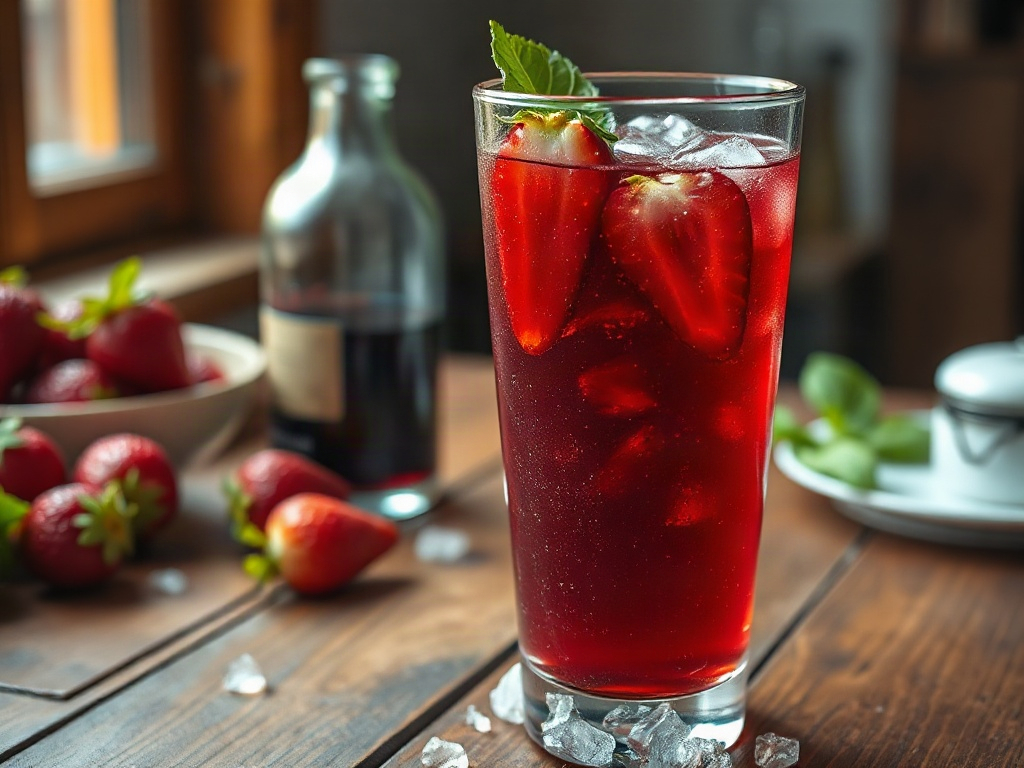
The simplest and most refreshing application mixes 1-2 tablespoons shrub with 8 ounces of cold sparkling water over ice. Garnish with fresh strawberry slices and basil leaves for visual appeal and complementary aromatics.
Cocktail Applications
Craft cocktails benefit enormously from shrub's acidity and complexity. Excellent combinations include:
- Strawberry Shrub Gin Fizz: 2 oz gin, 1 oz shrub, ¾ oz simple syrup, top with club soda
- Balsamic Berry Collins: 2 oz vodka, 1 oz shrub, ½ oz lemon juice, shake and strain over ice, top with soda
- Shrub Old Fashioned: 2 oz bourbon, ½ oz shrub, 2 dashes aromatic bitters, stir with ice
- Sparkling Shrub Spritz: 3 oz prosecco, 1 oz shrub, 1 oz club soda, fresh berries
The vinegar's acidity brightens spirits and creates a tartness similar to fresh citrus but with fruity depth that lemon or lime cannot provide. Shrubs also add body and mouthfeel that improve thin or astringent spirits.
Culinary Uses Beyond Beverages
Strawberry balsamic shrub excels in culinary applications where you want concentrated sweet-tart flavor without additional liquid. Drizzle over vanilla ice cream, panna cotta, or cheesecake as a complex dessert sauce. Whisk into vinaigrettes for salads featuring goat cheese, arugula, and candied nuts—use 1 tablespoon shrub with 3 tablespoons olive oil and pinch of salt.
Reduce shrub in a small saucepan over medium heat until thickened to syrup consistency for glazing grilled chicken, pork chops, or roasted vegetables. The concentrated flavor becomes intensely fruity with caramelized edges. Brush on during the final minutes of cooking to create glossy, flavorful coating. Mix into yogurt, oatmeal, or chia pudding for breakfast applications that add complexity without refined sugar.
How Long Does Strawberry Balsamic Shrub Last?
Properly prepared and stored strawberry balsamic shrub maintains peak flavor quality for 6 months when refrigerated continuously. The high sugar and vinegar content creates a hostile environment for most spoilage organisms, making shrubs remarkably shelf-stable. The acetic acid in vinegar has a pH around 2.5-3.5, well below the 4.6 threshold where most bacteria can survive.
After 6 months, the shrub remains safe to consume but may experience some flavor degradation. Fruit notes become less vibrant while vinegar sharpness increases slightly. The syrup may darken somewhat due to oxidation and Maillard reactions between sugars and acids. These changes affect quality rather than safety—shrubs can remain drinkable for up to 12 months refrigerated.
Signs of spoilage include mold growth on the surface, off-putting fermented smells (beyond normal vinegar tang), or fizzing and bubbling when opened. If any of these occur, discard the batch. Prevent contamination by always using clean utensils when dispensing, never drinking directly from the storage bottle, and ensuring the cap seals tightly after each use.
Unrefrigerated storage is not recommended despite the preservative properties. Room temperature storage accelerates flavor changes and increases spoilage risk. For maximum longevity and best flavor retention, keep shrubs refrigerated at 35-40°F from the moment vinegar is added.
People Also Ask
Can You Make Shrub Without Sugar?
Sugar-free shrubs are not recommended because sugar performs critical extraction and preservation functions that artificial sweeteners cannot replicate. The osmotic pressure from high sugar concentration draws liquid from fruit cells, creating the syrup base. Honey or maple syrup can substitute but still provide calories and sugar content similar to granulated sugar.
Why Is My Shrub Too Vinegary?
Excessive vinegar taste indicates either insufficient aging time or too much vinegar in the initial ratio. Allow shrubs to rest refrigerated for at least 2 weeks for acidity to mellow. If the problem persists, dilute the shrub with additional simple syrup (equal parts sugar and water, dissolved) to balance the acid-to-sweet ratio.
Traditional shrubs are preserved, not fermented, though some makers encourage brief fermentation before adding vinegar. The high acidity and sugar in standard shrubs prevent significant probiotic development. For probiotic drinks, consider kombucha or water kefir instead.
Expert Verdict
Strawberry balsamic shrub represents one of the most accessible and rewarding DIY beverage projects for home cooks. The three-ingredient recipe requires no specialized equipment, no cooking, and minimal active time while producing a sophisticated mixer that rivals expensive craft cocktail ingredients. The 1:1:1 ratio by weight creates consistently balanced results, though personal preference adjustments are encouraged after your first batch. Using peak-season local strawberries and quality balsamic vinegar from Modena elevates the final product dramatically without excessive cost. The two-week aging period is non-negotiable—patience allows harsh vinegar notes to soften into complex, layered acidity that enhances rather than dominates. Beyond beverages, shrubs deserve consideration as versatile culinary ingredients for dressings, marinades, and dessert applications. The six-month shelf life makes batch production practical, allowing you to preserve summer strawberry season for year-round enjoyment.
Article Summary
- Strawberry balsamic shrub combines fresh strawberries, granulated sugar, and quality balsamic vinegar in a 1:1:1 ratio by weight for optimal flavor balance
- The cold maceration method involves coating strawberries in sugar for 24-48 hours to extract juice, then adding vinegar and refrigerating for 1-2 weeks
- Mid-range balsamic vinegar ($12-25) from Modena with only grape must and wine vinegar as ingredients produces the best results without excessive cost
- Finished shrubs dilute 1:4 to 1:6 with sparkling water, spirits, or other liquids and work equally well in cocktails and culinary applications
- Properly stored shrubs maintain peak quality for 6 months refrigerated and remain safe for up to 12 months, making them ideal for preserving seasonal fruit
Frequently Asked Questions
What is the difference between shrub and drinking vinegar?
Shrub and drinking vinegar are essentially the same product—concentrated fruit-vinegar syrups meant to be diluted with water or mixed in drinks. "Shrub" is the traditional American colonial term, while "drinking vinegar" is a modern marketing descriptor. Both refer to the same preservation technique of combining fruit, sugar, and vinegar.
Can you use frozen strawberries for shrub?
Frozen strawberries work adequately but produce less vibrant flavor than fresh berries. Freezing ruptures cell walls, creating mushier texture and some flavor loss. If using frozen, thaw completely and use all released liquid in the maceration. Expect slightly less concentrated strawberry flavor and potentially cloudier syrup.
Do you need to strain out all fruit pulp?
Straining removes spent fruit solids that would cloud the shrub and potentially spoil over time. Fine pulp passing through the strainer is acceptable and adds body. For crystal-clear presentation, strain twice or line your strainer with cheesecloth. Some pulp does not affect safety or flavor significantly.
Can you make shrub with apple cider vinegar instead?
Apple cider vinegar creates a completely different flavor profile—earthier and less sweet than balsamic. The substitution works technically but produces a different product. For strawberry shrubs specifically, white wine vinegar or champagne vinegar substitutes more successfully than ACV, maintaining fruity character while providing necessary acidity.
How much shrub should you drink per day?
Limit consumption to 1-2 servings daily (1-2 tablespoons shrub diluted in 8 ounces liquid). The high sugar and acid content makes excessive consumption inadvisable. Undiluted consumption can damage tooth enamel due to acidity.
Why did my shrub develop sediment?
Light sediment is normal and consists of fruit particles, sugar crystals, or natural pectin settling over time. This does not indicate spoilage. Shake well before using or strain through a coffee filter for perfectly clear pours. Sediment increases if you pressed fruit solids too aggressively during initial straining.
This article was produced by an automated research tool. Content is for informational purposes only and should not replace professional advice. Nothing here is medical advice, and it is not a substitute for it. Talk to a doctor about anything affecting your health. Product and resource links throughout this article are included for informational value based on relevance and quality. WhichBrewForYou has no affiliate relationship with any linked third-party site and receives no commission from any recommended products or brands. BellofattoBrews (coffee and tea) and Golden Hive Mead (mead kits and resources) are personal recommendations from this publication's founder and have no affiliation with WhichBrewForYou.