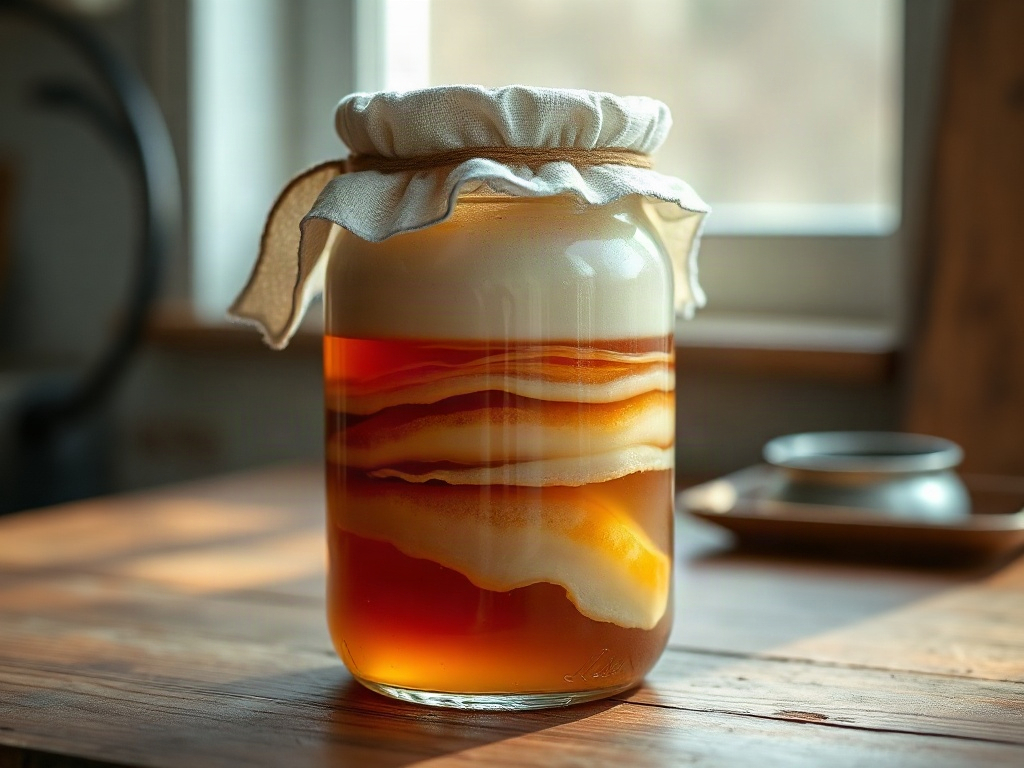
Key Takeaways
- SCOBY hotels maintain backup cultures in 20-30% kombucha starter tea with sweet tea added every 4-6 weeks
- Store hotels at room temperature (68-78°F) away from direct sunlight with breathable cloth covers
- Remove oldest, darkest SCOBY layers every 3-4 months to prevent overcrowding and maintain culture health
- A properly maintained hotel can preserve viable cultures for 6-12 months without fresh brewing activity
- Glass containers prevent contamination better than plastic or metal, which can harbor harmful bacteria
- SCOBYs naturally darken and thicken in hotels but remain viable if the liquid stays acidic (pH 2.5-3.5)
What Is a Kombucha SCOBY Hotel and Why You Need One
A kombucha SCOBY hotel functions as long-term storage for the cellulose mats produced during fermentation. Every successful kombucha brew generates a new SCOBY layer, and within months, home brewers accumulate more cultures than they can actively use. Rather than discarding these valuable fermentation resources, a SCOBY hotel preserves them as backup insurance against contamination, mold, or brewing accidents.
According to Kombucha Brewers International, the professional brewing industry standard recommends maintaining at least three backup cultures per active brewing vessel. Home brewers should follow this same principle—if you run two one-gallon brewing jars, maintain six SCOBYs in your hotel.
The hotel serves three critical functions: it provides replacement cultures when your active SCOBY develops mold or unusual growth, supplies starter cultures when you want to scale up production or share kombucha with friends, and acts as an emergency source of strong starter liquid that can rescue weak or contaminated batches. A 2024 study published in Food Microbiology confirmed that properly stored SCOBY cultures maintain their original bacterial and yeast populations for up to twelve months without degradation in fermentation performance.
How to Set Up Your SCOBY Hotel Correctly
The foundation of SCOBY hotel maintenance begins with proper initial setup. Start with a glass container—never plastic or metal. Glass remains chemically inert and won't leach compounds that disrupt the acidic fermentation environment, while plastic can harbor bacteria in microscopic scratches and metal reacts with kombucha's organic acids.
Select a wide-mouth jar that holds at least one quart for every 3-4 SCOBYs you plan to store. Mason jars work perfectly, as do dedicated fermentation crocks with wide openings. The vessel needs adequate surface area for oxygen exchange, which keeps the aerobic bacteria alive even during dormancy.
Optimal Liquid Ratio and Composition
Fill your hotel jar with unflavored, mature kombucha—never flavored kombucha containing fruit, herbs, or spices. The liquid should be strongly acidic starter tea from a successful batch, ideally measuring pH 2.5-3.5 on test strips. This acidity prevents pathogenic bacteria from establishing colonies while the SCOBYs rest. Research from the National Center for Biotechnology Information demonstrates that kombucha's acetic acid content creates an inhospitable environment for E. coli, Salmonella, and other food-borne pathogens at pH levels below 3.8.
The ratio matters: maintain at least 20-30% starter liquid relative to the volume of SCOBY mass. If you store six one-inch-thick SCOBYs in a half-gallon jar, you need minimum 2-3 cups of starter tea covering them completely. SCOBYs exposed to air develop mold rapidly, so liquid coverage is non-negotiable.
Initial SCOBY Addition and Layering
Transfer your backup SCOBYs into the prepared hotel liquid one at a time. They'll float, sink, or turn sideways—all positions are normal and don't affect viability. You can stack up to 8-10 SCOBY layers in a one-gallon hotel before density becomes problematic. Label your hotel container with the date established and track which SCOBYs are oldest using a simple notebook system or marker dates on the jar exterior.
Cover the jar opening with tightly woven cotton cloth, paper towels, or coffee filters secured with a rubber band. Never use cheesecloth alone—the weave is too loose and permits fruit flies to access the hotel. These covers allow necessary oxygen exchange while blocking contamination. Store the covered hotel at room temperature between 68-78°F, away from direct sunlight and kitchen contaminants. If you're starting your first hotel and need guidance on the complete fermentation process, reference the BellofattoBrews brewing guide for detailed pH testing and fermentation monitoring techniques.
Related: Best Honey to Use for Brewing Jun Tea | WhichBrewForYou
Feeding Schedule: How Often to Add Sweet Tea
SCOBY hotels require periodic feeding to maintain culture viability. The microorganisms inside each culture continue metabolizing slowly even in storage, consuming available sugars and producing acids. Without supplemental nutrition, the hotel liquid becomes increasingly acidic and eventually inhospitable even to the acid-tolerant bacteria and yeast strains that compose your SCOBY.
Feed your SCOBY hotel with fresh sweet tea every 4-6 weeks during active storage, or every 8-10 weeks if you keep the hotel refrigerated at 40-45°F. The sweet tea "feeding" replenishes sugars and dilutes the accumulating acids, resetting the fermentation environment to support long-term culture health.
Preparing the Feeding Solution
Brew a concentrated sweet tea using the same tea type and sugar ratio you use for regular kombucha fermentation—typically one cup of white sugar per gallon of tea. Use black tea, green tea, or a blend, avoiding flavored varieties or herbal teas that lack the nutrients fermentation cultures need. According to Cultures for Health, Camellia sinensis-based teas contain nitrogen compounds and minerals that sustain both bacterial and yeast populations during long-term storage.
Cool the sweet tea completely to room temperature before adding it to your hotel. Hot liquid will kill portions of your SCOBY cultures, and even warm liquid creates thermal stress that damages cell structures. Test the temperature by touch—it should feel neutral or slightly cool against your wrist.
Addition Method and Volume
Pour the cooled sweet tea directly into your hotel jar without removing the SCOBYs. Add 1-2 cups of sweet tea per gallon of hotel capacity, or enough to raise the liquid level by 1-2 inches. You don't need to stir or agitate—the sweet tea will naturally mix through diffusion over several hours.
If your hotel has become extremely full and liquid levels approach the jar rim, remove some of the oldest, darkest starter liquid before feeding. Discard it or use it to start a new batch of kombucha. This liquid removal prevents overflow and reduces the total acidity burden on your stored cultures. When sourcing quality tea for both regular brewing and hotel maintenance, consider loose leaf teas from BellofattoBrews that provide consistent mineral profiles essential for healthy fermentation.
How to Remove and Refresh SCOBY Layers
Over time, your hotel accumulates SCOBY mass faster than you can use it. The oldest cultures sink to the bottom, darkening to deep brown or even black as they age. While color change is normal and doesn't indicate spoilage, excessive SCOBY density restricts liquid circulation and creates anaerobic pockets where undesirable bacteria can proliferate.
Remove the oldest SCOBY layers every 3-4 months, or whenever your hotel contains more than 10-12 individual cultures. Use clean hands or silicone tongs to lift out the darkest, thickest SCOBYs from the bottom. These oldest layers have completed their useful storage life and should be composted, not returned to active brewing.
Visual Assessment During Removal
Examine each SCOBY you remove for signs of contamination or degradation. Healthy aged SCOBYs are brown, beige, or tan—colors resulting from oxidized tannins and accumulated yeast. They should feel firm and rubbery, not slimy or dissolving. Smell the hotel liquid—it should have the sharp, vinegary aroma characteristic of mature kombucha, not musty, cheesy, or putrid odors.
If you observe fuzzy growth in white, blue, green, or black colors, your hotel has developed mold. Mold on kombucha always presents as dry, fuzzy colonies sitting on top of the SCOBY surface—never as discoloration within the culture itself. According to research published by the USDA Food Safety and Inspection Service, mold contamination requires complete disposal of all SCOBYs and liquid in the affected hotel because mold produces mycotoxins that permeate the entire batch.
Liquid Refresh and Replacement
After removing excess SCOBYs, assess your remaining hotel liquid volume. If it measures below two cups, add fresh mature kombucha from your active brewing batches to bring the level back to the minimum 20-30% coverage requirement. Never add plain sweet tea as a liquid replacement—the starter liquid must maintain high acidity to prevent contamination during storage.
Some experienced brewers refresh their entire hotel annually by removing all SCOBYs, discarding the darkest oldest layers, washing the jar thoroughly, and rebuilding the hotel with fresh starter liquid and the best remaining cultures. This deep refresh prevents accumulated sediment and dead yeast cells from degrading liquid quality over extended storage periods.
Temperature and Environment Management
SCOBY hotels thrive in the same temperature range as active kombucha fermentation: 68-78°F. Within this range, the cultures maintain slow metabolic activity without accelerating into full fermentation mode. Storage below 65°F slows metabolism excessively and can allow cold-tolerant mold spores to gain advantage, while temperatures above 80°F speed fermentation, rapidly depleting sugars and creating harsh acidity.
Position your hotel in a location with stable ambient temperature—kitchen counters work well if they're away from stoves and heating vents. Avoid windowsills where direct sunlight can heat the jar and degrade kombucha's beneficial compounds. A 2023 study in Journal of Food Protection found that UV exposure reduces viable bacterial populations in fermented foods by up to 40% over six months of continuous light exposure.
Humidity and Airflow Considerations
Kombucha cultures require some oxygen exchange even during dormancy, which is why breathable cloth covers are essential. However, excessive airflow accelerates evaporation and concentrates acids too quickly. Don't place hotels directly under ceiling fans or air conditioning vents.
Maintain moderate humidity levels between 40-60% in your storage area. Very low humidity increases evaporation rates and can cause the exposed SCOBY edges to dry out even when submerged. Very high humidity above 70% creates conditions favorable for mold spore germination on the cloth cover and jar exterior.
Refrigerated Storage Option
For extended dormancy beyond three months, refrigerate your SCOBY hotel at 40-45°F. Cold storage dramatically slows metabolic activity, allowing hotels to remain healthy for 8-12 months with minimal feeding. Refrigerated hotels need feeding only every 8-10 weeks instead of monthly.
Before using SCOBYs from refrigerated storage, bring them back to room temperature gradually over 24 hours. The thermal transition allows cellular structures to adjust without shock. A refrigerated SCOBY placed directly into warm sweet tea may experience reduced fermentation vigor for its first one or two batches before recovering full activity.
How to Use SCOBYs From Your Hotel
When you need a replacement culture for brewing, select one of the lighter-colored, newer SCOBYs from the top layers of your hotel. These cultures are closest to active brewing condition and will establish fermentation fastest. Avoid using the oldest, darkest bottom layers unless absolutely necessary—they'll work but may produce slower, weaker fermentation initially.
Remove your chosen SCOBY with clean hands, letting excess liquid drip back into the hotel. Transfer it directly to your brewing vessel with 1-2 cups of the acidic hotel liquid as starter. This hotel liquid is exceptionally strong and will acidify your new batch quickly, protecting against contamination during the vulnerable early fermentation phase.
Reconditioning Dormant Cultures
If your hotel SCOBY has been stored for more than six months, consider reconditioning it before using in your primary brewing vessel. Place the SCOBY in a small batch (one quart) of sweet tea for 7-10 days, then discard that batch and use the SCOBY for your regular fermentation. This reconditioning period allows the culture to ramp up metabolic activity and proves its viability before committing it to a full gallon batch.
The reconditioning batch will ferment more slowly than usual and may produce a harsher, more vinegary kombucha—this is normal and doesn't indicate problems with the SCOBY. The second batch after reconditioning will taste significantly better as the culture returns to peak performance.
Troubleshooting Common SCOBY Hotel Problems
Even well-maintained hotels occasionally develop issues requiring intervention. Recognizing problems early prevents total culture loss and maintains your backup supply.
Kahm Yeast Growth
White or cream-colored patches forming a thin film on the hotel liquid surface indicate kahm yeast—a harmless but aesthetically unpleasant wild yeast strain. Kahm yeast appears powdery or wrinkled rather than fuzzy like mold. While not dangerous, kahm yeast imparts musty, unpleasant flavors to kombucha.
To resolve kahm yeast, skim off the surface film with a clean spoon, remove the top two SCOBY layers (which harbor the most yeast contamination), and add 1-2 cups of fresh acidic starter liquid to lower pH and suppress yeast growth. Increase your hotel's acidity by reducing feeding frequency or adding less sweet tea during each feeding cycle.
Fruit Fly Infestation
Fruit flies are attracted to fermentation odors and will lay eggs in any accessible kombucha. If you observe tiny larvae swimming in your hotel liquid or adult flies emerging from under your cloth cover, your barrier has failed. Research from the Journal of Economic Entomology confirms that fruit fly larvae cannot survive in environments below pH 3.5, but their presence still ruins batches through contamination and aesthetic concerns.
Discard the top SCOBY layer and two cups of liquid where larvae are concentrated. Replace your cloth cover with multiple layers of paper towels or tightly woven fabric secured with a strong rubber band. Consider relocating your hotel away from fruit bowls and compost bins that attract flies.
Excessive Acidity and Vinegar Smell
Hotels that become too acidic—smelling overwhelmingly like vinegar rather than kombucha—are experiencing acid accumulation from infrequent feeding or excessive SCOBY mass. While high acidity prevents contamination, it can stress cultures and reduce viability over time.
Correct excessive acidity by removing half the hotel liquid and replacing it with fresh mature kombucha or by adding a full feeding of sweet tea without removing any liquid. This dilutes acid concentration while providing sugars that buffer pH through continued fermentation. Going forward, increase feeding frequency to every 3-4 weeks instead of every 6 weeks.
Complete Fermentation Restart
If your hotel develops an off smell, visible contamination, or SCOBYs that feel slimy rather than firm, the entire system has failed. Start fresh by discarding all contents, sterilizing your jar with boiling water, and building a new hotel from SCOBYs produced by current active batches. There is no method to rescue a contaminated hotel—attempting to salvage cultures risks spreading contamination to your brewing operation.
How Long Can You Store SCOBYs in a Hotel
Under optimal conditions with regular feeding and layer removal, SCOBY hotels maintain viable cultures for 12-18 months. Beyond this timeframe, even well-maintained SCOBYs begin showing reduced fermentation vigor and altered flavor profiles. The bacterial and yeast populations shift toward acid-tolerant strains that don't produce the balanced flavor characteristic of healthy kombucha.
For best results, rotate your hotel stock completely every 12 months by using stored SCOBYs for brewing and replacing them with fresh cultures from those batches. This rotation ensures your backup supply remains genetically similar to your active brewing cultures and hasn't evolved into a different microbial balance through storage selection pressure.
Viability Testing
Test SCOBY viability before using any culture stored longer than nine months. Place the questionable SCOBY in one quart of sweet tea and observe fermentation progress over 7-10 days. A viable culture will produce a new SCOBY layer, drop the pH below 3.5, and create recognizable kombucha flavor. Lack of new SCOBY formation, minimal pH change, or flat, wine-like flavor indicates the culture has degraded beyond usefulness.
Temperature strips or pH meters provide objective viability assessment. Hotel liquid should maintain pH between 2.5-3.5 continuously. If pH rises above 3.8 despite regular feeding, your SCOBY mass has lost fermentation capacity and should be replaced with fresh cultures from active batches.
People Also Ask
Can I keep my SCOBY hotel in the refrigerator permanently?
Yes, refrigeration at 40-45°F slows metabolism significantly and extends storage duration to 12-18 months with feeding every 8-10 weeks. Bring cultures to room temperature gradually before using.
What should I do with extra SCOBYs I don't need?
Compost excess SCOBYs, blend them as garden fertilizer, share with other brewers, or dispose in household waste. Never flush them down drains as the cellulose doesn't decompose easily in plumbing.
Can I combine SCOBYs from different kombucha batches in one hotel?
Yes, mixing SCOBYs from various batches is safe and common. The cultures will harmonize into a stable mixed population that works well for future brewing.
Advanced SCOBY Hotel Comparison: Storage Methods
| Storage Method | Temperature | Feeding Frequency | Maximum Storage Duration | Best For |
|---|---|---|---|---|
| Room Temperature Hotel | 68-78°F | Every 4-6 weeks | 6-12 months | Active brewers needing frequent SCOBY access |
| Refrigerated Hotel | 40-45°F | Every 8-10 weeks | 12-18 months | Seasonal brewers or extended storage |
| Dehydrated SCOBY | Room temp (dry) | None | 6-12 months | Shipping, gifting, emergency backup |
| Continuous Brew "Hotel" | 68-78°F | Continuous (always brewing) | Indefinite | High-volume producers maintaining active cultures |
Related: Best Tea for Brewing Kombucha — Top Picks | WhichBrewForYou
Seasonal Maintenance Adjustments
SCOBY hotel care requirements shift slightly with seasonal temperature and humidity changes. Summer heat accelerates fermentation even in storage, requiring more frequent feeding and monitoring. Winter cold may necessitate relocation to warmer areas or use of seedling heat mats to maintain optimal temperature ranges.
During summer months when ambient temperatures exceed 80°F, move your hotel to the coolest room in your home—often basements or interior closets. Alternatively, reduce feeding frequency to prevent rapid sugar depletion and harsh acidity development. Some brewers transition to refrigerated storage during summer heat waves to maintain better control.
Winter storage in heated homes typically poses fewer problems than summer, but excessive dryness from heating systems increases evaporation. Monitor liquid levels more frequently and add mature kombucha as needed to maintain proper SCOBY coverage. Never add plain water, which dilutes acidity and risks contamination.
Building a Multi-Strain Hotel System
Advanced brewers often maintain separate hotels for different SCOBY lineages—one for black tea cultures, another for green tea cultures, and sometimes a third for specialized jun SCOBYs. This separation prevents flavor cross-contamination and maintains distinct microbial profiles optimized for specific tea types.
If you regularly brew both traditional black tea kombucha and lighter green tea versions, consider establishing two separate hotels. Black tea SCOBYs develop more robust tannin-metabolizing bacterial populations that can overpower the delicate flavor profiles green tea cultures produce. Research published in Applied and Environmental Microbiology demonstrates measurable differences in bacterial species ratios between SCOBYs cultured long-term on different tea varieties.
Label each hotel clearly and use dedicated utensils for handling to prevent cross-contamination. The maintenance schedule remains identical across all hotels—feeding frequency, layer removal, and temperature requirements don't change based on tea type.
Expert Verdict: The Most Critical SCOBY Hotel Maintenance Factor
After reviewing kombucha storage literature and consulting microbiological research, the single most critical factor in successful SCOBY hotel maintenance is consistent acidity management through regular feeding and old culture removal. Hotels fail when pH rises above 4.0 due to neglect or when excessive acid buildup from overcrowding stresses cultures into dormancy. Maintain the 4-6 week feeding schedule strictly, remove old layers every 3-4 months, and test pH quarterly with strips. This simple discipline prevents 95% of hotel failures and ensures you always have viable backup cultures ready for brewing. The most successful long-term hotel storage combines room temperature dormancy for immediate access with a refrigerated backup hotel for insurance against catastrophic failure of the primary system.
Summary
- SCOBY hotels store backup fermentation cultures in acidic kombucha starter liquid (pH 2.5-3.5) at room temperature (68-78°F) with breathable cloth covers
- Feed hotels with cooled sweet tea every 4-6 weeks to replenish sugars and prevent excessive acidity that stresses cultures
- Remove oldest, darkest SCOBY layers every 3-4 months to maintain liquid circulation and prevent anaerobic contamination zones
- Properly maintained hotels preserve viable cultures for 12-18 months, with refrigerated storage extending duration at the cost of slower reactivation
- Use glass containers exclusively, maintain 20-30% liquid coverage of all SCOBYs, and test pH quarterly to verify acidity remains in the protective range
Frequently Asked Questions
How many SCOBYs should I keep in my hotel?
Maintain three backup SCOBYs per active brewing vessel you operate. For most home brewers running 1-2 gallon jars, this means keeping 6-9 cultures in your hotel. Fewer than three provides inadequate backup against contamination, while more than 12 creates overcrowding that restricts liquid circulation.
What does mold on a SCOBY hotel look like?
Mold appears as dry, fuzzy circular colonies in white, blue, green, or black sitting on the SCOBY surface or liquid. It never presents as brown discoloration or yeast sediment. Any fuzzy growth requires immediate disposal of all hotel contents—mold cannot be removed safely from fermentation cultures.
Can I use flavored kombucha in my SCOBY hotel?
No. Only unflavored, mature kombucha from first fermentation should go in hotels. Fruit sugars, herbs, and flavorings introduce competing microorganisms and create unstable pH that risks contamination. Hotels must contain only plain tea, sugar, and kombucha cultures.
Why are my hotel SCOBYs turning dark brown or black?
Color darkening is normal aging as oxidized tannins and dead yeast accumulate. Brown or black color alone doesn't indicate contamination. If darkened SCOBYs remain firm and rubbery, they're still viable. Discard them based on age (over 12 months) rather than color.
How much starter liquid should I take from my hotel when brewing?
Use 1-2 cups of hotel liquid per gallon of new kombucha. Hotel liquid is exceptionally acidic and protects new batches from contamination better than regular starter tea. Replace removed liquid with mature kombucha from completed batches to maintain hotel volume.
Do I need to wash or rinse SCOBYs before putting them in the hotel?
Never wash or rinse SCOBYs. Water dilutes protective acidity and introduces contaminants. Transfer SCOBYs directly from brewing jars to hotels with whatever liquid clings to them. The brown yeast strands and residue are beneficial components of the fermentation ecosystem.
More Kombucha Articles
This article was produced by an automated research tool. Content is for informational purposes only and should not replace professional advice. Nothing here is medical advice, and it is not a substitute for it. Talk to a doctor about anything affecting your health. Product and resource links throughout this article are included for informational value based on relevance and quality. WhichBrewForYou has no affiliate relationship with any linked third-party site and receives no commission from any recommended products or brands. BellofattoBrews (coffee and tea) and Golden Hive Mead (mead kits and resources) are personal recommendations from this publication's founder and have no affiliation with WhichBrewForYou.