Key Takeaways
- Jun requires a first ferment of 3-7 days before beginning the second ferment, shorter than kombucha due to honey's simpler sugars.
- Bottles must be pressure-rated and sealed tightly to trap carbon dioxide produced during the second ferment.
- Flavoring ratios of 10-20% fruit juice or fruit by volume provide sufficient sugar for carbonation without over-pressurizing bottles.
- Room temperature second fermentation produces carbonation within 1-3 days, with daily burping recommended to prevent bottle explosions.
- Refrigeration after the second ferment halts fermentation and preserves carbonation for 2-3 weeks of optimal freshness.
What Is Jun Tea Second Fermentation?
Jun tea second fermentation is the stage following initial fermentation where jun is bottled with flavorings in sealed containers, allowing residual yeasts and bacteria to produce carbonation while developing additional flavor complexity. Jun is a fermented tea beverage made with green tea and honey rather than the black tea and cane sugar used in kombucha, and its unique culture produces a lighter, more delicate flavor profile that responds exceptionally well to second fermentation techniques.
Why Second Ferment Jun Tea?
The first fermentation of jun creates a tart, probiotic beverage, but second fermentation adds carbonation that transforms the drinking experience and allows for endless flavor customization. Carbonation develops naturally when yeasts consume sugars in a sealed environment, producing carbon dioxide that dissolves into the liquid rather than escaping into the air. This process also allows flavoring agents to infuse more deeply into the jun while the culture continues to break down compounds into more bioavailable forms.
Commercial probiotic beverages undergo similar secondary fermentation processes, but homebrewed jun offers greater control over carbonation levels, flavor intensity, and fermentation duration. According to Kombucha Brewers International, second fermentation increases both the perceived quality and the probiotic diversity of cultured beverages.
Completing the First Ferment Before Second Fermentation
Jun must complete its primary fermentation before beginning the second ferment. The first ferment typically requires 3-7 days at 75-85°F, shorter than kombucha's 7-14 day cycle because honey's monosaccharides ferment more rapidly than cane sugar's disaccharides. The jun is ready for bottling when it tastes balanced between sweet and tart, with a pH typically between 2.5 and 3.5.
Testing the first ferment requires tasting a small sample away from the fermentation vessel to avoid contamination. The jun should have noticeable tartness without harshness, a slight honey sweetness, and a clean green tea finish. If the jun tastes excessively sweet, the yeasts have not consumed enough sugar to support carbonation. If it tastes like vinegar, over-fermentation has depleted the sugars needed for the second ferment.
Related: Best Tea Brewing Techniques for Beginners
Equipment Needed for Jun Second Fermentation
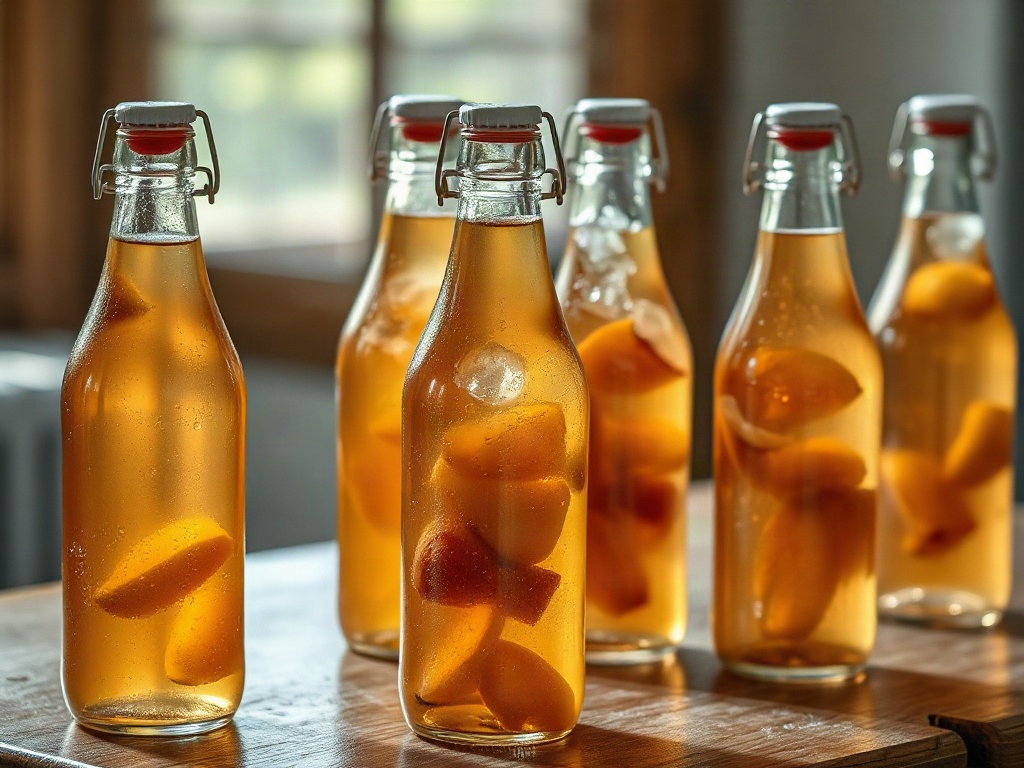
Second fermentation requires pressure-rated bottles, preferably swing-top bottles designed for carbonated beverages or heavy-duty beer bottles with crown caps. Standard wine bottles and thin glass containers cannot withstand the pressure generated during fermentation and present serious safety hazards. Each bottle must seal completely to trap carbon dioxide.
| Equipment | Purpose | Specifications |
|---|---|---|
| Swing-top bottles | Contain carbonation | 16-32 oz, pressure-rated glass |
| Funnel | Transfer jun without spills | Wide-mouth, non-reactive material |
| Fine-mesh strainer | Remove SCOBY fragments | Stainless steel or nylon |
| Measuring cups | Portion flavorings accurately | Glass or stainless steel |
| pH strips (optional) | Verify acidity levels | Range 2.0-4.5 |
Additional useful equipment includes a bottle brush for cleaning, a thermometer for monitoring fermentation temperature, and labels for tracking flavoring combinations and bottling dates. All equipment must be cleaned thoroughly with hot water and allowed to air dry completely before use, as residual soap can inhibit fermentation.
How to Bottle Jun for Second Fermentation
Remove the SCOBY and one to two cups of starter liquid from the first ferment vessel and set aside in a clean glass container covered with a breathable cloth. This culture and liquid will begin the next batch of jun. Strain the remaining jun through a fine-mesh strainer into a large bowl or pitcher to remove any SCOBY fragments or yeast strands.
Add flavorings directly to each bottle before pouring in the jun, or mix flavorings into the strained jun before bottling. Direct-to-bottle additions create variation between bottles, while pre-mixing ensures consistency across the batch. Pour jun into bottles, leaving one to two inches of headspace at the top to accommodate carbonation expansion. Seal bottles tightly and label with the flavoring and date.
The BellofattoBrews brewing guide emphasizes the importance of consistent headspace, as too little space increases explosion risk while too much space reduces carbonation efficiency.
What Flavors Work Best for Jun Second Fermentation?
Jun's delicate flavor profile pairs exceptionally well with light fruits, florals, and herbs. Ginger, berries, citrus, mint, lavender, and stone fruits complement jun's honey and green tea base without overwhelming it. The optimal flavoring ratio is 10-20% by volume, providing enough sugar to fuel carbonation while maintaining jun's characteristic lightness.
Fresh fruits must be chopped or muddled to release sugars and flavors efficiently. Frozen fruits work equally well and often release flavor more readily as ice crystals break down cell walls. Fruit juices provide consistent sugar content and dissolve immediately, making carbonation more predictable. Dried fruits and herbs infuse more slowly but create concentrated flavors.
Flavoring Combinations and Ratios
- Ginger-lemon: 1-inch fresh ginger slice plus 2 tablespoons lemon juice per 16 oz bottle
- Berry blend: 3-4 tablespoons mixed berries per 16 oz bottle
- Peach-basil: 3 tablespoons diced peach plus 2-3 basil leaves per 16 oz bottle
- Lavender-blueberry: 1/4 teaspoon dried lavender plus 2 tablespoons blueberries per 16 oz bottle
- Pineapple-mint: 3 tablespoons pineapple chunks plus 3-4 mint leaves per 16 oz bottle
- Apple-cinnamon: 3 tablespoons apple juice plus 1/4 cinnamon stick per 16 oz bottle
Avoid flavorings with added sugars, preservatives, or oils, as these can inhibit fermentation or create off-flavors. Pure fruit juices without preservatives work reliably, while juices containing potassium sorbate or sodium benzoate prevent fermentation entirely.
Temperature and Timing for Jun Second Fermentation
Second fermentation proceeds optimally at room temperature between 68-78°F, the same range preferred for the first ferment. Warmer temperatures accelerate fermentation and carbonation, producing fizzy jun in 24-48 hours. Cooler temperatures slow the process, requiring 3-5 days to achieve similar carbonation levels.
Store bottles in a dark location or inside a box during second fermentation, as light exposure degrades both flavor compounds and probiotic organisms. Keep bottles upright rather than on their sides to minimize the surface area exposed to pressure. Place bottles on a towel or in a plastic bin as a precaution against leaks or breakage.
Monitor carbonation daily by carefully opening one bottle over a sink. The jun should hiss when opened and develop a layer of fine bubbles when poured. If carbonation seems weak after two days, allow fermentation to continue for another 24-48 hours. If carbonation is strong earlier than expected, move all bottles to refrigeration immediately.
Related: Best Honey to Use for Brewing Jun Tea
Burping Bottles During Second Fermentation
Burping releases excess carbon dioxide pressure by briefly opening each bottle during fermentation. This technique prevents over-carbonation and reduces explosion risk, particularly important when using high-sugar flavorings or fermenting at warm temperatures. Open each bottle for one to two seconds daily, allowing gas to escape with a hiss before resealing.
Jun fermented with ginger, pineapple, or grape juice requires more frequent burping due to higher sugar content. Bottles that feel unusually firm or warm indicate aggressive fermentation and should be burped immediately and moved to a cooler location. According to Cultures for Health, burping reduces bottle failures by more than 80% in homebrewing applications.
When to Stop Second Fermentation
Second fermentation is complete when the jun reaches the desired carbonation level and flavor intensity. Most batches achieve optimal carbonation within 1-3 days at room temperature. Transfer bottles to refrigeration immediately upon reaching the target carbonation, as cold temperatures slow yeast activity to near-dormant levels and stabilize carbonation.
Refrigerated jun maintains carbonation and flavor quality for 2-3 weeks. Probiotic counts remain stable during refrigeration, though they gradually decline after three weeks. Continued fermentation at refrigerator temperatures proceeds extremely slowly but does occur, so jun stored longer than one month may develop increased tartness and slightly higher carbonation.
Troubleshooting Jun Second Fermentation Problems
No Carbonation After Three Days
Insufficient carbonation results from depleted yeast populations, inadequate sugar content, or temperatures below 65°F. Add one teaspoon of honey or fruit juice to each bottle and allow fermentation to continue for two more days at 72-75°F. If carbonation still does not develop, the jun may have been too tart at bottling, indicating the first ferment consumed nearly all available sugars.
Excessive Carbonation or Bottle Explosions
Over-carbonation occurs when fermentation continues too long or when excessive sugar is present. Always burp bottles daily and refrigerate promptly when carbonation reaches desired levels. If a bottle bursts, clean the area thoroughly and inspect remaining bottles immediately, burping and refrigerating them regardless of target carbonation level.
Off Flavors or Mold Growth
Mold appearing on flavorings or at the liquid surface indicates contamination, usually from improperly cleaned equipment or spoiled flavoring ingredients. Discard affected bottles completely. Jun with unpleasant sulfur or rotten odors has likely been contaminated with unwanted bacteria and should be discarded.
How Second Fermentation Differs Between Jun and Kombucha
Jun and kombucha follow identical second fermentation processes, but jun typically carbonates more rapidly due to its honey base and green tea composition. Jun's yeasts remain more active than kombucha yeasts at room temperature, producing noticeable carbonation within 24-36 hours compared to kombucha's typical 2-4 days. Jun also develops more delicate, champagne-like carbonation rather than kombucha's aggressive fizziness.
The lighter flavor profile of jun makes it more sensitive to flavoring additions. While kombucha can handle bold, intense flavorings like strong ginger or dark fruits, jun benefits from subtle additions that complement rather than mask its honey and green tea character. The BellofattoBrews brewing guide recommends reducing flavoring quantities by 25-30% when adapting kombucha recipes to jun.
People Also Ask About Jun Second Fermentation
Can you second ferment jun without adding fruit?
Yes, jun can second ferment without added flavorings using only the residual sugars from the first ferment, though carbonation will be lighter and develop more slowly. This creates a plain, unflavored sparkling jun that highlights the honey and tea character without additional complexity.
How do you know when jun second fermentation is done?
Jun second fermentation is complete when the beverage achieves desired carbonation levels, typically indicated by a strong hiss when opening the bottle and sustained bubbles when poured. This usually occurs within 1-3 days at room temperature, though timing varies with temperature and sugar content.
Is second fermented jun alcoholic?
Second fermented jun contains trace alcohol, typically 0.5-2% by volume, similar to kombucha. Longer fermentation times and higher sugar additions increase alcohol content slightly, though jun rarely exceeds 3% alcohol even under extended fermentation conditions at room temperature.
Article Summary
- Jun second fermentation requires completing a 3-7 day first ferment before transferring to sealed, pressure-rated bottles with added flavorings.
- Optimal flavoring ratios of 10-20% fruit or juice by volume provide sufficient sugar for carbonation without overwhelming jun's delicate flavor or over-pressurizing bottles.
- Room temperature fermentation at 68-78°F produces carbonation within 1-3 days, with daily burping recommended to prevent excessive pressure buildup.
- Jun carbonates faster than kombucha due to honey's simpler sugars and maintains champagne-like effervescence rather than aggressive fizziness when properly managed.
- Refrigeration immediately upon reaching desired carbonation halts fermentation and preserves quality for 2-3 weeks of optimal drinking condition.
Frequently Asked Questions
How long does jun second fermentation take?
Jun second fermentation typically takes 1-3 days at room temperature between 68-78°F. Warmer temperatures accelerate the process to 24-48 hours, while cooler conditions may require 3-5 days. Monitor daily by opening one bottle to check carbonation levels.
Can you second ferment jun in the refrigerator?
Refrigerator temperatures slow jun fermentation dramatically, requiring 1-2 weeks to develop light carbonation. Second fermentation proceeds most efficiently at room temperature, with refrigeration used to halt fermentation once desired carbonation is achieved.
What bottles are safe for jun second fermentation?
Swing-top bottles designed for carbonated beverages or heavy-duty beer bottles with crown caps are safe for jun second fermentation. These pressure-rated containers withstand 50-70 PSI generated during fermentation. Standard wine bottles and thin glass containers risk explosion and should never be used.
How much fruit should you add to second ferment jun?
Add 10-20% fruit by volume to second ferment bottles, equivalent to 3-4 tablespoons of chopped fresh fruit or 2-3 tablespoons of fruit juice per 16-ounce bottle. This ratio provides adequate sugar for carbonation while maintaining balanced flavor.
Does second fermented jun need to be refrigerated?
Second fermented jun must be refrigerated once it reaches desired carbonation to halt fermentation and prevent over-carbonation or bottle explosions. Refrigerated jun maintains optimal quality for 2-3 weeks, though it remains safe to drink for several months with gradually increasing tartness.
Can you reuse fruit from jun second fermentation?
Fruit from jun second fermentation should not be reused, as it has already released most of its sugars and flavors while absorbing acidity from the jun. Fresh or frozen fruit provides consistent results for each new batch of second fermentation.
More Tea Articles
This article was produced by an automated research tool and reviewed before publication. Content is for informational purposes only. Nothing here is medical advice, and it is not a substitute for it. Talk to a doctor about anything affecting your health. Product and resource links throughout this article are included for informational value based on relevance and quality. WhichBrewForYou has no affiliate relationship with any linked third-party site and receives no commission from any recommended products or brands. BellofattoBrews (coffee and tea) and Golden Hive Mead (mead kits and resources) are personal recommendations from this publication's founder and have no affiliation with WhichBrewForYou.