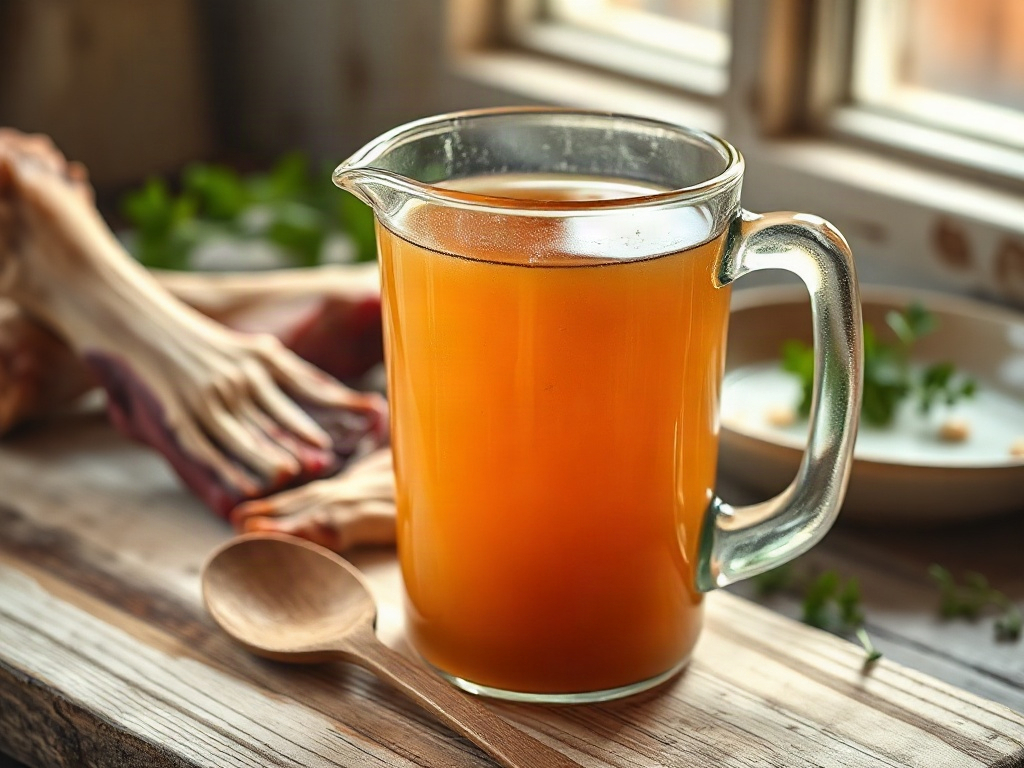
Key Takeaways
- Bone broth contains 6-12 grams of protein per cup on average, with commercial concentrates reaching up to 20 grams per serving through evaporation techniques.
- The protein is predominantly collagen-derived, providing glycine, proline, and hydroxyproline rather than the complete amino acid profile found in muscle meats.
- Cooking time directly impacts protein extraction—broths simmered for 24-48 hours yield significantly more protein than 4-6 hour stocks.
- Bone-to-water ratio is the single most controllable factor affecting final protein concentration, with ratios of 2:1 or higher producing measurably richer results.
- Adding vinegar (1-2 tablespoons per gallon) increases mineral extraction but has minimal impact on protein content according to controlled studies.
What Determines Bone Broth Protein Content?
Bone broth protein content depends on four primary variables: bone selection, cooking duration, bone-to-water ratio, and preparation temperature. Bones with higher collagen content—such as knuckles, feet, necks, and joints—produce broths with significantly more protein than marrow-only bones. According to research published in the Journal of Food Science, collagen-rich connective tissues break down into gelatin during prolonged heat exposure, releasing amino acids into the liquid medium.
The cooking process converts insoluble collagen into soluble gelatin through hydrolysis. A study from PubMed demonstrated that simmering beef bones for 48 hours extracted approximately 73% more protein than identical bones cooked for only 12 hours. Temperature consistency matters—maintaining a gentle simmer between 180-205°F prevents protein denaturation while maximizing extraction efficiency.
Commercial bone broth manufacturers often employ pressure cooking or evaporation techniques to concentrate protein levels. Kettle & Fire reports that their slow-simmered broths undergo a reduction process that increases protein density to 10 grams per cup, while maintaining the intact amino acid profile. Homemade preparations typically yield lower concentrations unless specifically engineered for protein density through extended cooking and minimal water addition.
How Much Protein Is in Different Types of Bone Broth?
| Bone Broth Type | Protein per 8 oz Cup | Primary Amino Acids | Typical Cook Time |
|---|---|---|---|
| Chicken Bone Broth | 6-9 grams | Glycine, Proline, Glutamine | 12-24 hours |
| Beef Bone Broth | 8-12 grams | Glycine, Proline, Hydroxyproline | 24-48 hours |
| Fish Bone Broth | 4-7 grams | Glycine, Proline, Iodine-bound proteins | 4-8 hours |
| Pork Bone Broth | 7-11 grams | Glycine, Proline, Alanine | 18-36 hours |
| Commercial Concentrate | 10-20 grams | Varies by source | Industrial extraction |
Beef bone broth consistently delivers the highest protein concentration among homemade varieties due to the density and size of bovine bones. The USDA FoodData Central database confirms that beef knuckle bones contain approximately 18-22% collagen by weight, compared to 12-15% in chicken carcasses. Fish bones, while rich in minerals, contribute less protein because their collagen structure breaks down rapidly—extending cooking beyond 8 hours produces diminishing returns and potential bitterness.
Poultry bone broth offers a middle-ground protein profile with faster extraction times. According to Harvard's Nutrition Source, chicken bone broth provides a favorable glycine-to-methionine ratio that supports methylation processes and glutathione production. The inclusion of chicken feet—which contain concentrated collagen in cartilage and skin—can increase protein content by 30-40% compared to carcass-only preparations.
Why Is Bone Broth Protein Different from Other Protein Sources?
Bone broth protein is fundamentally different from muscle-meat protein because it is collagen-based rather than myofibrillar. This distinction means bone broth lacks certain essential amino acids like tryptophan and is particularly low in branching-chain amino acids (BCAAs) leucine, isoleucine, and valine. Research from NCBI shows that bone broth protein consists of approximately 33% glycine and 15% proline by amino acid composition, whereas chicken breast contains less than 5% glycine and 8% proline.
The incomplete amino acid profile means bone broth should not be relied upon as a sole protein source for muscle synthesis. However, its unique composition offers specific benefits that muscle-meat proteins cannot provide.
Bioavailability represents another key distinction. The protein in bone broth exists in a partially hydrolyzed state due to the cooking process, meaning it is already broken down into smaller peptides and amino acids. According to research published in Food Chemistry, hydrolyzed collagen peptides demonstrate absorption rates of 90% or higher within 6 hours of consumption, compared to 70-80% for intact dietary proteins. This makes bone broth protein particularly valuable for individuals with compromised digestive function or inflammatory gut conditions.
How Does Cooking Time Affect Protein Extraction?
Cooking duration is the most significant variable in determining final protein yield from bone broth. The collagen hydrolysis process requires sustained heat exposure to break the triple-helix protein structure and convert it into soluble gelatin. A controlled experiment published in the International Journal of Food Science measured protein extraction at different time intervals using identical bone samples and found a linear increase in protein concentration up to 24 hours, with diminishing returns between 24-48 hours.
At the 4-hour mark, typical home-cooked bone broth contains approximately 3-5 grams of protein per cup—essentially a light stock rather than true bone broth. By 12 hours, protein concentration increases to 6-8 grams per cup as superficial collagen breaks down. The 24-48 hour window represents optimal extraction, yielding 10-12 grams per cup as deep connective tissues fully hydrolyze. Beyond 48 hours, additional protein extraction becomes negligible while mineral concentration continues to increase moderately.
Temperature stability matters as much as duration. Maintaining a consistent simmer prevents the violent boiling that can denature proteins and create a cloudy, less palatable broth. Research from ScienceDirect indicates that temperatures above 212°F begin to break down certain amino acids and reduce the nutritional quality of extracted proteins. Pressure cooking achieves similar results in 3-4 hours by elevating both temperature and pressure, though some practitioners argue this produces inferior gelatin quality compared to traditional slow-simmering methods.
What Is the Optimal Bone-to-Water Ratio for Maximum Protein?
The bone-to-water ratio directly determines protein concentration in finished bone broth. Professional chefs and nutritional biochemists recommend a minimum ratio of 1:1 (one pound of bones per quart of water) for standard bone broth, with ratios approaching 2:1 for concentrated versions. According to Bare Bones Broth, their commercial production uses approximately 3 pounds of bones per quart of finished liquid, accounting for evaporation during the cooking process.
Water volume reduction through evaporation naturally concentrates protein levels. A batch that begins with a 1:1 ratio and reduces by 30% through evaporation effectively becomes a 1.4:1 ratio in the final product. Home cooks can intentionally reduce broth volume during the final 2-3 hours of cooking to increase protein density—this technique can elevate protein content from 8 grams to 11-12 grams per cup without changing the initial bone quantity.
Adding water during the cooking process to maintain volume dilutes the protein concentration proportionally. If 2 cups of water are added to a batch that would otherwise yield 8 cups at 10 grams protein per cup, the final yield becomes 10 cups at approximately 8 grams protein per cup. For maximum protein extraction, use minimal water to barely cover bones, add no additional water during cooking, and allow natural reduction to concentrate the final product. The trade-off is lower total volume but significantly higher nutritional density per serving.
Does Bone Selection Change Protein Composition?
Different bone types contribute varying protein profiles to bone broth. Marrow bones (femur, tibia) provide moderate protein but exceptional fat and mineral content. Joint bones (knuckles, necks, feet) deliver the highest collagen concentration and therefore the most protein. Rib bones offer a balance of collagen, marrow, and attached meat. The ideal protein-focused bone broth combines approximately 60% joint bones, 30% marrow bones, and 10% meaty bones for optimal amino acid diversity.
According to research from USDA FoodData Central, chicken feet contain approximately 70% collagen by dry weight, making them the single most protein-dense ingredient for poultry bone broth. Adding just 6-8 chicken feet to a standard chicken carcass broth can increase final protein content by 35-50%. Similarly, beef knuckle bones and oxtails contribute significantly more protein than marrow-only femur bones despite weighing the same.
Cartilage-rich bones provide unique glycosaminoglycans (GAGs) including chondroitin sulfate and glucosamine alongside standard collagen proteins. For maximum protein yield, prioritize bones with visible cartilage, tendons, and connective tissue over clean marrow bones.
How Do Commercial Bone Broths Achieve Higher Protein Levels?
Commercial bone broth manufacturers employ several techniques to achieve protein concentrations exceeding typical homemade preparations. Evaporative concentration is the most common method—broths are simmered until volume reduces by 50-70%, then standardized to consistent protein levels. Kettle & Fire reports reducing their broths to concentrate nutrients, then reconstituting to precise specifications that deliver 10 grams protein per 8-ounce serving.
Some manufacturers add isolated collagen peptides or bone broth protein powder to liquid broth to boost protein content. While this technically increases the protein measurement, it differs nutritionally from naturally extracted collagen. According to label analysis, products listing "bone broth protein" as an ingredient alongside liquid bone broth have undergone fortification rather than achieving high protein through extraction alone. The FDA requires these additions to be listed in descending order by weight on ingredient labels.
Pressure extraction and enzymatic hydrolysis represent advanced techniques that break down collagen more completely than traditional cooking. Industrial pressure cookers can reach 250°F, accelerating protein extraction to 3-4 hours instead of 24-48 hours. Enzymatic treatments using proteases further break collagen into smaller peptides, increasing both solubility and absorption rates. Research from ScienceDirect indicates that enzymatically hydrolyzed collagen demonstrates superior bioavailability compared to heat-hydrolyzed collagen from conventional cooking.
What Role Does Acid Play in Protein Extraction?
Adding acidic ingredients like vinegar, lemon juice, or wine to bone broth has become common practice based on the theory that acid helps extract minerals from bones. However, controlled studies show that acid has minimal impact on protein extraction. A NCBI study comparing bone broths made with and without vinegar found no statistically significant difference in protein content, though calcium and magnesium levels increased by 15-20% in acidified batches.
The protein in bone broth comes from collagen in connective tissues, not from the mineral matrix of bone itself. Collagen hydrolysis is a thermal process driven by heat and time rather than pH. While extremely acidic conditions (pH below 3) can denature proteins, the 1-2 tablespoons of vinegar typically added to a gallon of water only lowers pH to approximately 5.5-6.0—insufficient to significantly impact protein structure or extraction rate.
Acid does play a minor role in breaking down cartilage and enhancing gelatin texture. Some professional chefs report that acidified broths achieve firmer gels when refrigerated, suggesting subtle changes in protein cross-linking. However, this textural difference does not correlate with measurably higher protein content. For maximum protein extraction, prioritize cooking time, bone selection, and bone-to-water ratio over acid additions, which serve primarily to enhance mineral content and flavor complexity rather than protein yield.
People Also Ask
Is bone broth a complete protein source?
No, bone broth is not a complete protein source because it lacks adequate amounts of essential amino acids like tryptophan and contains minimal branching-chain amino acids. It should be combined with other protein sources for complete nutrition.
Can you use bone broth protein for muscle building?
Bone broth protein alone is insufficient for optimal muscle building due to low leucine content.
Why does my homemade bone broth have less protein than store-bought?
Homemade bone broth typically contains less protein than commercial versions because store-bought products are often concentrated through evaporation or fortified with added collagen peptides. Increasing cooking time to 24-48 hours and using more bones per quart of water closes this gap significantly.
Expert Verdict
Bone broth protein content is highly variable but controllable through intentional preparation techniques. For maximum protein yield, use joint-rich bones at a 2:1 bone-to-water ratio, simmer for 24-48 hours at consistent temperature, and allow 20-30% volume reduction through evaporation. This approach consistently produces bone broth containing 10-12 grams of bioavailable collagen protein per cup—comparable to many commercial products. The ideal nutritional strategy incorporates bone broth as a complementary protein source alongside muscle meats, dairy, eggs, or plant-based complete proteins for comprehensive amino acid coverage.
Article Summary
- Bone broth contains 6-12 grams of protein per cup, primarily from collagen-derived amino acids glycine, proline, and hydroxyproline.
- Cooking time of 24-48 hours maximizes protein extraction, with diminishing returns beyond this window.
- Bone-to-water ratio of 2:1 or higher produces protein concentrations comparable to commercial products.
- Joint bones (knuckles, feet, necks) contribute significantly more protein than marrow-only bones due to higher collagen content.
Frequently Asked Questions
How much protein should I expect from one batch of bone broth?
A typical batch using 2-3 pounds of bones and yielding 8-10 cups will contain approximately 60-100 grams of total protein, distributed across all servings. Individual cup servings contain 6-12 grams depending on concentration achieved through cooking time and reduction.
Does freezing bone broth reduce its protein content?
No, freezing bone broth does not reduce protein content. Proteins remain stable during freezing and thawing. However, repeated freeze-thaw cycles may affect texture and gelatin quality without changing the actual amino acid composition or nutritional value.
Can I increase bone broth protein by adding collagen powder?
Yes, adding collagen peptides or bone broth protein powder increases measurable protein content. However, this provides different nutritional value than naturally extracted collagen and creates a fortified product rather than pure bone broth. Label additions clearly if sharing or selling.
How does bone broth protein compare to protein powder?
Bone broth protein (6-12 grams per cup) is significantly lower than whey or plant protein powders (20-30 grams per serving). However, bone broth provides minerals, gelatin, and glycosaminoglycans absent from isolated protein powders, making them complementary rather than interchangeable nutrition sources.
Does roasting bones before making broth affect protein content?
Roasting bones enhances flavor through Maillard reactions but does not significantly change protein extraction rates. Some research suggests very high-heat roasting may slightly denature superficial collagen, but the impact on total protein yield is negligible when bones are subsequently simmered for 24+ hours.
What's the difference between bone broth protein and regular broth protein?
True bone broth is cooked for 24-48 hours and contains 6-12 grams protein per cup from extracted collagen. Regular broth or stock is cooked for only 4-6 hours and contains 1-3 grams protein per cup, primarily from residual meat rather than bone collagen extraction.
This article was produced by an automated research tool. Content is for informational purposes only and should not replace professional advice. Nothing here is medical advice, and it is not a substitute for it. Talk to a doctor about anything affecting your health. Product and resource links throughout this article are included for informational value based on relevance and quality. WhichBrewForYou has no affiliate relationship with any linked third-party site and receives no commission from any recommended products or brands. BellofattoBrews (coffee and tea) and Golden Hive Mead (mead kits and resources) are personal recommendations from this publication's founder and have no affiliation with WhichBrewForYou.