Key Takeaways
- Rum production uses either fresh sugarcane juice (rhum agricole) or molasses (the majority of commercial rums), determining flavor profile from the start.
- Fermentation duration dramatically affects rum character—short fermentations (24-48 hours) produce lighter rums, while extended fermentations (up to 3 weeks) create funkier, ester-rich spirits.
- Pot stills produce heavier, more flavorful rums with greater congener content, while column stills create lighter, cleaner spirits suitable for mixing.
- Barrel aging is mandatory for dark and aged rums but not for white rum, which is either unaged or filtered to remove color after brief barrel contact.
- Caribbean climate accelerates barrel aging—three years in Barbados equals approximately six to eight years in Scotland due to higher temperatures and evaporation rates.
What Raw Materials Are Used to Make Rum?
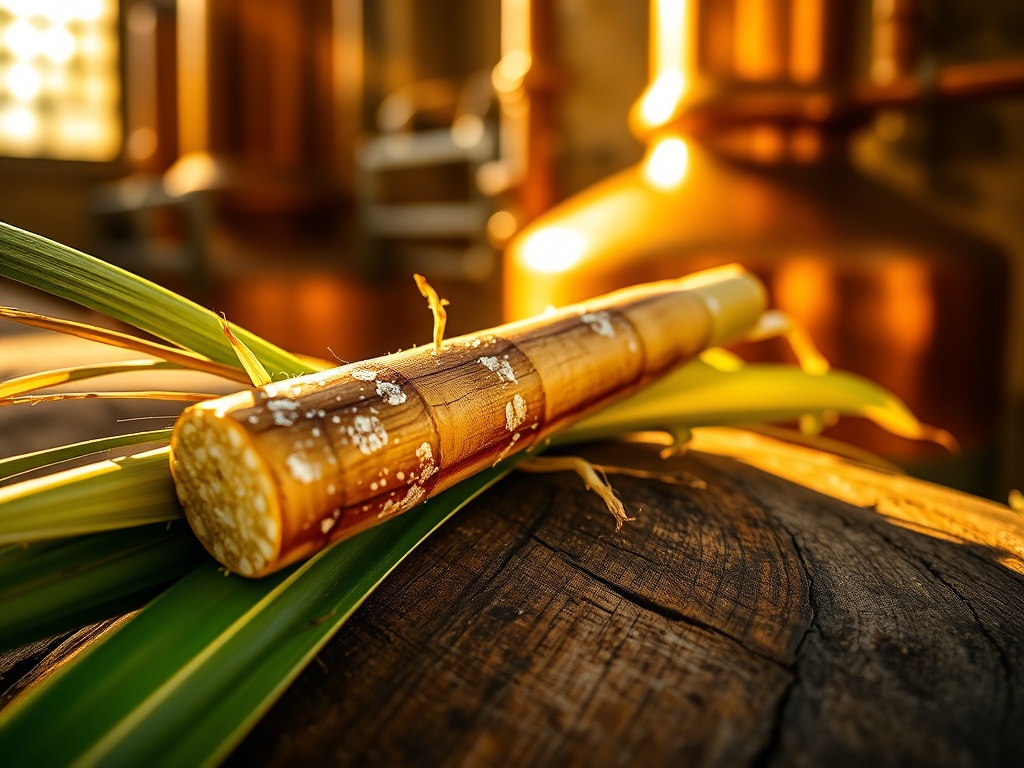
Rum production relies exclusively on sugarcane-derived materials as its fermentable base. According to the Distilled Spirits Council, rum must be produced from sugarcane products to carry that legal designation. The two primary raw materials are fresh sugarcane juice and molasses, each creating distinctly different rum styles.
Fresh sugarcane juice produces rhum agricole, the traditional French Caribbean style made predominantly in Martinique, Guadeloupe, and Haiti. Producers harvest mature sugarcane stalks, crush them in roller mills within hours of cutting, and ferment the extracted juice immediately to preserve volatile aromatic compounds. This method captures the grassy, vegetal, and floral notes inherent to fresh cane. Martinique's rhum agricole carries Appellation d'Origine Contrôlée (AOC) protection, requiring specific cane varieties, harvest timing, and production methods.
Molasses, the thick syrup remaining after sugar crystals are extracted from cane juice, serves as the raw material for approximately 90% of global rum production. After sugarcane processing facilities extract raw sugar, they sell molasses to distilleries at significantly lower cost than fresh juice. Molasses contains 50-60% fermentable sugars and contributes deeper, caramelized, and less vegetal flavors than fresh juice. Major rum-producing nations including Jamaica, Barbados, Cuba, Puerto Rico, and the Dominican Republic build their industries on molasses-based production.
Some producers blend both materials or use intermediary products like cane syrup, which retains more aromatics than molasses but stores more easily than fresh juice. Hawaiian and some South American distilleries employ this hybrid approach to balance flavor complexity with practical logistics.
Related: Best Gins for Beginners — Easy-Drinking Choices | WhichBrewForYou
How Does Fermentation Transform Sugarcane Into Alcohol?
Fermentation converts the sugars in cane juice or molasses into ethanol and carbon dioxide through yeast metabolism. Distilleries dilute their sugar source with water to achieve optimal fermentation conditions, typically targeting 5-8% sugar content in the wash. According to research published in the Journal of Food Science, yeast strain selection and fermentation duration determine the final rum's aromatic profile more than any other production variable.
Light rum producers use short fermentations lasting 24-48 hours with cultured Saccharomyces cerevisiae strains at controlled temperatures (28-32°C). This rapid process minimizes congener development—the flavorful but sometimes harsh compounds created as fermentation byproducts. The result is a clean, neutral spirit ideal for mixing in cocktails like mojitos and daiquiris. Puerto Rican and Cuban distilleries pioneered this light rum style in the mid-20th century.
Funky Jamaican rums undergo dramatically different fermentation. Distilleries like Hampden Estate and Worthy Park employ multi-week fermentations (7-21 days) using wild yeast strains, bacteria cultures, and dunder (the acidic liquid left in the still after distillation). These extended fermentations at ambient tropical temperatures generate extraordinarily high ester concentrations—up to 1,600 grams per hectoliter of pure alcohol according to Master of Malt's Hampden Estate analysis. The resulting wash smells pungently of overripe fruit, banana, and acetone before distillation.
Barbadian distilleries occupy the middle ground, fermenting for 36-72 hours with house yeast strains that balance cleanliness with character. This approach creates rums suitable for both mixing and aged expression where barrel influence becomes the dominant flavor driver.
| Fermentation Duration | Typical Ester Level | Rum Style | Flavor Profile |
|---|---|---|---|
| 24-48 hours | 50-150 g/hlpa | Light/White Rum | Clean, neutral, subtle sweetness |
| 3-5 days | 200-400 g/hlpa | Medium/Gold Rum | Balanced fruit, caramel, vanilla |
| 7-21+ days | 500-1600 g/hlpa | High-Ester Jamaican | Intense tropical fruit, funk, complexity |
What Distillation Methods Shape Rum Character?
Distillation separates alcohol and desirable flavor compounds from water and unwanted impurities through controlled heating and vapor collection. The still design fundamentally determines whether a rum emerges light and mixable or rich and sippable.
Column stills (also called continuous or Coffey stills) produce the majority of commercial light rum through highly efficient fractional distillation. Fermented wash enters the top of a tall column containing multiple perforated plates while steam enters from the bottom. As vapors rise and condense repeatedly on each plate, alcohol concentrates while heavier compounds fall back. Column stills can operate continuously and produce spirit at 90-96% alcohol by volume, removing most congeners and creating a nearly neutral distillate. Distilleries then dilute this high-proof spirit to bottling strength or age it briefly before filtration. Bacardi pioneered large-scale column distillation in Cuba during the 1860s, establishing the template for modern light rum production.
Pot stills—copper vessels heated from below—create fuller-bodied rums through batch distillation. The distiller fills the pot with fermented wash, applies heat, and collects vapors that condense in the still's neck and cooling coil. Pot distillation typically produces spirit at 60-75% alcohol by volume, retaining far more congeners, esters, and aromatic compounds than column distillation. Most producers perform double distillation, running the first distillation's output (low wines) through a second pot still to achieve adequate purity while preserving character.
According to the spirits education platform Distiller, Jamaican distilleries often use unique double-retort pot stills that pass vapors through additional chambers containing previous distillations, intensifying ester concentration. Barbados distilleries frequently blend pot and column distillates, combining the richness of pot stills with the smoothness of column-distilled spirits.
Hybrid systems combine both technologies. A distillery might use column stills for the initial distillation to remove the heaviest impurities, then finish in pot stills to add character. This approach offers blending flexibility—producers can adjust the pot-to-column ratio to create rums ranging from light to heavy within a single facility.
Why Is Aging Critical for Premium Rum Development?
Barrel aging transforms harsh white spirit into smooth, complex sipping rum through three simultaneous processes: extraction of wood compounds, oxidation reactions, and evaporation concentration. Unlike whiskey or bourbon, which face strict aging requirements, rum carries no minimum aging mandate in most producing countries, though many impose voluntary standards.
Most aged rums mature in charred American oak barrels previously used for bourbon production. United States law requires bourbon barrels to be used only once, creating a large secondary market that Caribbean distilleries readily access. The barrels' previous bourbon content seasons the wood and adds complementary vanilla, caramel, and sweet spice notes to maturing rum.
Tropical aging conditions dramatically accelerate maturation compared to temperate climates. Research cited by Whisky Advocate demonstrates that Caribbean warehouses maintain year-round temperatures of 25-35°C with high humidity, causing rapid wood interaction and high evaporation rates (called the "angel's share"). Barbadian distilleries lose 8-12% of barrel volume annually to evaporation compared to 2-3% in Scottish whisky warehouses. This accelerated interaction means a 5-year Barbadian rum may demonstrate similar wood influence to a 12-year Scottish whisky.
Age statements on rum bottles can mislead consumers because tropical and temperate aging produce vastly different results in the same timeframe. A "12-year rum" aged in Guyana exhibits far more barrel character than a "12-year rum" aged in continental European warehouses, though both labels are technically accurate.
During aging, rum extracts lignin-derived vanillin, oak lactones that contribute coconut notes, tannins that add structure and astringency, and color compounds that transform clear spirit into deep amber liquid. Oxidation reactions round harsh alcohol edges and develop dried fruit, nut, and spice complexity. Some producers employ solera systems—fractional blending across multiple vintages—to create consistency while maintaining average age.
White rum undergoes minimal or no aging. Most producers either bottle immediately after distillation or age briefly in barrels before charcoal filtration removes all color. This process (called charcoal mellowing) slightly smooths the spirit while maintaining the clear appearance consumers expect in mixing rums.
Related: How Gin Is Made and What Gives It Flavor | WhichBrewForYou
How Do Regional Styles Differ in Rum Production?
Caribbean islands developed distinct rum styles reflecting colonial history, available resources, and local expertise. These regional differences persist today despite global consolidation in the spirits industry.
Jamaican rum prioritizes intense flavor through long fermentation, pot distillation, and extended tropical aging. Distilleries preserve wild fermentation techniques and dunder pits—vats containing stillage, fruit peels, and cane residue that harbor unique microorganism colonies. The result is powerfully aromatic rum with pronounced ester notes that performs well in tiki cocktails or as an aged sipper. Hampden Estate, Worthy Park, and Appleton Estate represent this style.
Barbadian rum balances approachability with complexity. Distilleries like Mount Gay (the world's oldest continuously operating rum distillery, founded in 1703 according to their official history) blend pot and column distillates, age in ex-bourbon barrels, and emphasize smoothness. Barbados legally prohibits adding sugar or artificial flavorings to rum, ensuring what's labeled as aged rum contains only distillate, water, and barrel influence.
Cuban and Puerto Rican light rums emphasize column distillation, short fermentation, brief aging, and charcoal filtration. These islands pioneered the cocktail-focused rum category after Prohibition, when Americans demanded mixable spirits without strong flavor. Bacardi (originally Cuban, now Puerto Rican) and Havana Club exemplify this approach.
Martinique's AOC rhum agricole requires fresh cane juice, specific harvest standards, and column distillation to 65-75% ABV. The regulations preserve traditional methods and terroir expression. Producers like Rhum J.M and Clément create grassy, floral rums that taste distinctly of their agricultural origins.
Guyanese rum from Demerara Distillers employs massive wooden pot stills and distinctive wooden column stills found nowhere else. These antique stills produce heavy, molasses-rich rums that form the backbone of many blended British navy-strength rums. El Dorado rums showcase this style.
What Happens During Blending and Bottling?
Blending represents the final creative step where master blenders combine distillates of different ages, still types, and barrel treatments to achieve consistent house character or create special expressions. Most commercial rums are blends rather than single-barrel or single-distillation bottlings.
Master blenders maintain detailed inventories of available barrels categorized by age, still type, fermentation style, and barrel treatment. They nose and taste hundreds of samples, creating trial blends until achieving the target profile. Computer modeling assists modern blenders in predicting how components will integrate, but sensory evaluation remains essential. According to industry standards maintained by the Distilled Spirits Council, age statements on blended rums must reflect the youngest component in the blend.
After blending, producers reduce the rum to bottling strength by adding filtered water. Most rums bottle at 40% ABV (80 proof) to meet international standard spirit strength, though premium expressions often bottle at 43-46% ABV to carry more flavor, and overproof rums reach 50-75.5% ABV for cocktail applications requiring higher alcohol.
Chill filtration removes congeners that cause cloudiness when rum is chilled or diluted. The process involves cooling rum to near-freezing and passing it through fine filters that trap fatty acids and proteins. While this ensures crystal-clear appearance, many craft producers skip chill filtration to preserve maximum flavor, accepting slight haze as a mark of authenticity.
Additives remain controversial in rum production. Some producers add caramel coloring for consistency, sugar or glycerol for perceived smoothness, and flavoring essences to create spiced rums. Regulations vary dramatically by country—Barbados and Jamaica prohibit additives, while many other nations allow them without disclosure requirements. Premium producers increasingly highlight "nothing added" on labels to differentiate from sweetened competition.
Spiced rum represents a separate category where producers macerate botanicals (vanilla, cinnamon, nutmeg, citrus peel, clove) in base rum or add natural flavor extracts. Captain Morgan and Sailor Jerry popularized this heavily flavored style, though craft distilleries now create more subtle spiced expressions using estate-grown botanicals.
People Also Ask About Rum Production
Can you make rum at home legally?
Home rum production is federally illegal in the United States without a distilled spirits permit regardless of quantity. Fermentation is legal, but distillation of any alcohol requires proper licensing. Some countries allow small-scale distillation for personal use.
Why is Caribbean rum better than other regions?
Caribbean rum benefits from 400+ years of specialized expertise, ideal sugarcane growing conditions, tropical aging that accelerates maturation, and traditional production methods preserved across generations. These factors create distinctive quality though excellent rums now emerge from other tropical regions.
What's the difference between dark and light rum?
Dark rum is aged in charred barrels for extended periods without filtration, developing color and flavor from wood contact. Light rum is either unaged or briefly aged then charcoal-filtered to remove color while maintaining slight smoothness. The difference is processing, not base ingredients.
Expert Verdict on Rum Production
Rum production combines agricultural precision, fermentation science, distillation artistry, and patient aging into one of the world's most diverse spirit categories. The best rums demonstrate clear terroir expression, technical excellence, and balanced complexity whether they're meant for mixing or sipping. Modern craft distilleries are rediscovering traditional methods—wild fermentation, pot distillation, extended aging—while established Caribbean producers maintain centuries-old expertise. For consumers, understanding how rum is made transforms it from a simple cocktail ingredient into a sophisticated spirit deserving the same respect as fine whiskey or cognac. Quality begins with raw materials, develops through careful fermentation and distillation, and culminates in patient aging and thoughtful blending.
Summary: How Rum Production Works From Start to Finish
- Rum production requires sugarcane-derived materials—either fresh juice (rhum agricole) or molasses (most commercial rum)—which determine fundamental flavor character before fermentation begins.
- Fermentation duration ranges from 24 hours for light rums to 21+ days for high-ester Jamaican funk, with yeast selection and wild cultures dramatically affecting final aromatic profile.
- Pot stills create rich, congener-heavy rums while column stills produce clean, light spirits, with many producers blending both distillation types for balanced complexity.
- Tropical barrel aging accelerates maturation due to high temperatures and evaporation rates, making a 5-year Caribbean rum comparable in barrel influence to much older temperate-climate spirits.
- Regional styles reflect centuries of tradition—Jamaica produces funky high-ester rums, Barbados creates balanced blends, Martinique protects agricultural terroir, and Cuba/Puerto Rico pioneered light mixing rums through column distillation and filtration.
Frequently Asked Questions
What is the main ingredient in rum?
Rum's primary ingredient is sugarcane in the form of either fresh pressed juice or molasses, the thick syrup remaining after sugar crystallization. All rum must be produced from sugarcane products to carry that legal designation across international spirits regulations.
How long does rum take to make from start to finish?
White rum can be produced in as little as one week from fermentation through distillation to bottling. Aged premium rums require 3-25+ years in barrels after distillation. Total production time depends on desired style and quality tier.
Is rum fermented or distilled?
Rum undergoes both processes sequentially. Fermentation converts sugarcane sugars into alcohol using yeast over 24 hours to 3 weeks. Distillation then separates and concentrates that alcohol from the fermented wash using heat and condensation in specialized stills.
What makes spiced rum different from regular rum?
Spiced rum contains added botanicals like vanilla, cinnamon, nutmeg, and clove either macerated directly in the spirit or added as natural flavor extracts. Base spirit is typically light rum that provides a neutral canvas for spice flavors.
Why does some rum taste sweet and others don't?
Perceived sweetness comes from added sugar (legal in many countries), glycerol for mouthfeel, or natural barrel-derived vanilla and caramel compounds. Fermentation converts all sugarcane sugars to alcohol, so any remaining sweetness is either added post-distillation or perceived from aromatic compounds.
Can rum be made from anything other than sugarcane?
No. International spirits regulations define rum specifically as a distilled spirit produced from sugarcane juice, sugarcane syrup, or sugarcane molasses. Spirits made from other sources must use different designations like cachaça (Brazilian sugarcane spirit with distinct regulations) or simply "distilled spirit."
More Spirits Articles
This article was produced by an automated research tool. Content is for informational purposes only and should not replace professional advice. Nothing here is medical advice, and it is not a substitute for it. Talk to a doctor about anything affecting your health. Product and resource links throughout this article are included for informational value based on relevance and quality. WhichBrewForYou has no affiliate relationship with any linked third-party site and receives no commission from any recommended products or brands. BellofattoBrews (coffee and tea) and Golden Hive Mead (mead kits and resources) are personal recommendations from this publication's founder and have no affiliation with WhichBrewForYou.