Key Takeaways
- Whiskey production begins with grains like barley, corn, rye, or wheat that provide fermentable sugars and distinctive flavors
- Fermentation converts sugars into alcohol, producing a beer-like liquid called "wash" with 5-10% alcohol by volume
- Distillation concentrates alcohol and flavor compounds, typically raising alcohol content to 60-70% ABV before aging
- Barrel aging is legally required for most whiskey types and transforms clear distillate into amber-colored spirits with complex flavors
- The entire process from grain to bottled whiskey takes a minimum of two years for young whiskeys and often decades for premium expressions
What Grains Are Used to Make Whiskey?
Whiskey begins with grain, and the specific grains used define the fundamental character of the finished spirit. The four primary grains in whiskey production are malted barley, corn, rye, and wheat, each contributing unique flavor profiles and fermentation properties.
Malted barley is the foundation of Scotch whisky and Irish whiskey, offering enzymes necessary for converting starches to sugars plus malty, biscuit-like flavors. According to the Distilled Spirits Council, bourbon must contain at least 51% corn, which provides sweetness and body. Rye delivers spicy, peppery notes and is the defining grain in rye whiskey (minimum 51% rye). Wheat creates softer, gentler whiskeys with subtle vanilla and honey characteristics.
Grain quality directly impacts whiskey quality. Distillers source grains based on protein content, starch levels, and regional growing conditions. A 2024 study in the Journal of Agricultural and Food Chemistry found that barley varieties with higher enzyme activity produce more fermentable sugars, increasing alcohol yield and flavor development during distillation.
The grain bill—the recipe of grains used—remains one of whiskey's most closely guarded secrets. Most whiskeys blend multiple grains: bourbon typically combines corn (51-80%), malted barley (10-15%), and rye or wheat (5-35%). Single malt Scotch uses 100% malted barley, while blended Scotch incorporates grain whisky made from corn or wheat alongside malt whisky.
How Does the Mashing Process Work?
Mashing is the process of combining ground grains with hot water to extract fermentable sugars, creating a sweet liquid called wort. This biochemical conversion is essential because yeast cannot ferment grain starches directly—they must first be broken down into simple sugars.
The mashing process begins with milling, where grains are ground into coarse flour called grist. The grist is then mixed with hot water (typically 60-75°C) in a large vessel called a mash tun. According to Whisky Advocate's production guide, temperature control during mashing is critical—too hot destroys enzymes, too cool slows conversion.
During mashing, naturally occurring enzymes in malted barley (primarily alpha-amylase and beta-amylase) break down complex starch molecules into fermentable sugars like maltose and glucose. This enzymatic activity occurs over 1-2 hours with occasional stirring or recirculation to ensure even heat distribution and maximum sugar extraction.
Bourbon and American whiskey production often uses a sour mash process, where a portion of spent mash from a previous batch is added to the new mash. This technique, developed in the 1800s, controls bacterial contamination, maintains pH consistency, and ensures flavor continuity between batches. The American Homebrewers Association notes that sour mashing also provides wild yeast strains that contribute distinctive flavor characteristics.
After mashing, the liquid wort is separated from the solid grain residue (draff or spent grain). The wort contains 12-18% dissolved sugars and proceeds to fermentation, while the spent grain is typically sold as livestock feed.
What Happens During Whiskey Fermentation?
Fermentation transforms sweet wort into alcoholic wash through yeast metabolism, creating not only ethanol but also hundreds of flavor compounds that survive distillation. This biological process typically lasts 48-96 hours and produces a beer-like liquid with 5-10% alcohol by volume.
Distillers add cultured yeast strains to cooled wort (18-25°C) in large fermentation vessels called washbacks, traditionally made from wood or stainless steel. The yeast consumes sugars and produces ethanol, carbon dioxide, heat, and congeners—flavor-active compounds including esters, aldehydes, and higher alcohols. Different yeast strains produce different congener profiles, making yeast selection a crucial decision in defining whiskey character.
According to research published in NCBI's fermentation studies, longer fermentation times (72-96 hours) generally produce more complex flavors because slower yeast metabolism creates a broader range of esters and acids. Scotch whisky distillers often ferment for 60-100 hours, while bourbon fermentation typically runs 3-5 days.
Temperature management during fermentation is critical. As yeast metabolizes sugars, it generates heat that can kill the yeast if temperatures exceed 35°C. Modern distilleries use temperature-controlled washbacks or external cooling systems to maintain optimal fermentation conditions.
The finished wash tastes and smells like unhopped beer—malty, slightly sweet, with alcohol warmth. At this stage, the liquid contains the alcohol and flavor precursors that will be concentrated and refined through distillation.
How Does Distillation Concentrate Alcohol and Flavor?
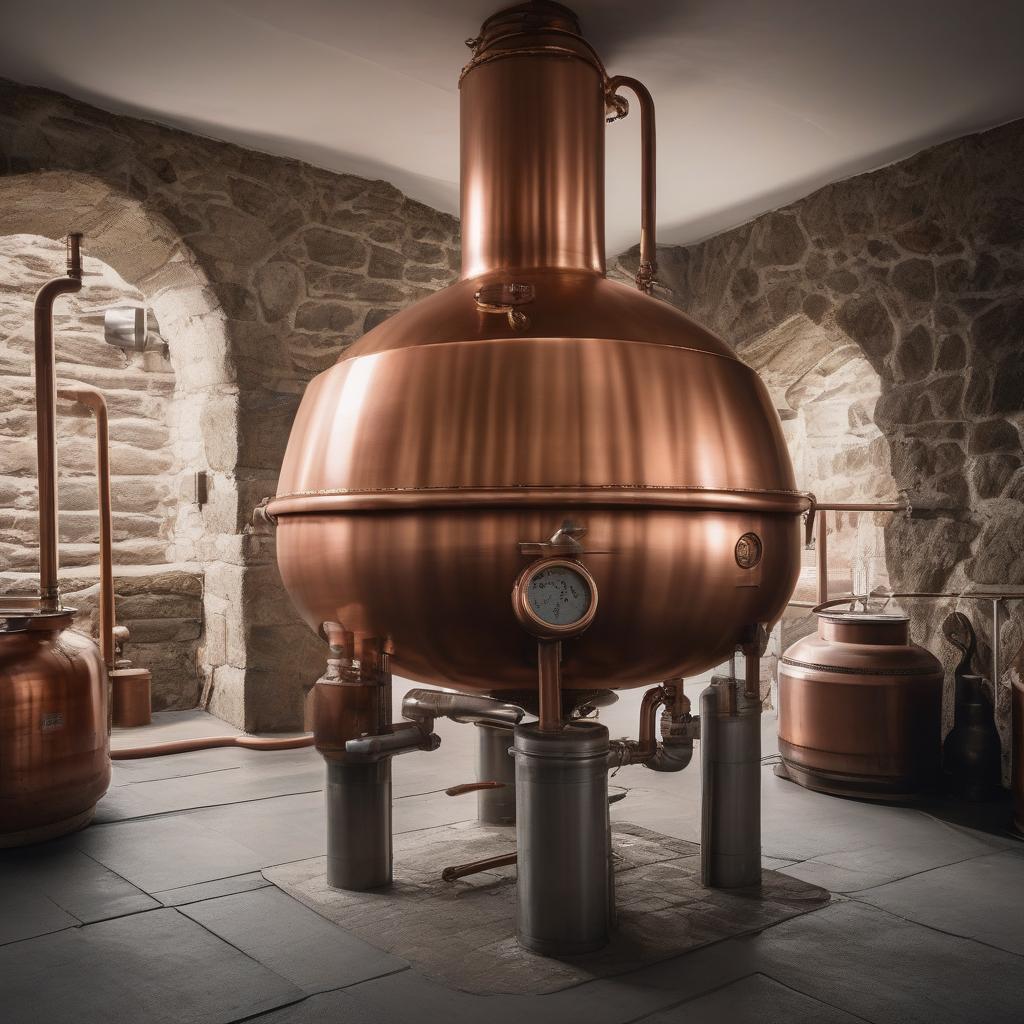
Distillation purifies and concentrates the fermented wash by exploiting the different boiling points of water (100°C) and ethanol (78.4°C), while also separating desirable flavor compounds from unwanted impurities. Whiskey distillation typically occurs in copper pot stills or column stills, with most whiskeys distilled two or three times to achieve the desired purity and strength.
In pot still distillation, the wash is heated in a large copper vessel until alcohol vapors rise through the swan neck and into a condensing coil where they cool back into liquid. The first distillation (wash distillation) produces "low wines" at roughly 20-25% ABV. The second distillation (spirit distillation) increases alcohol concentration to 60-70% ABV while allowing the distiller to separate the distillate into three fractions: heads, hearts, and tails.
The heads contain volatile compounds like methanol and acetone that boil off first—these are discarded or redistilled. The hearts are the prized middle cut containing ethanol and desirable flavor congeners—this becomes whiskey. The tails contain heavier compounds and fusel oils that emerge last—these are typically recycled into the next distillation. According to Master of Malt's distillation guide, the skill of making precise cuts between fractions separates exceptional whiskey from mediocre spirits.
Column stills (continuous stills) work differently, using vertical columns with perforated plates where rising vapor repeatedly contacts descending liquid, achieving very high alcohol purity (95%+ ABV) in a single continuous operation. Column distillation is more efficient but produces lighter-flavored spirits because it strips out more congeners. Bourbon typically uses column stills for initial distillation followed by pot still refinement, while grain whisky for blending relies entirely on column distillation.
Copper plays a vital catalytic role in distillation. Copper removes sulfur compounds that would create unpleasant aromas and catalyzes chemical reactions that improve flavor. The amount of copper contact—determined by still shape, size, and distillation speed—significantly influences the final whiskey character.
Why Is Barrel Aging Essential to Whiskey Production?
Barrel aging transforms harsh, clear new-make spirit into smooth, complex whiskey by extracting compounds from wood, promoting oxidation reactions, and allowing unwanted volatile compounds to evaporate. Legally, most whiskey must be aged in wooden barrels for a minimum period—three years for Scotch whisky, two years for straight bourbon—though many premium whiskeys age considerably longer.
New-make whiskey enters barrels at 60-65% ABV as a clear, fiery liquid. Over months and years, the spirit extracts vanillin, lignin, tannins, and wood sugars from the barrel's interior, developing amber color and flavors of vanilla, caramel, spice, and oak. The Distilled Spirits Council's aging research shows that barrel char level, warehouse temperature, and humidity all dramatically impact flavor development.
American bourbon regulations require aging in new, charred oak barrels. The charring process caramelizes wood sugars and creates a carbon layer that filters impurities while allowing deeper spirit penetration into the wood. Scotch whisky typically ages in used bourbon barrels or sherry casks, which impart more subtle flavors because much of the wood's extractable compounds were removed during previous use.
Temperature fluctuations drive the aging process. As warehouses warm, whiskey expands into the wood, extracting flavor compounds; as temperatures cool, whiskey contracts back into the barrel, bringing extracted compounds with it. According to a 2023 study in Food Chemistry, bourbon aged in Kentucky's hot summers develops faster and differently than Scotch aged in Scotland's cool, stable climate.
The "angel's share"—whiskey lost to evaporation through barrel wood—amounts to 2-4% per year in Scotland and up to 10% annually in hot, dry climates. This evaporation concentrates flavors but also reduces yield, making extended aging financially risky. Some Scottish distilleries now age whisky for 50+ years, though most expressions are released at 10-25 years.
What Happens During Bottling and Finishing?
After aging, whiskey undergoes final processing before bottling, including potential blending, dilution, filtration, and finishing in secondary casks. These final steps fine-tune flavor, appearance, and shelf stability while maintaining legal compliance and brand consistency.
Blending is standard practice for most whiskey brands. Master blenders combine whiskeys of different ages, barrel types, or distillation runs to achieve consistent flavor profiles batch after batch. Single malt Scotch often blends whisky from dozens of casks from the same distillery, while blended Scotch combines single malts with grain whisky. Blended whisky accounts for over 90% of Scotch production, though single malts receive more enthusiast attention.
Most whiskey is diluted from cask strength (50-65% ABV) to bottling strength (40-46% ABV) using purified water. This dilution is carefully controlled because adding water changes flavor balance—some flavor compounds become more volatile while others become more prominent. Cask strength bottlings skip dilution, offering unfiltered intensity that enthusiasts prize despite higher prices.
Chill filtration removes fatty acids, esters, and proteins that cause whiskey to turn cloudy when cold or diluted. The spirit is chilled to near-freezing and passed through fine filters, emerging crystal-clear. However, Master of Malt notes that chill filtration also removes flavor compounds, leading many craft distillers to release non-chill-filtered whiskeys that may cloud but retain fuller flavor.
Finishing (also called double maturation or wood finishing) involves transferring aged whiskey into different barrels for several months to a few years. Common finishing casks include port, sherry, rum, wine, and beer barrels. This technique adds layers of flavor complexity—port casks contribute berry notes, sherry casks add dried fruit and nuttiness, rum casks bring tropical sweetness.
How Do Different Whiskey Types Vary in Production?
Regional regulations, tradition, and ingredient choices create distinct whiskey categories with specific production requirements and flavor profiles. Understanding these differences helps beginners navigate whiskey selection and appreciate the diversity within the category.
| Whiskey Type | Primary Grain(s) | Distillation Method | Barrel Type | Minimum Aging |
|---|---|---|---|---|
| Scotch Single Malt | 100% malted barley | Pot still, 2x distillation | Used oak (bourbon/sherry) | 3 years |
| Bourbon | Min. 51% corn | Column + pot still | New charred oak | 2 years (for "straight") |
| Irish Whiskey | Malted/unmalted barley | Pot still, 3x distillation | Used oak | 3 years |
| Rye Whiskey | Min. 51% rye | Column + pot still | New charred oak | 2 years (for "straight") |
| Japanese Whisky | Malted barley (typical) | Pot still, 2x distillation | Various oak types | 3 years (voluntary standard) |
Scotch whisky must be produced in Scotland, aged in oak casks for at least three years, and bottled at minimum 40% ABV. Single malt Scotch uses only malted barley from one distillery, while blended Scotch combines malt and grain whisky from multiple sources. Regional styles vary: Islay Scotch is known for peat smoke and maritime character, Speyside for fruit and elegance, Highland for diverse profiles ranging from light to rich.
Bourbon must be made in the United States (though 95% comes from Kentucky), contain at least 51% corn, be distilled to no more than 80% ABV, enter barrels at no more than 62.5% ABV, and age in new charred oak containers. The combination of high corn content, new oak, and warm Kentucky aging creates bourbon's signature sweetness, vanilla, and caramel notes.
Irish whiskey is typically triple-distilled, producing a smoother, lighter spirit than double-distilled Scotch. Traditional pot still Irish whiskey uses a mixture of malted and unmalted barley distilled in pot stills, creating a distinctive spicy, creamy character. According to the Irish Whiskey Association, Irish whiskey sales have grown 300% over the past decade, driven by craft distillery expansion.
Rye whiskey, whether American or Canadian, features rye grain's spicy, dry character. American rye must contain at least 51% rye and follow bourbon's aging requirements. Canadian whisky (often called "rye" even when containing little actual rye) tends to be lighter and smoother, often blended from multiple grains and aged in used barrels.
What Equipment Do Distilleries Use to Make Whiskey?
Professional whiskey production requires specialized equipment designed for precise temperature control, sanitation, and safety during alcohol production. While homebrewing beer is legal in most jurisdictions, distilling alcohol at home is illegal in the United States and many other countries without proper licensing due to fire hazards and tax regulations.
Essential distillery equipment includes:
- Mash tuns: Large vessels (500-10,000+ gallons) with heating systems and agitators for converting grain starches to sugars
- Washbacks: Fermentation tanks made from stainless steel, wood (pine, larch, or cypress), or hybrid materials, sized to match mash tun capacity
- Pot stills: Copper vessels shaped like onions or lanterns with swan-neck tops leading to condensers, ranging from 1,000 to 30,000+ liter capacity
- Column stills: Tall vertical distillation columns (20-60 feet high) with internal plates or packing for continuous distillation
- Spirit safes: Locked glass chambers where distillers observe and test distillate without touching it (historically to prevent tax evasion)
- Condensers: Shell-and-tube or worm tub systems that cool alcohol vapor back into liquid
- Barrels: Typically 200-liter (53-gallon) American oak casks, either new (for bourbon) or used (for Scotch and most other whiskeys)
The American Homebrewers Association emphasizes that while beer and wine production are legal hobbies in the U.S., distillation requires federal and state licensing regardless of scale. Penalties for illegal distillation include fines up to $10,000 and criminal prosecution.
Craft distilleries can begin operations with equipment investments of $500,000-$2 million, depending on production capacity and automation level. Large heritage distilleries like those in Scotland or Kentucky represent capital investments exceeding $50 million, with some facilities producing 10+ million liters annually.
People Also Ask
Can you make whiskey without aging it?
Legally, whiskey must be aged in wooden barrels in most jurisdictions, though minimum aging periods vary by country and type. Unaged distilled grain spirits exist but cannot be labeled whiskey. Some craft distilleries accelerate aging using smaller barrels, ultrasonic waves, or wood chips, producing younger whiskeys with barrel character in months rather than years, though purists debate whether these methods replicate traditional aging.
Why is copper used in whiskey stills?
Copper removes sulfur compounds during distillation that would otherwise create unpleasant rotten-egg or burnt-rubber aromas in the finished whiskey. Copper also catalyzes chemical reactions that improve flavor development and removes certain heavy metals. The amount of copper contact directly influences whiskey character—more contact produces lighter, cleaner spirits while less contact retains more congeners and heavier flavors.
What is the difference between whiskey and whisky spelling?
American and Irish producers typically spell it "whiskey" while Scottish, Canadian, and Japanese producers use "whisky" without the 'e'. This spelling convention reflects historical production traditions rather than legal requirements. The plural forms follow the same pattern: whiskeys (American/Irish) versus whiskies (Scottish/Canadian/Japanese). Both spellings refer to distilled grain spirits aged in wooden barrels.
Expert Verdict: Understanding Whiskey Production
Whiskey production is both ancient craft and modern science, requiring precise control over biological and chemical processes while allowing for creative expression through grain selection, fermentation management, distillation techniques, and barrel aging. The five fundamental steps—mashing grains to extract sugars, fermenting sugars into alcohol, distilling to concentrate and purify, aging in wooden barrels to develop flavor and color, and careful bottling to preserve quality—remain constant across all whiskey types despite regional variations and regulatory differences.
For beginners, understanding that whiskey quality depends on decisions made throughout production helps develop appreciation for the craft. The grain bill establishes foundational flavors, fermentation creates aromatic complexity, distillation defines purity and strength, and barrel aging transforms harsh spirit into smooth, complex whiskey. Different whiskey styles represent different balances of these variables rather than fundamental process changes.
While large heritage distilleries optimize efficiency and consistency, craft distilleries experiment with heritage grain varieties, wild yeast fermentations, unusual still designs, and innovative barrel finishes. This diversity ensures whiskey remains one of the most dynamic and innovative spirits categories, offering flavors ranging from delicate and floral to rich and smoky, with age statements spanning three years to half a century.
Article Summary
- Whiskey production begins with grain selection—barley, corn, rye, or wheat—each contributing distinctive flavors that define whiskey style
- Mashing converts grain starches into fermentable sugars using hot water and natural enzymes, creating sweet wort
- Fermentation transforms wort into alcoholic wash (5-10% ABV) using yeast, producing not only alcohol but hundreds of flavor compounds
- Distillation concentrates alcohol to 60-70% ABV while separating desirable flavor compounds from impurities through controlled heating and condensation
- Barrel aging is legally required and transforms clear new-make spirit into amber whiskey through wood extraction, oxidation, and evaporation over years or decades
- Final processing includes blending, dilution to bottling strength, optional filtration, and sometimes finishing in secondary casks before bottling
- Different whiskey types follow the same basic process but vary in grain composition, distillation methods, barrel types, and aging requirements
- Professional distillation requires specialized equipment and legal licensing—home distillation is illegal in most countries despite being a common misconception
Frequently Asked Questions
How long does it take to make whiskey from start to finish?
The whiskey production process from grain to bottle takes a minimum of 2-3 years for young whiskeys and often 10-25+ years for premium expressions. Grain processing, fermentation, and distillation require approximately 1-2 weeks, but legal aging requirements mandate minimum barrel time: three years for Scotch, two years for straight bourbon, three years for Irish whiskey.
What is the difference between single malt and blended whiskey?
Single malt whiskey comes from one distillery and uses only malted barley, though it may blend whisky from multiple casks of different ages. Blended whiskey combines whiskies from multiple distilleries or mixes malt whiskey with grain whiskey. Blended whiskey accounts for over 90% of Scotch sales, offering consistency and affordability, while single malts showcase individual distillery character.
Can I legally make whiskey at home?
Distilling alcohol at home is illegal in the United States without federal and state permits, regardless of quantity or intended use, with penalties including fines up to $10,000 and potential criminal charges. Most countries similarly prohibit home distillation due to fire hazards, explosion risks, and tax enforcement. Home beer and wine production is legal in most jurisdictions, but distillation is not.
Why does whiskey need to age in barrels?
Barrel aging is legally required for most whiskey types and chemically essential for developing color, flavor, and smoothness. New-make spirit is harsh and clear; barrel aging extracts vanillin, tannins, and wood sugars that create vanilla, caramel, and spice notes while oxidation reactions mellow harsh alcohol burn and develop complexity over months and years.
What makes bourbon different from other whiskeys?
Bourbon must contain at least 51% corn, be produced in the United States, age in new charred oak barrels, be distilled to no more than 80% ABV, and enter barrels at no more than 62.5% ABV. These requirements create bourbon's signature sweet, vanilla-forward profile. Scotch uses malted barley and used barrels, Irish whiskey is typically triple-distilled, and rye whiskey features spicy rye grain.
How does peat affect whiskey flavor?
Peat smoke is introduced during malting when barley is dried over burning peat (partially decomposed plant matter). The smoke contains phenolic compounds that penetrate the grain and survive distillation, creating smoky, medicinal, maritime flavors characteristic of Islay Scotch. Peat levels are measured in phenol parts per million (PPM), ranging from unpeated (0 PPM) to heavily peated (50+ PPM).
This article was produced by an automated research tool. Content is for informational purposes only and should not replace professional advice. Nothing here is medical advice, and it is not a substitute for it. Talk to a doctor about anything affecting your health. Product and resource links throughout this article are included for informational value based on relevance and quality. WhichBrewForYou has no affiliate relationship with any linked third-party site and receives no commission from any recommended products or brands. BellofattoBrews (coffee and tea) and Golden Hive Mead (mead kits and resources) are personal recommendations from this publication's founder and have no affiliation with WhichBrewForYou.