Key Takeaways
- Switchel originated in the Caribbean before becoming a colonial American staple by the mid-1600s
- Farmers drank switchel during haying season because it replenished electrolytes lost through sweat without causing stomach cramps
- The drink's popularity declined in the early 1900s with commercial soda but has resurged as a craft beverage in specialty markets
What Historical Role Did Switchel Play in Colonial Agriculture?
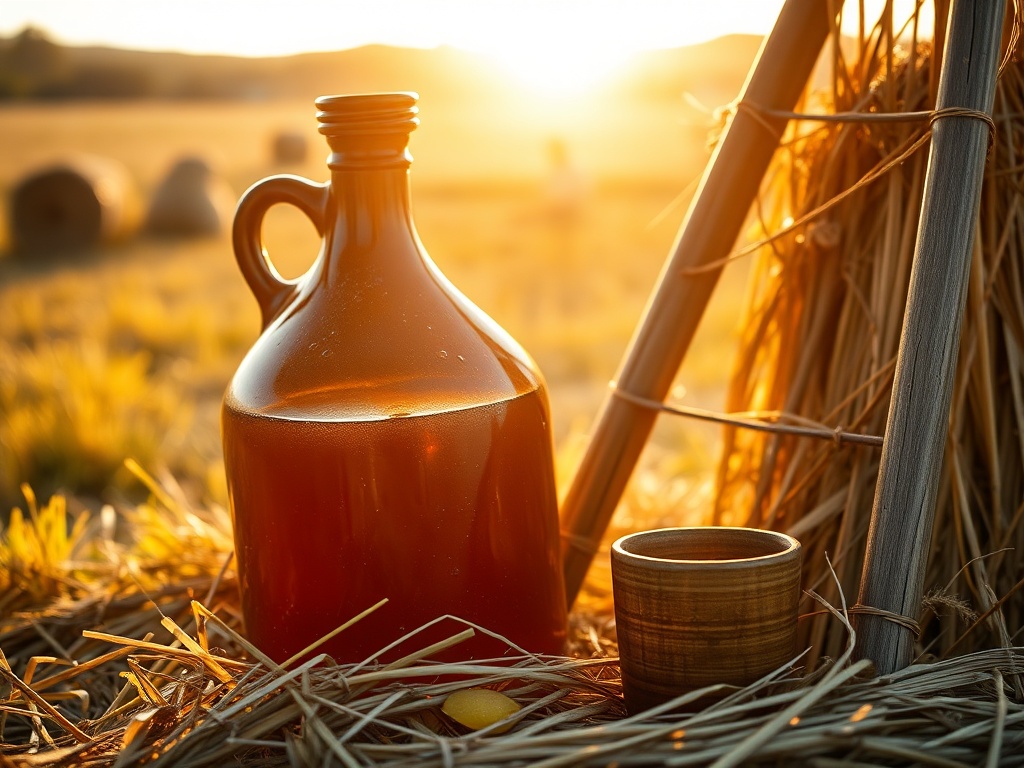
Switchel emerged as an agricultural necessity in 17th-century American farming communities. According to the Vermont Village historical archives, farmers recognized that plain water caused cramping during intense physical labor, while switchel's mineral-rich composition prevented this problem. The beverage became synonymous with haymaking—the labor-intensive process of cutting, drying, and storing hay for winter livestock feed. A single acre of hay required 8-12 hours of continuous scything, raking, and baling under direct summer sun. Farmworkers consumed 2-4 quarts of switchel daily during peak harvest weeks in July and August. The typical colonial switchel recipe contained four core ingredients that each served a physiological purpose:| Ingredient | Typical Amount (per gallon) | Historical Function |
|---|---|---|
| Apple Cider Vinegar | 1/2 to 1 cup | Electrolyte delivery, thirst quenching, antimicrobial protection |
| Fresh Ginger Root | 2-4 tablespoons grated | Anti-nausea, circulation enhancement, heat tolerance |
| Molasses or Maple Syrup | 1/2 to 3/4 cup | Quick glucose energy, mineral replacement (iron, calcium, potassium) |
| Cold Water | Base (1 gallon) | Primary hydration, ingredient dilution |
Why Did Revolutionary War Soldiers Depend on Switchel?
The Mount Vernon historical collection documents that Continental Army officers recommended switchel as a military ration beverage during the Revolutionary War. Contaminated water killed more soldiers than combat in 18th-century warfare, making safe hydration a strategic priority. General George Washington's personal recipe notes from 1776 specify a stronger ginger concentration than civilian versions—approximately 1/4 cup of grated ginger per gallon. Military physicians believed ginger's warming properties counteracted the "cold humors" thought to cause camp fever and digestive ailments. Soldiers carried switchel in canteens during summer campaigns because the vinegar content prevented bacterial growth during multi-day marches. A typical infantry soldier consumed 3-5 pints daily when marching 15-20 miles in July and August heat. The molasses component provided strategic value beyond hydration. A 2018 study in the Journal of the International Society of Sports Nutrition found that blackstrap molasses contains 20% of the daily iron requirement per tablespoon—critical for soldiers suffering from anemia due to poor diet and parasitic infections.Related: What Does Switchel Taste Like — Tangy Apple Vinegar Drink
How Did Switchel Recipes Vary Across American Regions?
Regional ingredient availability created distinct switchel traditions throughout colonial and early American territories. New England versions relied heavily on maple syrup as the sweetener, while Mid-Atlantic and Southern recipes used molasses imported through Caribbean trade routes. Vermont and New Hampshire switchel used pure maple syrup tapped during late winter sugaring season. The Vermont Maple Sugar Makers' Association records indicate that farm families produced 3-5 gallons of maple syrup annually, with approximately one-third allocated to switchel production during summer months. Pennsylvania Dutch communities added additional spices including cinnamon and cloves to their switchel. These German-American farmers stored switchel in traditional stoneware crocks and served it slightly warmer than New England versions, believing that ice-cold beverages caused digestive shock during hot weather. Southern plantation switchel incorporated sorghum molasses when available, creating a darker, more robust flavor profile. Enslaved agricultural workers who harvested tobacco and cotton in Virginia, North Carolina, and South Carolina consumed switchel as their primary field beverage, though historical records from plantation ledgers show that enslaved people received lower-quality molasses and reduced ginger quantities compared to versions consumed by property owners.What Made Switchel Superior to Water for Physical Labor?
Modern sports science validates the physiological wisdom behind switchel's widespread adoption as a work beverage. The combination of simple sugars, organic acids, and minerals addresses three critical needs during prolonged exertion: hydration, energy replacement, and electrolyte balance. According to research published by the National Center for Biotechnology Information, acetic acid in vinegar improves glucose uptake in muscle cells. This mechanism explains why farmers reported sustained energy when drinking switchel compared to plain water or sweetened beverages without vinegar. Switchel provided specific advantages over plain water during agricultural work:- The vinegar's acetic acid stimulated saliva production and reduced perceived thirst intensity, preventing overconsumption that led to stomach cramping during physical activity
- Ginger's bioactive compounds gingerol and shogaol reduced exercise-induced nausea and improved heat tolerance by promoting peripheral circulation
- Molasses delivered rapidly absorbed glucose alongside minerals including potassium (300mg per 1/4 cup), calcium (172mg per 1/4 cup), and magnesium (48mg per 1/4 cup)—all essential electrolytes lost through sweat
- The acidic pH (approximately 3.5-4.0) slowed gastric emptying, providing sustained hydration rather than rapid water loss through urination
When and Why Did Switchel's Popularity Decline?
Switchel consumption peaked in the 1850s-1870s, then entered a rapid decline that effectively eliminated it from American beverage culture by 1920. Three concurrent developments drove this transformation. The rise of commercial ice production in the 1870s-1890s made cold water readily accessible to urban and suburban populations. According to historical records from the American Heritage magazine, ice delivery became a standard urban service by 1885, eliminating one of switchel's key advantages—providing a cool, refreshing beverage without ice. The introduction of commercial carbonated beverages directly competed with switchel's market position. Coca-Cola launched nationally in 1886, followed by dozens of competing soda brands. These heavily marketed, sweetened beverages appealed to younger generations who associated homemade drinks like switchel with outdated rural lifestyles. Agricultural mechanization reduced the massive field labor crews that had sustained switchel demand. The introduction of horse-drawn mowing machines in the 1880s and gasoline-powered tractors after 1910 cut hay harvest labor requirements by 60-75%. Fewer farmworkers meant dramatically reduced switchel consumption. The final decline accelerated during Prohibition (1920-1933), when home production of fermented and vinegar-based beverages fell under increased scrutiny. Although switchel contained no alcohol, its use of fermented apple cider vinegar and association with rural "moonshine culture" contributed to its abandonment by respectable middle-class households.How Has Switchel Experienced a Modern Revival?
Switchel re-emerged in specialty beverage markets starting in the early 2010s as part of the fermented foods and craft beverage renaissance. The Bragg Live Food Products company identified switchel as a natural extension of their apple cider vinegar product line, introducing commercial bottled versions in 2015. Modern switchel manufacturers position the beverage as a functional hydration drink competing with coconut water and kombucha. According to market research data, the craft switchel category grew by 340% between 2020 and 2024, driven by consumer interest in low-sugar, probiotic-rich, and historically authentic beverages. Contemporary versions often incorporate additional functional ingredients not present in historical recipes:- Cayenne pepper for metabolism enhancement
- Lemon juice for additional vitamin C and flavor complexity
- Raw honey instead of molasses for probiotic content and local sourcing
- Carbonation through forced CO2 or secondary fermentation
People Also Ask About Switchel in American History
Did switchel contain alcohol historically?
Traditional switchel contained no alcohol. However, some farmers allowed switchel to ferment for 2-3 days in warm weather, creating a mildly alcoholic version (1-3% ABV) similar to small beer. This "hard switchel" remained uncommon compared to the standard non-alcoholic version consumed as a daily work beverage.
What is the difference between switchel and shrub?
Switchel is a working beverage made from vinegar, ginger, sweetener, and water for immediate hydration. Shrubs are concentrated fruit-vinegar syrups that require dilution before drinking and emphasize fruit flavors over the ginger-forward profile of switchel. Shrubs originated as preservation methods; switchel was designed as a functional thirst quencher.
Why was switchel called haymaker's punch?
Farmers named switchel "haymaker's punch" because it became the standard beverage during haymaking season—the most physically demanding agricultural period requiring 12-16 hour workdays in July and August heat. The term appears in New England farm journals and agricultural publications from the 1780s through 1880s as the drink's most common colloquial name.
Expert Verdict: Switchel's Lasting Impact on American Beverage Culture
Switchel represents America's first functional hydration beverage, demonstrating that pre-industrial agricultural communities understood practical sports nutrition principles validated by modern science. The drink's decline reflected broader shifts from agricultural to industrial economies, while its contemporary revival reveals ongoing consumer interest in historically grounded, minimally processed alternatives to synthetic sports drinks. Anyone interested in the intersection of food history, fermentation culture, and functional nutrition should understand switchel's role as the original American sports drink—a testament to the physiological wisdom embedded in traditional foodways.
Summary
- Switchel served as colonial America's primary hydration and electrolyte drink from the 1600s through the early 1900s, particularly during demanding agricultural labor like haymaking
- The beverage combined apple cider vinegar, ginger, molasses or maple syrup, and water to provide minerals, energy, antimicrobial protection, and enhanced hydration compared to plain water
- Revolutionary War soldiers carried switchel because its vinegar content prevented waterborne illnesses that killed more troops than combat
- Regional variations developed based on local sweetener availability, with New England favoring maple syrup and Southern states using molasses
- Switchel declined after 1900 due to commercial ice availability, carbonated soft drinks, agricultural mechanization, and changing cultural preferences
- The beverage experienced a revival starting in the 2010s as consumers sought functional, historically authentic alternatives to synthetic sports drinks
Frequently Asked Questions
What is switchel made from?
Switchel is made from four basic ingredients: apple cider vinegar, fresh ginger root, molasses or maple syrup, and water. Historical recipes used approximately 1/2 cup vinegar, 2-4 tablespoons grated ginger, and 1/2 cup sweetener per gallon of water. Some regional variations added spices like cinnamon or cloves for additional flavor complexity.
Why did farmers prefer switchel over plain water?
Farmers discovered that plain water caused stomach cramping during intense physical labor, while switchel's mineral content and acidity prevented this problem. The vinegar improved hydration efficiency, ginger reduced nausea, and molasses provided quick energy and essential minerals lost through sweat. These benefits made switchel superior for sustained agricultural work in summer heat.
Is switchel the same as drinking vinegar?
Switchel differs from drinking vinegars (shrubs) in formulation and purpose. Switchel always contains ginger and uses minimal sweetener for working hydration. Shrubs are concentrated fruit-vinegar syrups emphasizing fruit flavor over function. Switchel is consumed in larger quantities as a sports drink; shrubs are sipped in small amounts for flavor or digestion.
How long does homemade switchel last?
Refrigerated switchel lasts 7-10 days due to vinegar's antimicrobial properties. Historical versions stored in cool spring houses or cellars remained safe for 3-5 days even without refrigeration. For maximum safety and flavor, consume homemade switchel within one week and store it at temperatures below 40°F to prevent fermentation or spoilage.
Can you ferment switchel like kombucha?
Switchel can undergo fermentation if left at room temperature for 2-4 days, creating a mildly alcoholic and effervescent beverage. Traditional switchel was consumed fresh without fermentation, though accidental fermentation occasionally occurred during warm weather storage.