Key Takeaways
- Primary fermentation completes in 1-3 weeks when yeast activity is most vigorous and visible bubbling occurs
- Secondary fermentation requires 4-8 weeks for clarification, flavor development, and residual sugar conversion
- Temperature control is critical—each 10°F increase can halve or double fermentation time
- Specific gravity readings below 1.000 indicate complete fermentation, not calendar days
- Wine needs additional aging after fermentation—minimum 3-6 months for drinkable quality
- Fruit wines ferment differently than grape wines due to varying sugar and acid profiles
Understanding the fermentation timeline for homemade wine is essential for producing quality results and avoiding common mistakes like bottling too early or aging too long. Fermentation time affects every aspect of your final wine, from alcohol content and sweetness to clarity and flavor complexity. According to the MoreWine fermentation guide, the most common mistake among home winemakers is rushing the secondary fermentation phase, which leads to cloudy wine and off-flavors.
Wine fermentation is a biological process where yeast organisms consume sugar and produce alcohol, carbon dioxide, and heat as byproducts. The timeline varies based on numerous controllable and environmental factors, but the fundamental phases remain consistent across all wine styles. Professional winemakers rely on specific gravity measurements and sensory evaluation rather than arbitrary time periods, and home winemakers should adopt the same approach for consistent results.
What Happens During Primary Fermentation and How Long Does It Take?
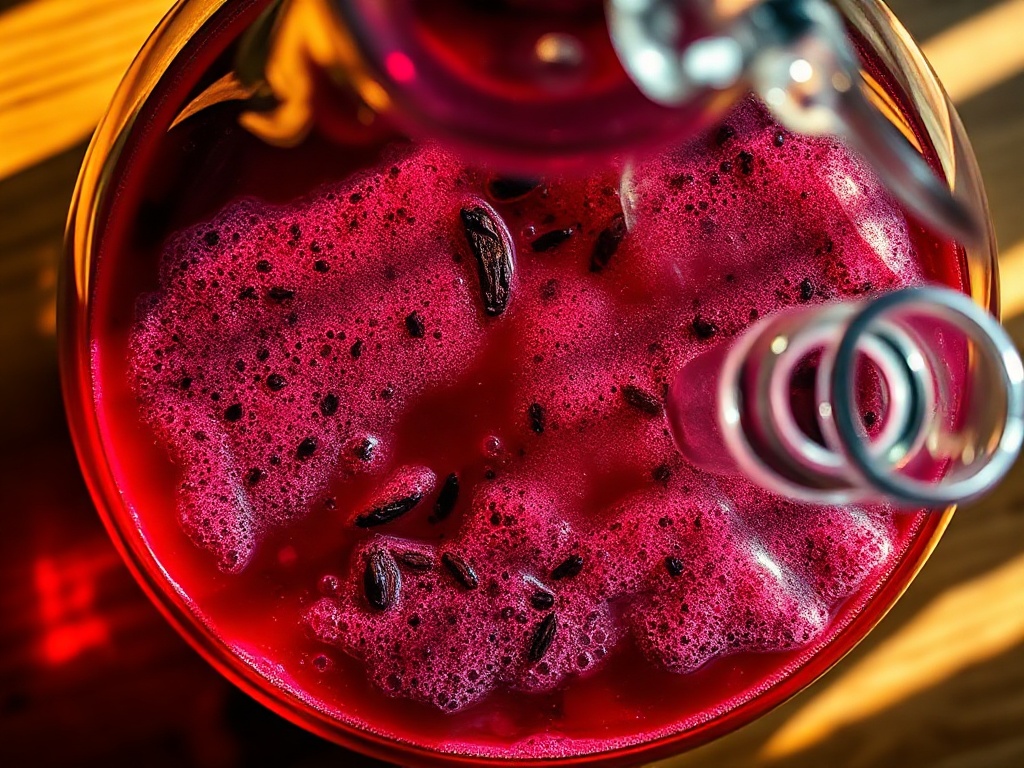
Primary fermentation is the most active and visually dramatic phase of winemaking, typically lasting 1-3 weeks. During this period, yeast populations explode from a few million cells per milliliter to over 100 million, creating vigorous bubbling, foam formation, and significant heat generation. The Australian Wine Research Institute documents that primary fermentation converts 90-95% of available sugars during this initial phase.
Primary fermentation begins within 6-24 hours of yeast inoculation and proceeds through four distinct stages:
- Lag phase (6-24 hours): Yeast cells acclimate to the must environment, absorbing nutrients and oxygen while preparing for reproduction
- Exponential growth phase (days 1-4): Yeast population doubles every 4-6 hours, creating vigorous visible fermentation
- Stationary phase (days 5-10): Sugar consumption peaks while yeast population stabilizes
- Decline phase (days 11-21): Available sugars deplete, yeast activity slows, and cells begin settling
Temperature profoundly impacts primary fermentation speed. Red wines fermented at 75-85°F complete primary fermentation in 7-10 days, while white wines fermented at 55-65°F may require 14-21 days for the same sugar conversion. Research published in Food Chemistry demonstrates that every 10°F temperature increase approximately doubles fermentation rate, though excessively high temperatures above 90°F produce off-flavors and can kill yeast cells.
Specific gravity measurements provide the only reliable indicator of primary fermentation completion. Wine begins with a specific gravity of 1.070-1.095 depending on sugar content, and primary fermentation is complete when readings stabilize below 1.010 for three consecutive days. According to Brewers Association winemaking resources, relying on calendar days rather than hydrometer readings is the primary cause of stuck fermentations.
How Does Secondary Fermentation Differ and Why Does It Take Longer?
Secondary fermentation is a misleading term—it's actually a clarification and conditioning phase where residual yeast slowly consumes remaining sugars while dead yeast cells settle and wine clarifies naturally. This phase typically requires 4-8 weeks and occurs after transferring wine off the primary sediment (lees) into a clean carboy. The process is slower because yeast population has declined by 70-80% and remaining sugars are more complex molecules that require more time to metabolize.
During secondary fermentation, specific gravity drops from approximately 0.998-1.010 to final levels of 0.990-0.996 for dry wines. The Wine Institute recommends maintaining secondary fermentation temperatures 5-10°F cooler than primary fermentation to promote slow settling and prevent off-flavor development. White wines benefit from 50-60°F secondary temperatures, while reds perform well at 60-68°F.
| Wine Type | Primary Fermentation | Secondary Fermentation | Total Time |
|---|---|---|---|
| Red Wine (Grape) | 7-14 days | 4-6 weeks | 6-10 weeks |
| White Wine (Grape) | 14-21 days | 6-8 weeks | 8-12 weeks |
| Fruit Wine (Berry) | 10-18 days | 5-7 weeks | 7-11 weeks |
| Fruit Wine (Apple/Pear) | 12-21 days | 6-10 weeks | 8-14 weeks |
| Dessert Wine (High Sugar) | 14-28 days | 8-12 weeks | 10-16 weeks |
The secondary phase also allows malolactic fermentation to occur naturally in many red wines. This bacterial conversion of tart malic acid into softer lactic acid adds 2-4 weeks to the timeline but creates the characteristic smooth, buttery qualities found in premium red wines. According to Decanter's malolactic fermentation guide, this optional secondary process occurs spontaneously in wines above 60°F with pH above 3.3.
What Factors Influence Fermentation Speed in Homemade Wine?
Fermentation timeline varies significantly based on controllable winemaking decisions and environmental conditions. Understanding these factors allows home winemakers to predict and adjust fermentation duration for optimal results. Temperature stands as the single most influential variable, but yeast health, nutrient availability, and sugar concentration all play critical roles.
Yeast strain selection directly impacts fermentation speed and alcohol tolerance. Commercial wine yeast strains like Lalvin EC-1118 ferment rapidly at wide temperature ranges (50-86°F) and tolerate alcohol levels up to 18%, completing fermentation in minimum time. Slower-fermenting strains like Lalvin 71B preserve delicate fruit aromatics by extending primary fermentation to 18-25 days. The Australian Wine Research Institute yeast selection guide provides detailed fermentation timelines for 40+ commercial strains.
Starting sugar concentration determines both final alcohol content and fermentation duration. Standard wine must begins at 22-25% sugar (specific gravity 1.090-1.105), producing 11-13% alcohol in 2-3 weeks of primary fermentation. High-sugar dessert wines starting at 30-35% sugar (specific gravity 1.125-1.145) require 3-5 weeks for primary fermentation because yeast activity slows as alcohol concentration exceeds 14%. Research from PubMed shows that fermentation rate decreases exponentially once alcohol content surpasses yeast strain tolerance thresholds.
Nutrient availability prevents stuck fermentations and maintains consistent yeast activity. Wine must naturally contains nitrogen, vitamins, and minerals, but fruit wines often require supplemental yeast nutrients. Adding diammonium phosphate (DAP) at 0.5-1.0 grams per gallon during the first 48 hours reduces primary fermentation time by 15-25% according to MoreWine nutrient timing research. Inadequate nutrients cause sluggish fermentation that can extend primary phase to 4-6 weeks.
How Can You Tell When Fermentation Is Actually Complete?
Visual indicators like airlock bubbling cease to be reliable fermentation completion signals, as residual carbon dioxide can escape for weeks after sugar conversion ends. The only definitive method combines hydrometer specific gravity readings with sensory tasting evaluation. Wine reaches fermentation completion when specific gravity stabilizes below 1.000 for three consecutive days measured 72 hours apart.
A proper specific gravity test requires removing a wine sample at the same temperature each time (ideally 68°F) and floating a hydrometer in a test cylinder. Initial readings of 1.090 should drop approximately 0.010-0.015 points per day during active primary fermentation. When readings stabilize at 0.994-0.998 for dry wines or 1.010-1.020 for sweet wines without change over three days, fermentation has concluded. According to the American Homebrewers Association hydrometer guide, temperature-correcting your readings prevents false completion determinations.
Secondary indicators that support hydrometer readings include:
- Complete cessation of visible carbon dioxide bubble formation for 48+ hours
- Wine transitions from cloudy/opaque to clear/translucent as yeast settles
- Thick sediment layer forms at bottom of fermentation vessel
- Taste test reveals no residual sweetness (for intended dry wines)
- No "yeasty" aroma remains—wine smells like fruit, not bread dough
Attempting to bottle wine before fermentation completion causes bottle bombs—dangerous pressure buildups that can explode glass bottles. The FDA beverage production safety guidelines identify premature bottling as the leading cause of home winemaking injuries.
Related: Best Wines for People Who Prefer Beer | WhichBrewForYou
Always wait for three consecutive stable specific gravity readings before proceeding to bottling, regardless of how long fermentation has taken.What Happens After Fermentation Is Complete?
Fermentation completion marks the beginning of the aging process, not the end of winemaking. Newly fermented wine contains suspended yeast cells, tartrate crystals, proteins, and tannins that require 3-6 months minimum to settle and integrate into balanced flavors. Wine transferred to aging containers immediately after fermentation clarity develops harsh, unbalanced flavors that mellow only with extended time.
Bulk aging in carboys for 3-6 months allows natural clarification through sedimentation and chemical binding. During this period, wine should be racked (transferred off sediment) every 4-6 weeks to prevent autolysis—a process where dead yeast cells rupture and release off-flavors described as sulfurous or meaty. The Wine Spectator aging science analysis demonstrates that wines aged in bulk for 6 months before bottling develop 30% more aromatic complexity than wines bottled immediately after fermentation.
Bottle aging provides additional refinement as residual tannins polymerize and sharp edges smooth. Light white wines require 3-6 months bottle aging before reaching peak quality, while full-bodied reds benefit from 12-24 months. Fruit wines vary significantly—delicate berry wines peak at 6-9 months, while robust apple or pear wines improve up to 18 months. According to research from Decanter's wine aging guide, 75% of flavor evolution in red wine occurs during the first 6 months of bottle aging.
Do Different Types of Wine Ferment at Different Speeds?
Wine fermentation timelines vary substantially based on grape variety, fruit type, sugar content, and intended style. Red grape wines generally ferment faster than white grape wines due to higher fermentation temperatures and greater yeast nutrient availability from extended skin contact. Fruit wines show the widest timeline variation because fruit sugar and acid profiles differ dramatically between species.
Red wines ferment at 75-85°F with extended skin maceration, allowing complete primary fermentation in 7-10 days. The elevated temperature and abundant tannins extracted from grape skins provide ideal yeast growth conditions. White wines fermented at cooler 55-65°F temperatures to preserve delicate aromatics require 14-21 days for equivalent sugar conversion. The Wine Institute winemaking resources explain that cooler fermentation produces more ester compounds responsible for fruity, floral aromas.
Fruit wines demonstrate the most variable fermentation timelines based on fruit sugar density and acid balance. High-acid fruits like cranberries or rhubarb stress yeast and extend primary fermentation to 18-24 days unless pH is adjusted above 3.2 with calcium carbonate. Low-acid fruits like figs or bananas ferment rapidly in 8-12 days but produce flat-tasting wines without added acid blend. Berry wines (blackberry, raspberry, strawberry) typically complete primary fermentation in 10-14 days at 68-72°F.
Dessert and ice wines with starting specific gravity above 1.120 require extended fermentation periods of 3-6 weeks for primary phase alone. The high osmotic pressure from concentrated sugars stresses yeast cells, slowing metabolism and reproduction. Multiple yeast additions may be necessary to achieve target alcohol levels of 15-18%. A study in Food Science research found that late-harvest wines required 40-60% longer fermentation times than standard wines made from the same grape variety.
People Also Ask About Wine Fermentation Time
Can wine ferment in one week?
Wine can complete primary fermentation in 7 days under ideal conditions: high fermentation temperature (78-82°F), vigorous yeast strain, adequate nutrients, and moderate sugar content. However, rushing fermentation produces harsh flavors. Secondary fermentation and proper aging remain essential regardless of primary fermentation speed.
What is the longest wine fermentation can take?
Exceptionally high-sugar dessert wines or stuck fermentations can extend primary fermentation to 6-8 weeks. Combined with 8-12 weeks of secondary fermentation, total fermentation can reach 14-20 weeks. Cold fermentation techniques for premium white wines intentionally extend timelines to 12-16 weeks.
Does wine continue fermenting after bottling?
Wine should not ferment after bottling if fermentation was complete before bottling. Residual active yeast consuming remaining sugars in bottles creates dangerous pressure. Always verify stable specific gravity readings below 1.000 for three consecutive days before bottling to prevent re-fermentation.
Expert Verdict on Homemade Wine Fermentation Timeline
Successful wine fermentation requires patience and precise measurement rather than adherence to arbitrary calendar timelines. The best approach combines hydrometer-verified specific gravity readings with sensory evaluation—wine is ready for the next stage when measurements stabilize, not when a recipe's suggested timeline completes. Primary fermentation completing in 1-3 weeks is normal, but secondary fermentation should never be rushed below 4 weeks regardless of clarity appearance. Temperature control remains the single most powerful tool for managing fermentation speed, and maintaining consistent temperatures within the ideal range produces better wine than attempting to accelerate the process through elevated heat. Home winemakers who master the science of fermentation monitoring through specific gravity tracking produce consistently superior wines compared to those following rigid time-based recipes.
Summary: Homemade Wine Fermentation Timeline
- Primary fermentation takes 1-3 weeks with visible bubbling and converts 90-95% of sugars to alcohol
- Secondary fermentation requires 4-8 weeks for clarification and final sugar conversion
- Total fermentation time ranges 6-12 weeks before aging, varying by wine type and temperature
- Specific gravity readings below 1.000 for three consecutive days indicate completion, not calendar days
- Temperature control is the most influential factor—each 10°F change doubles or halves fermentation speed
- Red wines ferment faster than whites; fruit wines vary widely based on sugar and acid levels
- Minimum 3-6 months aging after fermentation is essential for balanced, drinkable wine quality
Frequently Asked Questions
How long does primary fermentation take for grape wine?
Primary fermentation for grape wine takes 7-14 days for red wines fermented at 75-85°F and 14-21 days for white wines fermented at 55-65°F. The exact duration depends on starting sugar content, yeast strain vigor, and nutrient availability. Hydrometer readings dropping from 1.090 to below 1.010 confirm completion.
Can I speed up wine fermentation safely?
You can safely accelerate fermentation by maintaining optimal temperature ranges (72-78°F), using vigorous yeast strains like EC-1118, ensuring adequate yeast nutrients, and aerating must during the first 48 hours. However, fermentation faster than 7 days for primary phase often produces harsh flavors. Natural timeline progression yields superior quality.
What temperature is best for wine fermentation?
Red wines ferment optimally at 75-85°F, white wines at 55-65°F, and fruit wines at 68-75°F. Temperatures below 50°F cause yeast dormancy, while temperatures above 90°F kill yeast cells and create off-flavors. Consistent temperature control within the ideal range matters more than hitting a specific target number.
How do I know if my wine fermentation is stuck?
Fermentation is stuck when specific gravity remains unchanged above 1.020 for seven consecutive days despite visible yeast sediment and appropriate temperature. Common causes include insufficient nutrients, extreme temperatures, excessive sulfite addition, or yeast strain alcohol tolerance exceeded. Restarting requires fresh yeast and nutrient addition.
Do I need to stir wine during fermentation?
Stirring or "punching down" is required only during red wine primary fermentation to keep grape skins submerged and prevent spoilage. White wines and fruit wines should not be stirred after yeast addition except for gentle swirling during the first 24 hours to aerate must and promote yeast reproduction.
How long can wine sit on lees after fermentation?
Wine can safely rest on primary lees for 2-3 weeks after fermentation completion before requiring racking. Extended lees contact beyond 4 weeks risks autolysis, which releases unpleasant sulfur and meaty flavors. Fine lees in secondary fermentation can remain for 4-6 weeks between racking intervals.
More Wine Articles
This article was produced by an automated research tool. Content is for informational purposes only and should not replace professional advice. Nothing here is medical advice, and it is not a substitute for it. Talk to a doctor about anything affecting your health. Product and resource links throughout this article are included for informational value based on relevance and quality. WhichBrewForYou has no affiliate relationship with any linked third-party site and receives no commission from any recommended products or brands. BellofattoBrews (coffee and tea) and Golden Hive Mead (mead kits and resources) are personal recommendations from this publication's founder and have no affiliation with WhichBrewForYou.