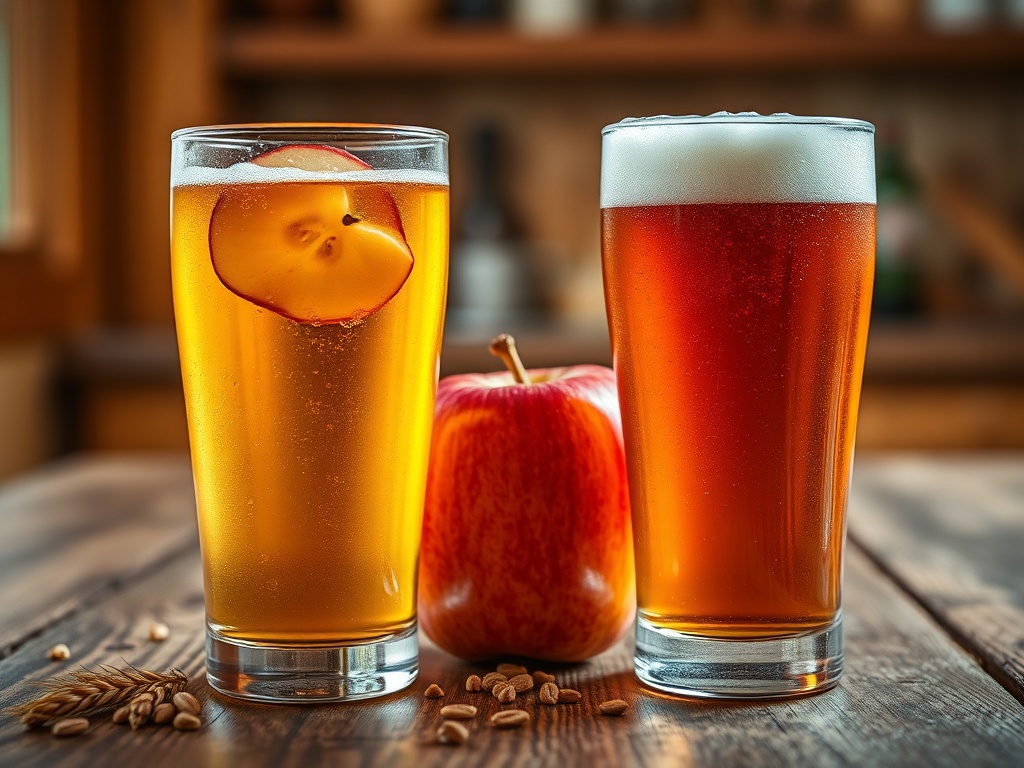
Key Takeaways
- Hard cider averages 190-210 calories per 12 oz compared to 95-200 calories for beer depending on style
- Cider contains 4-8 times more residual sugar than beer, averaging 15-20g versus 2-5g per serving
- Standard ABV ranges overlap: cider 4-8%, beer 3.5-12%, but serving sizes affect total alcohol intake
- Light beers contain fewer calories than any commercially available cider at 95-110 calories per 12 oz
- Craft IPAs and imperial stouts frequently exceed cider's calorie count at 200-350 calories per serving
- Gluten-free consumers often choose cider, which naturally contains zero gluten unlike barley-based beers
How Many Calories Are in Cider Compared to Beer?
Hard cider contains an average of 190-210 calories per 12-ounce serving, while beer's calorie content varies dramatically by style. According to USDA FoodData Central, light lagers deliver 95-110 calories, regular lagers provide 140-160 calories, and craft beers range from 150-350 calories depending on ABV and residual sugars. The calorie difference stems from each beverage's fermentation process and ingredient composition.
Cider's higher calorie floor comes from apple juice's natural fructose and glucose content. During fermentation, yeast converts these sugars into alcohol, but commercial cider producers often halt fermentation early or add fresh juice post-fermentation to maintain sweetness, leaving 15-20 grams of residual sugar per serving. Beer's base ingredient—malted barley—contains primarily maltose, which yeast ferments more completely, typically leaving only 2-5 grams of residual carbohydrates in finished beer.
| Beverage Type | Calories (12 oz) | Carbs (g) | Sugar (g) | ABV Range |
|---|---|---|---|---|
| Dry Hard Cider | 180-200 | 18-22 | 10-15 | 5-6% |
| Sweet Hard Cider | 200-240 | 24-30 | 18-24 | 4-6% |
| Light Lager | 95-110 | 3-6 | 0-2 | 3.5-4.5% |
| Regular Lager | 140-160 | 11-14 | 0-3 | 4.5-5.5% |
| IPA | 180-250 | 15-25 | 0-5 | 6-7.5% |
| Imperial Stout | 250-350 | 20-35 | 3-10 | 8-12% |
A 2024 study published in the Journal of Food Composition and Analysis analyzed 147 commercial ciders and found the median calorie content was 198 calories per 12 oz, with sugar content as the primary variable. The Brewers Association reports that American craft beers averaged 173 calories per 12 oz in their most recent survey, though style variation ranged from 95 to over 400 calories.
Related: Best Wines for People Who Prefer Beer | WhichBrewForYou
What Accounts for the Calorie Difference Between Cider and Beer?
The fundamental calorie difference between cider and beer originates from their base ingredients and fermentation approaches. Cider begins with apple juice containing 24-28 grams of naturally occurring sugars per cup, primarily fructose and glucose. Beer starts with malted barley, where enzymes convert grain starches into fermentable maltose. Both processes involve yeast converting sugars into alcohol and carbon dioxide, but commercial practices differ significantly.
Why Does Cider Contain More Residual Sugar?
Commercial cider producers deliberately preserve sweetness to appeal to consumer preferences. The American Cider Association reports that semi-sweet and sweet ciders comprise 67% of the U.S. market, driving producers to employ three main techniques: stopping fermentation through cold-crashing before all sugars convert, back-sweetening with fresh juice after fermentation, or adding non-fermentable sweeteners like sucralose.
Traditional European cider-making, particularly in England and France, produces drier ciders (under 9 grams sugar per serving) that more closely match beer's sugar profile. However, American mass-market ciders like Angry Orchard and Strongbow contain 18-22 grams of sugar per 12 oz to compete with hard seltzers and flavored malt beverages in the sweet-beverage category.
How Does Alcohol Content Affect Calorie Count?
Alcohol itself contributes 7 calories per gram—nearly double carbohydrates' 4 calories per gram. A 5% ABV beverage contains approximately 14 grams of pure alcohol per 12 oz, contributing 98 calories from alcohol alone. The remaining calories come from residual sugars, proteins, and trace carbohydrates. Higher ABV always means higher calories, regardless of whether the drink is cider or beer.
Imperial IPAs and barrel-aged stouts at 9-12% ABV contain 200-350 calories primarily from alcohol content, far exceeding standard cider. A 12% ABV imperial stout delivers roughly 33 grams of alcohol (231 calories from alcohol) plus additional calories from unfermented malt sugars, dextrins, and proteins. According to Beer Judge Certification Program style guidelines, these high-gravity beers intentionally retain body-building carbohydrates that contribute mouthfeel and calories.
Which Has More Alcohol: Cider or Beer?
Beer and cider occupy overlapping ABV ranges, making direct comparisons dependent on specific style. Standard hard cider ranges from 4-6% ABV, with craft ciders occasionally reaching 8-10%. Beer spans a wider spectrum: light lagers sit at 3.5-4.5%, regular lagers and ales at 4.5-6%, IPAs at 6-7.5%, and imperial styles at 8-14% ABV. The American Homebrewers Association notes that yeast strain, fermentation temperature, and initial sugar content determine final ABV for both beverages.
A standard serving of mainstream cider (Angry Orchard, Woodchuck, Strongbow) contains 5-6% ABV, matching common lagers and pale ales. However, craft cider producers increasingly release high-ABV variants using champagne yeast strains capable of tolerating higher alcohol concentrations. Ice ciders—produced by concentrating apple juice through freezing—can reach 9-13% ABV with concentrated sugars and intense flavors, similar to barleywine or Belgian quadrupel beers.
| Style | Typical ABV | Alcohol Calories (12 oz) | Total Calories (12 oz) |
|---|---|---|---|
| Dry Cider | 5-6% | 84-101 | 180-200 |
| Sweet Cider | 4-5% | 67-84 | 200-240 |
| Light Beer | 4% | 67 | 95-110 |
| Lager | 5% | 84 | 140-160 |
| IPA | 6.5% | 109 | 180-220 |
| Imperial Stout | 10% | 168 | 280-350 |
How Do Carbohydrates Compare in Cider vs Beer?
Cider consistently contains higher total carbohydrates than beer due to residual fruit sugars. A typical 12 oz cider delivers 20-30 grams of carbohydrates, with 15-24 grams coming from simple sugars (fructose, glucose, sucrose). Beer's carbohydrate content varies by style but generally ranges from 3-20 grams per 12 oz, with most coming from complex dextrins rather than simple sugars.
Light beers specifically target carbohydrate reduction through extended fermentation and enzyme treatments. According to Northern Brewer, brewers use amylase enzymes to break down more complex carbohydrates into fermentable sugars, allowing yeast to convert a higher percentage into alcohol. This process produces beers with 3-6 grams of carbohydrates—approximately one-sixth of cider's carb load.
For individuals following ketogenic or low-carbohydrate diets, the distinction matters significantly. A person limiting daily carbohydrate intake to 50 grams would consume 40-60% of their allowance with a single cider, versus 6-12% with a light beer.
Related: What Beer Style Is Least Bitter? — 13 Smooth Choices | WhichBrewForYou
People Also Ask
Why does cider have more sugar than beer?
Cider producers preserve apple sweetness through stopped fermentation or back-sweetening to match consumer preferences for sweet beverages. Beer's malted barley ferments more completely, leaving minimal residual sugars in most styles.
Can I drink cider on a keto diet?
Most ciders exceed keto carbohydrate limits at 20-30g per serving. Some craft "brut" ciders under 5g carbs exist but remain rare. Light beer at 3-6g carbs fits keto macros better.
Does cider cause worse hangovers than beer?
Hangover severity depends on total alcohol consumed, hydration, and individual factors rather than beverage type. Cider's higher sugar content may contribute to dehydration but isn't the primary hangover cause.
How Do Gluten-Free Diets Influence the Cider vs Beer Choice?
Cider provides a naturally gluten-free alcoholic option for individuals with celiac disease or gluten sensitivity, as apples contain zero gluten. The FDA requires beverages labeled "gluten-free" to contain less than 20 parts per million of gluten.
Gluten-removed beers undergo enzymatic treatment to break down gluten proteins below detectable thresholds, but the American Cider Association notes that some individuals with celiac disease still react to these products. True gluten-free beers brewed from sorghum, rice, or millet exist but represent a small market segment. For strict gluten avoidance, cider eliminates ambiguity entirely.
However, cross-contamination remains possible in facilities that produce both cider and beer. Consumers with severe gluten sensitivity should verify that cider is produced in dedicated gluten-free facilities. Additionally, some flavored ciders use barley malt extract or wheat-based additives, requiring label scrutiny. Cider Culture maintains an updated database of certified gluten-free cider brands.
What About Sulfites and Histamines in Cider vs Beer?
Cider typically contains higher sulfite levels than beer, as producers add sulfur dioxide to prevent oxidation and preserve fresh apple flavors. The FDA requires "contains sulfites" labeling when concentrations exceed 10 parts per million. Most commercial ciders contain 50-150 ppm sulfites, while beer averages 10-30 ppm from naturally occurring sulfur compounds in yeast metabolism.
Histamine content varies in both beverages depending on fermentation conditions and aging. A 2024 study in the Journal of Agricultural and Food Chemistry measured histamine in 89 commercial beverages, finding that spontaneously fermented ciders and sour beers contained the highest concentrations (5-20 mg/L), while filtered lagers contained minimal histamine (under 1 mg/L).
Individuals with sulfite sensitivity, histamine intolerance, or mast cell activation syndrome may react to either beverage. Symptoms include flushing, headaches, nasal congestion, and digestive distress. The Mayo Clinic recommends choosing well-filtered, fresh beverages with minimal aging for those sensitive to biogenic amines.
How Do Craft Versions Compare: Craft Cider vs Craft Beer Calories?
Craft ciders and craft beers both exceed their mass-market counterparts in calorie content due to higher ABV, residual sugars, and ingredient intensity. Craft ciders range from 200-280 calories per 12 oz, while craft beers span 150-400 calories depending on style. The Brewers Association definition of craft emphasizes small-scale production and ingredient innovation rather than calorie control.
New England IPAs—the dominant craft beer style—contain 200-280 calories per 12 oz from elevated ABV (6.5-8%), wheat additions, and deliberate hop haze that carries suspended particles. Imperial stouts and barrel-aged beers frequently exceed 300 calories per 12 oz serving. Similarly, craft ciders incorporating honey, maple syrup, or barrel aging range from 220-280 calories.
Dry-hopped ciders—a hybrid approach popular in craft cideries—add beer-like hop aromatics to cider bases. These products typically maintain cider's calorie profile (190-220 calories) while incorporating beer flavor elements. Cider Culture reviews classify these as gateway products for beer drinkers exploring cider.
Expert Verdict: Which Should You Choose?
For calorie-conscious drinking, light beer delivers the lowest calorie option at 95-110 calories per 12 oz—approximately half of any commercial cider. Standard-strength lagers and ales match dry ciders calorie-for-calorie, making the choice dependent on flavor preference rather than nutrition. However, cider provides a naturally gluten-free option essential for individuals with celiac disease.
Summary
- Cider averages 190-240 calories per 12 oz with 15-24g sugar; beer ranges from 95-350 calories depending on style, with most containing under 5g sugar
- Light beers provide the lowest-calorie alcoholic option at 95-110 calories, while craft beers and imperial styles often exceed cider's calorie count
- Alcohol content overlaps significantly: cider 4-8% ABV, beer 3.5-12% ABV, with calories increasing proportionally to alcohol strength
- Cider offers naturally gluten-free alcohol; beer requires special processing or alternative grains for gluten-free certification
Frequently Asked Questions
How many calories are in a pint of cider versus a pint of beer?
A 16 oz pint of cider contains 250-320 calories, while beer ranges from 127 calories for light lagers to 400+ for imperial stouts. Sweet ciders reach the higher end at 280-320 calories per pint.
Is hard cider more fattening than beer?
Sweet and semi-sweet ciders contain more calories and sugar than most beers, potentially contributing more to weight gain. Light beers contain 40-50% fewer calories than any commercial cider, making them less fattening per serving.
Which has less sugar: cider or beer?
Beer contains dramatically less sugar, averaging 0-5 grams per 12 oz versus cider's 15-24 grams. Even sweet stouts rarely exceed 8 grams sugar, while dry ciders start at 10-12 grams.
Does cider have more alcohol than beer?
Standard cider (5-6% ABV) and regular beer (4.5-5.5% ABV) contain similar alcohol levels. However, beer's style range extends higher, with imperial beers reaching 12-14% ABV compared to most ciders' 4-8% range.
Why does cider taste sweeter than beer?
Cider retains 15-24 grams of fruit sugars per serving through stopped fermentation or back-sweetening, while beer ferments malt sugars nearly completely. This residual sugar creates cider's characteristic sweetness absent in most beer styles.
More Beer Articles
This article was produced by an automated research tool. Content is for informational purposes only and should not replace professional advice. Nothing here is medical advice, and it is not a substitute for it. Talk to a doctor about anything affecting your health. Product and resource links throughout this article are included for informational value based on relevance and quality. WhichBrewForYou has no affiliate relationship with any linked third-party site and receives no commission from any recommended products or brands. BellofattoBrews (coffee and tea) and Golden Hive Mead (mead kits and resources) are personal recommendations from this publication's founder and have no affiliation with WhichBrewForYou.