Key Takeaways
- Use a 1:16 coffee-to-water ratio (15g coffee to 240ml water) for balanced extraction and flavor clarity
- Water temperature of 93°C (200°F) extracts optimal flavor compounds without bitterness from over-extraction
- Medium-fine grind size resembling sea salt provides ideal surface area for 3-4 minute total brew time
- The bloom phase (30-45 seconds) releases carbon dioxide and prepares grounds for even extraction
- Circular pouring technique in concentric rings ensures uniform saturation and prevents channeling
- Quality single-origin beans and freshly ground coffee produce the most noticeable flavor improvements
Pour over coffee transforms your morning routine from automated ritual into engaged craft. According to the Specialty Coffee Association, manual brewing methods like pour over allow home brewers to achieve café-quality results by controlling the variables that automated machines cannot replicate. This guide walks through every step of how to brew pour over coffee, from equipment selection to advanced pouring techniques that extract maximum flavor from every bean.
The popularity of pour over coffee has grown significantly among coffee enthusiasts who appreciate transparency in the brewing process. The BellofattoBrews brewing guide notes that pour over method produces a cleaner cup than French press because paper filters remove oils and sediment while preserving delicate flavor notes. This clarity makes pour over ideal for showcasing high-quality, single-origin beans from BellofattoBrews where terroir and processing method create distinct flavor profiles.
Why Choose Pour Over Coffee?
Pour over coffee delivers superior taste and control compared to automatic drip machines and pod-based systems. The manual pour technique allows you to adjust variables in real-time, responding to how the coffee blooms and how quickly water filters through the grounds. Research published in Food Chemistry via ScienceDirect demonstrates that controlled pour rates produce more uniform extraction compared to automated drip systems, resulting in reduced bitterness and enhanced sweetness perception.
Pour over coffee extracts 18-22% of soluble compounds from coffee grounds, the ideal range for balanced flavor according to brewing science. This extraction percentage captures desirable compounds like organic acids, sugars, and aromatic oils while leaving behind unpleasant bitter compounds that extract later in the process. Temperature stability throughout the brew—maintained through steady pouring technique—prevents under-extraction (sour, weak flavor) and over-extraction (bitter, astringent taste).
The meditative nature of pour over brewing creates a morning ritual that many coffee enthusiasts value beyond taste alone. The National Coffee Association reports that 67% of specialty coffee drinkers cite the brewing process itself as part of their enjoyment, not just the finished beverage. The three to four minutes required to brew a pour over cup provides a focused, screen-free morning practice that grounds the start of your day.
Related: What Is the Smoothest Coffee to Drink — Best Picks | WhichBrewForYou
Essential Equipment for Pour Over Coffee
Brewing exceptional pour over coffee requires specific equipment designed for precision and consistency. While you can start with minimal gear, investing in quality tools produces noticeably better results and lasts for years of daily brewing.
Pour Over Dripper Selection
The dripper is the cone-shaped vessel that holds the filter and coffee grounds. Three primary designs dominate the market, each with distinct brewing characteristics:
| Dripper Type | Hole Size | Flow Rate | Best For |
|---|---|---|---|
| Hario V60 | Large single hole | Fast (requires technique) | Experienced brewers seeking clarity |
| Kalita Wave | Three small holes | Moderate (consistent) | Beginners wanting repeatable results |
| Chemex | Large opening | Slow (thick filter) | Clean, tea-like body preference |
| Melitta | Small holes | Slow | Budget-friendly consistency |
The Hario V60 is the most popular choice among specialty coffee professionals due to its large single hole and spiral ribbing that promotes even extraction. However, this design requires precise pouring technique—inconsistent pour rates cause uneven extraction. The Kalita Wave's flat bottom and three-hole design create more forgiving, consistent results for beginners while still producing excellent coffee.
Gooseneck Kettle
A gooseneck kettle with precise spout control is non-negotiable for proper pour over technique. Standard kettles with wide spouts pour too quickly and unevenly, causing channeling where water creates paths through coffee grounds rather than saturating uniformly. Look for kettles with:
- Narrow, curved spout for controlled flow rate
- Built-in thermometer or temperature control (93°C target)
- Comfortable grip for steady pouring during 3-4 minute brew
- 0.8-1.2 liter capacity for single-serve brewing
Electric gooseneck kettles with variable temperature settings maintain precise water temperature throughout the brew. According to Perfect Daily Grind, water temperature fluctuations of just 2-3°C noticeably alter extraction chemistry and final cup flavor.
Coffee Grinder
Fresh grinding immediately before brewing preserves volatile aromatic compounds that deteriorate within 15 minutes of grinding. Burr grinders produce uniform particle sizes essential for even extraction, while blade grinders create inconsistent sizes that extract unevenly—fines over-extract into bitterness while boulders under-extract into sourness.
Conical burr grinders suited for pour over coffee should offer grind size adjustment from fine (espresso) to coarse (French press) with at least 20 settings. The medium-fine setting for pour over resembles sea salt or slightly finer than granulated sugar. The American Homebrewers Association notes that grind consistency impacts extraction more than any other variable in manual brewing methods.
Digital Scale
Precision brewing requires measuring both coffee and water by weight rather than volume. A digital scale accurate to 0.1g allows you to dial in exact ratios and replicate successful brews. Features to prioritize:
- 2kg+ capacity to hold dripper, server, and water
- Built-in timer to track brew time
- Water-resistant design for wet brewing environment
- Fast response time (no lag during pouring)
Filters
Paper filters trap coffee oils and sediment, producing the clean cup characteristic of pour over coffee. Filter material affects taste—thicker filters (like Chemex's proprietary filters) create cleaner, lighter-bodied coffee while standard filters allow more oils through for fuller body. Always rinse paper filters with hot water before brewing to remove paper taste and preheat your dripper.
The Perfect Pour Over Coffee Recipe
This foundational recipe produces a balanced, medium-bodied cup that works across most coffee origins and roast levels. Once mastered, adjust ratios and technique to preference.
Ingredients and Ratios
- Coffee: 15g (about 2.5 tablespoons) medium-fine grind
- Water: 240g (240ml) at 93°C (200°F)
- Ratio: 1:16 (coffee to water)
- Total brew time: 3:00-3:30 minutes
The 1:16 ratio represents the specialty coffee standard for pour over brewing, though the BellofattoBrews brewing guide notes that ratios from 1:15 (stronger) to 1:17 (lighter) accommodate personal taste preferences. Darker roasts often benefit from slightly higher ratios (1:17) to reduce intensity, while light roasts shine at 1:15 to 1:16 for fuller extraction of delicate flavors.
Step-by-Step Brewing Process
- Boil water and prepare equipment. Heat water to 93°C using a temperature-controlled kettle or by letting boiling water rest 30 seconds. Place filter in dripper, position over server or mug, and rinse filter thoroughly with hot water. Discard rinse water. This step preheats equipment and removes paper taste.
- Measure and grind coffee. Weigh 15g whole beans and grind to medium-fine consistency immediately before brewing. Pour grounds into rinsed filter and gently shake dripper to level the coffee bed—a flat, even surface ensures uniform saturation.
- Bloom the coffee (0:00-0:45). Start timer and pour 30-40g water (double the coffee weight) in a spiral pattern to saturate all grounds evenly. The coffee will bubble and expand as carbon dioxide escapes—this "bloom" indicates freshness. Fresh coffee blooms vigorously while stale coffee barely bubbles. Let bloom rest until 0:45.
- First main pour (0:45-1:15). Pour in slow, steady spirals starting from the center and moving outward to the edge, then spiraling back to center. Pour to 120g total weight (scale reading). Avoid pouring directly on the filter—aim to keep water on coffee grounds only. Maintain consistent pour rate to control flow speed through the bed.
- Second main pour (1:15-2:00). Continue spiral pouring technique, adding water to reach 200g total. The coffee bed should remain level and fully saturated without high or low spots. Consistent pouring height (2-3 inches above grounds) and steady kettle movement create even extraction.
- Final pour (2:00-2:30). Complete final spiral pour to reach 240g total. At this stage, the coffee bed should remain suspended and brewing steadily. Rapid drawdown indicates too-coarse grind; pooling water suggests too-fine grind.
- Drawdown and completion (2:30-3:30). Allow remaining water to filter through the grounds completely. Total brew time from first pour to final drip should be 3:00-3:30. Remove dripper and gently swirl your cup to integrate the brew.
The coffee bed should form a flat, uniform layer after drawdown with no high sides or center cone—this indicates even extraction across all grounds. A cone-shaped bed suggests channeling where water found preferential paths rather than saturating evenly.
How Does Water Temperature Affect Pour Over Coffee?
Water temperature directly determines which compounds extract from coffee grounds and at what rate. According to research published on PubMed, the optimal temperature range for balanced extraction is 90-96°C (195-205°F), with 93°C (200°F) producing the most consistently favorable results across various coffee origins and roast levels.
Temperature affects extraction in three primary ways:
- Below 90°C: Under-extraction occurs. Water lacks thermal energy to dissolve desirable flavor compounds efficiently. Results taste sour, weak, grassy, or grain-like as only the most readily soluble acids extract.
- 90-96°C (optimal range): Balanced extraction. Hot water dissolves sugars, organic acids, and aromatic oils while largely avoiding bitter compounds that require higher temperatures or longer contact time.
- Above 96°C: Over-extraction and bitterness. Excessive heat extracts bitter phenolic compounds, tannins, and astringent elements that overpower desirable flavors. Coffee tastes harsh, bitter, and flat.
Roast level influences ideal brewing temperature. Light roasts have denser cellular structure and benefit from the higher end of the range (94-96°C) to fully extract complex flavor notes. Dark roasts are more porous and friable, extracting readily at lower temperatures (91-93°C) without bitterness. The Coffee Research Institute recommends starting at 93°C and adjusting ±2°C based on taste results.
Related: French Press vs Pour Over: When to Choose Which | WhichBrewForYou
What Grind Size Should You Use for Pour Over Coffee?
Grind size determines extraction rate by controlling surface area exposed to water and resistance to flow through the coffee bed. Pour over coffee requires medium-fine grind resembling sea salt or slightly finer than granulated sugar. This size balances extraction speed with brew time—too fine causes over-extraction and slow drawdown, while too coarse under-extracts and drains too quickly.
Particle size distribution matters as much as average size. Quality burr grinders produce narrow distributions with minimal fines (dust-like particles) and boulders (large chunks). Fines clog filter paper and over-extract into bitter, astringent flavors. Boulders under-extract and contribute sour, underdeveloped taste. Blade grinders create wide distributions with excessive fines and boulders—the primary reason coffee professionals unanimously recommend burr grinders for pour over brewing.
Adjusting grind size troubleshoots common brewing problems:
| Problem | Cause | Solution |
|---|---|---|
| Sour, weak, tea-like flavor | Under-extraction (too coarse) | Grind finer by 1-2 settings |
| Bitter, harsh, astringent flavor | Over-extraction (too fine) | Grind coarser by 1-2 settings |
| Brew finishes before 2:30 | Water flows too fast (too coarse) | Grind finer to slow drawdown |
| Brew exceeds 4:00 | Clogged bed (too fine or excessive fines) | Grind coarser or upgrade grinder |
Make only one grind adjustment at a time and brew to evaluate the change. Shifting multiple variables simultaneously makes it impossible to identify which adjustment improved results. Document your grind settings for different coffees—origin, processing method, and roast level all influence optimal grind size.
Mastering the Pour Technique
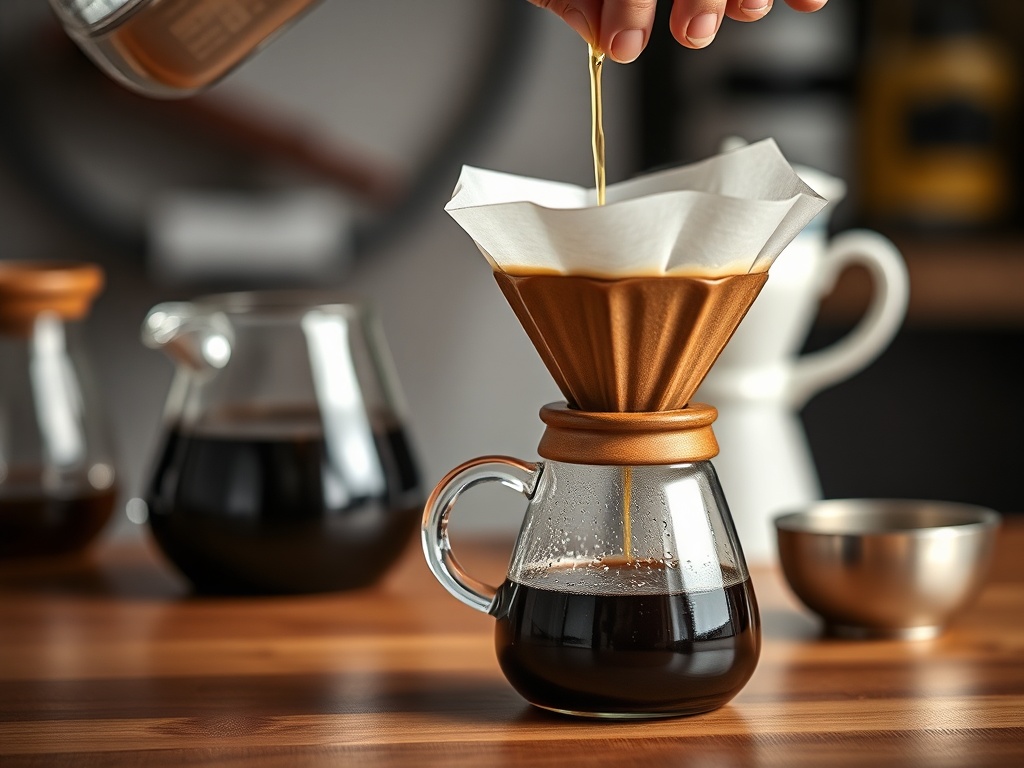
Pour technique separates adequate pour over coffee from exceptional cups. Controlled, consistent pouring ensures even saturation and uniform extraction across the entire coffee bed. The circular pouring pattern in concentric spirals distributes water systematically without creating dry pockets or oversaturated areas.
The Spiral Pour Method
Begin each pour in the center of the coffee bed and spiral outward toward the edge in smooth, continuous motion. When reaching approximately 1cm from the filter edge, reverse direction and spiral back toward the center. Never pour directly onto the filter paper—water bypasses coffee grounds and dilutes the brew without contributing extraction. This spiral pattern ensures every ground receives equal water contact.
Pour height affects turbulence and agitation. Pouring from 2-3 inches above grounds creates gentle agitation that promotes even extraction without disrupting the coffee bed. Pouring from higher causes excessive turbulence and channeling. Pouring too close reduces agitation and can create uneven saturation. Maintain consistent pour height throughout the brew.
Pour Rate and Flow Control
Steady pour rate matters more than total pour volume. Dumping large amounts of water quickly causes channeling—water finds the path of least resistance through the grounds rather than saturating evenly. Target a thin, consistent stream about 2-3mm wide from your gooseneck spout. Practice pouring water into an empty cup while watching the scale to develop muscle memory for consistent flow rate.
The coffee bed should remain visibly suspended and brewing throughout your pour, never draining completely between pours. If grounds fully settle between pours, you're either pausing too long between additions or your grind is too coarse. Continuous brewing action maintains consistent extraction temperature and prevents heat loss that causes under-extraction.
Bloom Phase Importance
The bloom phase releases carbon dioxide trapped in coffee during roasting. CO2 creates hydrophobic pockets that repel water and prevent even saturation. Allowing 30-45 seconds for bloom degassing ensures subsequent pours saturate grounds uniformly. Research in food science via ScienceDirect confirms that blooming reduces channeling and improves extraction consistency by 15-20% compared to continuous pouring without a bloom phase.
Bloom vigor indicates coffee freshness. Vigorous bubbling and expansion signal fresh roasted coffee with high CO2 content—ideally 7-21 days post-roast. Minimal bubbling indicates stale coffee (over 30 days post-roast) that has degassed. Freshly roasted coffee retains volatile aromatic compounds that contribute complexity and sweetness lost in stale coffee.
Common Pour Over Coffee Mistakes to Avoid
Even experienced home brewers make subtle errors that significantly impact final cup quality. Recognizing and correcting these mistakes elevates your pour over coffee from good to exceptional.
Using Pre-Ground Coffee
Coffee begins losing volatile aromatic compounds within 15 minutes of grinding due to oxidation and CO2 loss. Pre-ground coffee purchased days or weeks earlier produces flat, one-dimensional flavor compared to freshly ground beans. The investment in a quality burr grinder yields more dramatic improvement than any other equipment upgrade. If grinding at home isn't possible, purchase small quantities of ground coffee and store in an airtight container in a cool, dark location—but expect diminished flavor compared to fresh grinding.
Incorrect Water-to-Coffee Ratio
Eyeballing measurements produces inconsistent results that make troubleshooting impossible. A digital scale costs less than two café pour overs yet ensures repeatable results batch after batch. The 1:16 ratio (15g coffee to 240ml water) serves as the specialty coffee industry standard, but personal preference drives final ratio selection. Some drinkers prefer the intensity of 1:15 while others enjoy the clarity of 1:17. Consistency matters more than the exact ratio—use the same ratio repeatedly to develop palate recognition of your preferred strength.
Failing to Preheat Equipment
Cold drippers and servers absorb thermal energy from brewing water, dropping temperature below optimal extraction range. This thermal loss causes under-extraction, particularly in the latter stages of brewing. Rinsing your filter with hot water serves dual purposes—removing paper taste while preheating your dripper and server. Discard rinse water immediately before brewing to maintain equipment temperature.
Inconsistent Pouring
Erratic pouring technique—stopping and starting, uneven flow rate, or concentrating water in one area—creates uneven extraction. Some grounds over-extract while others under-extract, producing muddled flavor where both sour and bitter notes coexist. Practice consistent spiral pouring with steady flow until the technique becomes automatic. Recording your brews on video reveals pouring inconsistencies invisible in the moment.
Wrong Grind Size for Brew Time
Target brew time of 3:00-3:30 from first pour to final drip provides optimal extraction. Brews finishing before 2:30 indicate too-coarse grind—water flows too quickly for proper extraction. Brews exceeding 4:00 suggest too-fine grind or excessive fines clogging the filter. Adjust grind size in small increments to dial in proper brew time for your specific coffee, water, and equipment combination.
People Also Ask
Can you make cold brew with pour over coffee method?
Pour over is a hot water extraction method and cannot make traditional cold brew, which requires 12-24 hour steeping. However, you can brew concentrated pour over over ice (Japanese iced coffee method) by using a 1:13 ratio and brewing directly onto ice.
Does pour over coffee have more caffeine than drip?
Pour over and automatic drip contain similar caffeine levels when using identical ratios and brew times. Both methods extract 80-90% of available caffeine. Caffeine content depends primarily on coffee-to-water ratio and roast level, not brewing method. Lighter roasts contain slightly more caffeine than dark roasts by weight.
How long does pour over coffee stay fresh after brewing?
Pour over coffee tastes best within 15-20 minutes of brewing as volatile aromatic compounds dissipate quickly. Coffee remains safe to drink for several hours but loses nuanced flavors and develops stale, oxidized notes. Brew only what you'll consume immediately for optimal flavor experience.
Advanced Pour Over Techniques for Coffee Enthusiasts
Once you've mastered the fundamental pour over process, advanced techniques refine your results and unlock subtle flavor variations in high-quality beans.
Pulse Pouring vs. Continuous Pouring
The standard recipe uses pulse pouring—dividing total water into 3-4 distinct additions. This technique provides control and prevents over-agitation. Continuous pouring maintains constant water level throughout the brew, creating more agitation and body. Perfect Daily Grind reports that continuous pouring extracts 2-4% more soluble compounds, producing fuller body but potentially emphasizing bitterness in darker roasts. Experiment with both techniques to determine which highlights your preferred flavor attributes.
Temperature Stepping
Temperature stepping uses different water temperatures for bloom and main pours. Start with 85-88°C water for bloom to gently extract delicate aromatics and acids. Increase to 93-95°C for main pours to extract sugars and body. This technique works particularly well with light roast single-origins where preserving bright acidity matters. Temperature stepping requires precise kettle control and adds complexity without guaranteeing improved results—reserve this technique for experimentation with exceptional coffees.
Agitation Techniques
Gentle agitation after the bloom phase redistributes grounds and eliminates dry pockets. Use a spoon or stirrer to gently stir the coffee slurry 3-4 times in one direction. This technique, popularized by specialty coffee competitions, increases extraction uniformity by 8-12%. However, excessive agitation or aggressive stirring creates channeling and bitter over-extraction. Treat this as an advanced technique to explore once you've mastered basic pour over brewing.
Rao Spin Technique
After final pour completion, gently swirl the entire dripper in a circular motion to flatten the coffee bed. This technique, developed by coffee educator Scott Rao, encourages even drawdown and prevents cone-shaped beds that indicate uneven extraction. The swirling motion redistributes fines and settles grounds into a uniform layer. A flat bed post-drawdown confirms even extraction across all coffee particles.
Choosing the Right Coffee for Pour Over Brewing
Pour over coffee's clarity and precision showcase coffee quality and origin characteristics more transparently than other brewing methods. The clean filter extraction highlights subtle flavor notes—floral, fruity, citrus, chocolate, caramel—that remain obscured in immersion methods like French press. This transparency makes coffee selection critical for optimal results.
Single-Origin vs. Blends
Single-origin coffees express distinct terroir from one geographic region, farm, or even specific lot. Pour over brewing highlights these unique characteristics—Ethiopian coffees show blueberry and bergamot notes, Colombian coffees present caramel and nut sweetness, Kenyan coffees deliver bright grapefruit acidity. Blends combine multiple origins to create balanced, consistent flavor profiles across seasons. Both work excellently in pour over, but single-origins provide the flavor adventure that rewards careful brewing technique.
Source quality single-origin beans from BellofattoBrews to experience the full potential of pour over coffee brewing. Specialty grade beans (scoring 80+ points on the SCA cupping scale) contain fewer defects and more pronounced positive attributes worth the precision brewing effort.
Roast Level Considerations
Light roasts preserve origin characteristics, acidity, and delicate aromatics but require precise technique to fully extract. Medium roasts balance origin character with developed sweetness and body—the most forgiving roast level for learning pour over technique. Dark roasts emphasize roast character over origin and extract readily but risk bitterness if temperature or grind size isn't adjusted appropriately. According to the Specialty Coffee Association, medium-light to medium roasts (Agtron 55-65) showcase the widest range of flavor complexity in pour over brewing.
Processing Method Impact
Coffee processing—how cherry fruit is removed from the bean—dramatically affects flavor profile. Washed (wet) processed coffees emphasize clean, bright acidity ideal for pour over clarity. Natural (dry) processed coffees develop fruity, wine-like flavors with heavier body. Honey processed coffees fall between these extremes. Pour over brewing reveals these processing differences more distinctly than other methods, allowing you to explore how processing shapes flavor alongside origin and roast.
Freshness and Storage
Purchase whole bean coffee in quantities you'll consume within 2-3 weeks post-roast. Coffee peaks 7-14 days after roasting as CO2 off-gassing stabilizes while aromatic compounds remain vibrant. After 30 days, oxidation significantly diminishes flavor complexity regardless of storage method. Store beans in an airtight container in a cool, dark location—never refrigerate or freeze as moisture condensation damages cellular structure. Buy from roasters who print roast dates on bags, not just "best by" dates that obscure actual freshness.
Expert Verdict
Pour over coffee delivers unmatched clarity and flavor precision when brewed with attention to five critical variables: fresh, quality beans ground immediately before brewing; 93°C water temperature; 1:16 coffee-to-water ratio; medium-fine grind size; and controlled spiral pouring technique. Master the fundamental recipe before exploring advanced techniques—consistency produces better results than complexity. The method rewards practice with increasingly nuanced flavor recognition and repeatable café-quality results in your own kitchen. Invest in a quality burr grinder and gooseneck kettle first—these tools impact results more than expensive drippers or exotic beans. Pour over coffee transforms your morning routine from passive consumption into engaged craft, one cup at a time.
Article Summary
- Pour over coffee uses manual pouring technique over grounds in a cone filter to achieve precise extraction control and clean, nuanced flavor
- Essential equipment includes gooseneck kettle, burr grinder, digital scale, pour over dripper (V60, Kalita Wave, or Chemex), and paper filters
- The standard recipe uses 15g coffee to 240g water (1:16 ratio), 93°C temperature, medium-fine grind, and 3-4 minute total brew time
- Brewing process requires 30-45 second bloom phase followed by three spiral pours, maintaining consistent flow rate and circular pouring pattern throughout
- Common mistakes include using pre-ground coffee, incorrect ratios, inconsistent pouring, wrong grind size for brew time, and failing to preheat equipment
Frequently Asked Questions
How much coffee do I need for one cup of pour over?
Use 15 grams of coffee (about 2.5 tablespoons) for a standard 240ml (8oz) cup. This 1:16 ratio produces balanced strength. For stronger coffee, use 1:15 ratio (16g coffee to 240ml water). For milder coffee, use 1:17 ratio (14g to 240ml). Always measure by weight for consistency.
What's the difference between pour over and drip coffee?
Pour over is manual—you control water temperature, pour rate, and timing. Drip coffee is automated—machines handle these variables with less precision. Pour over produces cleaner, more nuanced flavor by allowing real-time adjustment. Both use similar extraction principles but pour over offers greater control and flavor clarity.
Can I use regular coffee filters for pour over?
Only if they match your dripper size and shape. V60 requires cone filters, Kalita Wave uses wave filters, and Chemex needs proprietary thick filters. Using wrong filter type
More Coffee Articles
This article was produced by an automated research tool. Content is for informational purposes only and should not replace professional advice. Nothing here is medical advice, and it is not a substitute for it. Talk to a doctor about anything affecting your health. Product and resource links throughout this article are included for informational value based on relevance and quality. WhichBrewForYou has no affiliate relationship with any linked third-party site and receives no commission from any recommended products or brands. BellofattoBrews (coffee and tea) and Golden Hive Mead (mead kits and resources) are personal recommendations from this publication's founder and have no affiliation with WhichBrewForYou.