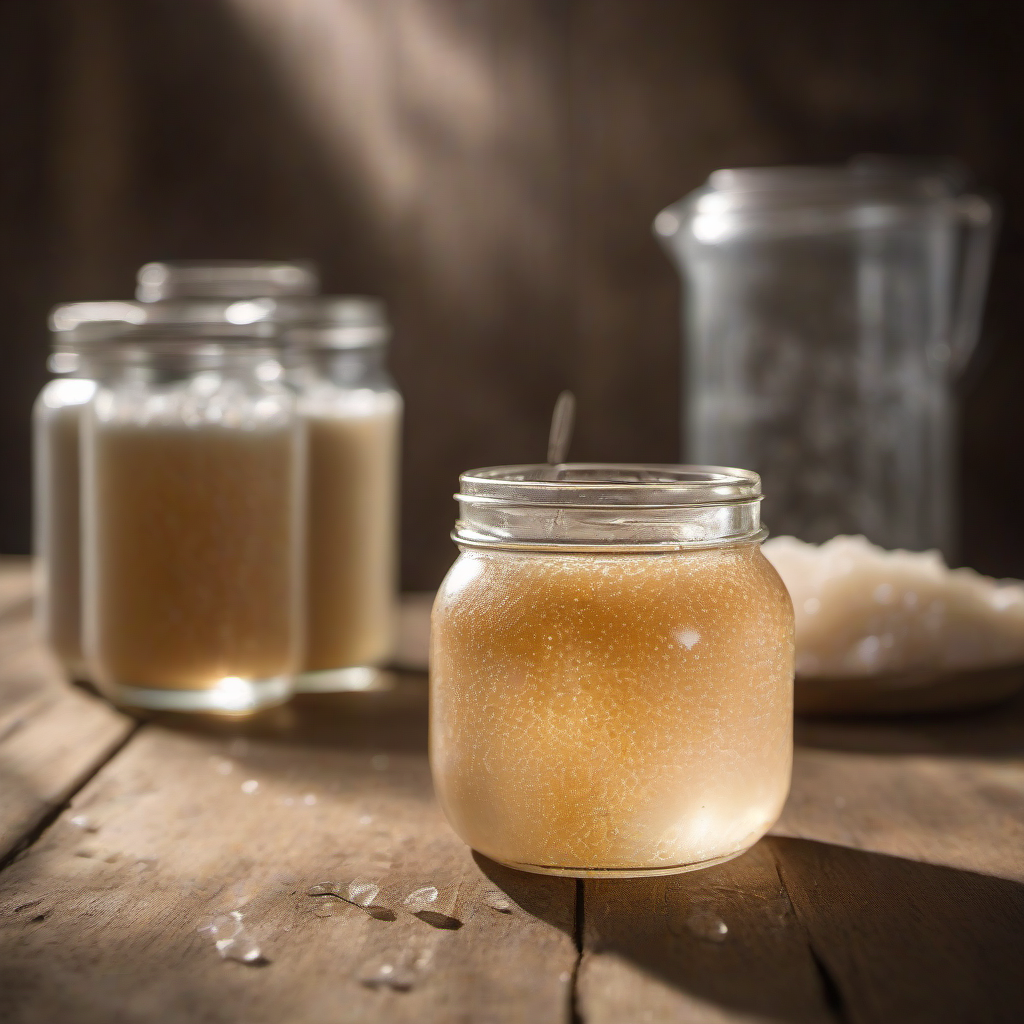
Key Takeaways
- Water kefir grains are living SCOBY cultures containing over 400 species of beneficial bacteria and yeast according to research published in Frontiers in Microbiology.
- The fermentation process converts most sugar into probiotics, organic acids, and CO2, resulting in a drink with significantly less sugar than the starting liquid.
- Properly fermented water kefir contains 10-34 billion CFU (colony-forming units) of probiotics per cup.
- Water kefir grains multiply during fermentation—healthy grains can double in volume every 2-4 weeks with proper care.
- The drink naturally contains trace amounts of alcohol (0.5-1%) from yeast fermentation, similar to kombucha.
- Unlike kombucha which uses tea, water kefir can be made with plain water, juice, coconut water, or herbal infusions.
What Exactly Are Water Kefir Grains?
Water kefir grains are translucent, gelatinous clusters that look like tiny crystals or cauliflower florets. Despite the name, they contain no grain products or gluten. These "grains" are actually symbiotic colonies of bacteria and yeast (SCOBY) held together by a matrix of polysaccharides called kefiran. According to a comprehensive analysis in the Journal of Food Science and Technology, water kefir grains contain: - **Lactic acid bacteria**: Lactobacillus, Leuconostoc, Streptococcus species - **Acetic acid bacteria**: Acetobacter species that produce organic acids - **Yeasts**: Saccharomyces, Candida, and Kluyveromyces strains that create carbonation The exact microbial composition varies by grain source and fermentation conditions, creating unique flavor profiles much like sourdough starter cultures.Water Kefir Grains vs Milk Kefir Grains
Water kefir grains and milk kefir grains are not interchangeable. Milk kefir grains are white, larger, and require lactose to thrive. Water kefir grains are translucent, smaller, and feed on sucrose or fructose. Each is adapted to its specific environment—attempting to ferment water with milk kefir grains will kill the culture over time.How Water Kefir Fermentation Works
The fermentation process transforms simple sugar water into a complex probiotic beverage through microbial metabolism. Here's the biological sequence: 1. **Sugar consumption**: Bacteria and yeast consume sucrose, glucose, and fructose from the sugar water 2. **Acid production**: Lactic acid bacteria produce lactic acid, lowering pH to 3.5-4.5 (mildly acidic) 3. **CO2 generation**: Yeast produces carbon dioxide gas, creating natural carbonation 4. **Alcohol formation**: Yeast fermentation produces trace ethanol (typically 0.5-1% ABV) 5. **Nutrient synthesis**: Microbes produce B vitamins, enzymes, and other bioactive compounds Research from the International Journal of Food Microbiology shows that properly fermented water kefir retains only 20-30% of the starting sugar content, with the remainder converted into probiotics, organic acids, and carbon dioxide.Step-by-Step: How to Make Water Kefir at Home
Making water kefir requires minimal equipment and delivers consistent results once you understand the basic ratios and timing.Equipment You'll Need
- 1-quart glass jar (avoid metal contact with grains during fermentation)
- Plastic or wooden spoon for stirring
- Breathable cover (coffee filter, paper towel, or cloth) secured with rubber band
- Fine-mesh plastic strainer
- Glass bottles with tight seals for second fermentation (optional but recommended)
Ingredients
- 3-4 tablespoons active water kefir grains
- 3 cups filtered or spring water (chlorine-free—chlorine kills beneficial bacteria)
- ¼ cup organic cane sugar or coconut sugar
- Optional minerals: 1 small piece dried unsulfured fruit, pinch of sea salt, or clean eggshell piece
First Fermentation Process
- Dissolve sugar: Combine water and sugar in your glass jar. Stir until sugar completely dissolves. Let cool to room temperature if using warm water—heat above 85°F (29°C) stresses the grains.
- Add grains: Drop water kefir grains into the sugar water. They'll sink initially and may float as fermentation produces CO2.
- Add minerals: Drop in your mineral source. Water kefir grains need trace minerals to thrive—dried fruit provides potassium and magnesium, eggshell provides calcium.
- Cover loosely: Secure breathable cover over jar opening. The culture needs oxygen during primary fermentation.
- Ferment 24-48 hours: Place jar in a spot between 68-78°F (20-25°C) away from direct sunlight. Ferment for 24 hours in warm conditions or up to 48 hours in cooler temperatures.
- Taste test: At 24 hours, sample the liquid. It should taste mildly sweet and slightly tangy. If too sweet, ferment longer. If too sour or vinegary, reduce next fermentation time.
- Strain grains: Pour liquid through plastic strainer into a clean container. The grains remain in the strainer. Remove and discard any fruit pieces.
Second Fermentation (Optional but Recommended)
Second fermentation increases carbonation and allows flavor customization:- Bottle the liquid: Pour strained water kefir into glass bottles with tight-fitting lids, leaving 1 inch of headspace.
- Add flavoring (optional): Add ¼ cup fruit juice, ½ cup fresh fruit, 1-2 tablespoons dried fruit, or fresh herbs like ginger or mint.
- Seal and ferment: Cap bottles tightly. Ferment at room temperature for 12-48 hours. The sealed environment traps CO2, building carbonation.
- Burp daily: Open bottles once daily to release excess pressure and prevent explosions (this is critical in warm weather).
- Refrigerate when ready: Once carbonation reaches your preference, refrigerate to slow fermentation. Cold water kefir stays fresh for 2-3 weeks.
Restarting Your Grains for Continuous Brewing
After straining, immediately restart first fermentation with your grains and fresh sugar water. Healthy grains should never sit idle for more than a few hours—they need a constant food source. If you need to take a break, store grains in sugar water in the refrigerator for up to 2 weeks, or freeze them in sugar water for long-term storage (though this reduces viability).Common Water Kefir Problems and Solutions
Even experienced brewers encounter occasional fermentation challenges. Here are the most common issues and evidence-based fixes.Grains Stop Growing or Shrink
**Cause**: Insufficient minerals in water or extended exposure to chlorine. **Solution**: Add a clean, crushed eggshell or pinch of unrefined sea salt to each batch. Switch to spring water or filtered water verified chlorine-free. According to Kefir Lady, an authority on kefir cultivation, grains should visibly multiply every 2-4 weeks under ideal conditions.No Carbonation in Finished Product
**Cause**: Insufficient yeast activity, loose bottle caps, or cold fermentation temperature. **Solution**: Ensure second fermentation uses bottles with airtight seals (flip-top or screw-cap). Ferment at 72-78°F (22-25°C) where yeast is most active. Add ½ teaspoon of sugar or a small piece of dried fruit to each bottle before sealing—this gives yeast extra food for CO2 production.Liquid Tastes Overly Sour or Vinegary
**Cause**: Over-fermentation or bacterial dominance over yeast. **Solution**: Reduce fermentation time to 18-24 hours. Increase sugar slightly to 5 tablespoons per quart. Lower fermentation temperature to 68-72°F (20-22°C) to slow bacterial acid production. If grains have been over-fermented repeatedly, they may need a "rest" in sugar water in the refrigerator for 3-5 days to rebalance.White or Colored Mold on Grains or Liquid Surface
**Cause**: Contamination from airborne mold spores, unclean equipment, or prolonged exposure to air. **Solution**: Discard entire batch including liquid and grains—mold contamination cannot be reversed. Obtain new grains. Sterilize all equipment with boiling water. Use fresh, chlorine-free water. Ensure cover is breathable but secure enough to keep out dust and insects.Water Kefir vs Other Fermented Drinks
Understanding how water kefir compares to similar probiotic beverages helps you choose the right option for your needs.Water Kefir vs Kombucha
Both are fermented probiotic drinks, but they differ significantly: - **Base ingredient**: Water kefir uses plain water; kombucha requires brewed tea - **Fermentation culture**: Water kefir uses grain cultures; kombucha uses a SCOBY mat - **Caffeine**: Water kefir is naturally caffeine-free; kombucha contains 10-25mg caffeine per cup from tea - **Acidity**: Water kefir is milder (pH 3.5-4.5); kombucha is more acidic (pH 2.5-3.5) - **Fermentation time**: Water kefir ferments in 24-48 hours; kombucha requires 7-14 daysRelated: How Long Does Kombucha Take to Brew — Complete Timeline
According to Kombucha Brewers International, both drinks offer comparable probiotic benefits—choice depends on personal taste preference and caffeine tolerance.Water Kefir vs Milk Kefir
- **Dairy content**: Water kefir is naturally vegan; milk kefir is dairy-based - **Probiotic strains**: Water kefir contains 400+ species; milk kefir contains 30-50 species but at higher concentrations - **Texture**: Water kefir is thin like juice; milk kefir is thick like drinkable yogurt - **Protein**: Water kefir has negligible protein; milk kefir provides 8-11g per cup - **Shelf life**: Water kefir lasts 2-3 weeks refrigerated; milk kefir lasts 1-2 weeks Milk kefir delivers more protein and calcium but is unsuitable for those avoiding dairy. Water kefir provides gut health benefits without allergen concerns.Water Kefir vs Store-Bought Probiotic Drinks
Commercial probiotic drinks like KeVita or GT's Living Foods use controlled fermentation in industrial settings with standardized strains. Homemade water kefir contains a more diverse microbial ecosystem with higher CFU counts per dollar spent—often 10-20 times more affordable than store-bought options. However, commercial products offer consistency and convenience. A hybrid approach—making water kefir at home for daily consumption while purchasing commercial drinks for travel—works well for many people.Flavor Variations and Recipe Ideas
Water kefir's neutral base accepts virtually any flavor profile, making it highly customizable.Fruit-Flavored Water Kefir
Add during second fermentation: - **Berry blend**: ½ cup mixed berries (strawberries, blueberries, raspberries) - **Tropical**: ¼ cup pineapple juice + 2 tablespoons coconut water - **Citrus ginger**: Juice of 1 lemon + 1-inch fresh ginger slice - **Stone fruit**: ¼ cup fresh or dried peaches, apricots, or cherriesHerbal and Botanical Infusions
Add during first or second fermentation: - **Lavender lemon**: 1 tablespoon dried culinary lavender + lemon zest - **Mint cucumber**: Fresh mint leaves + 3-4 cucumber slices - **Hibiscus**: 2 tablespoons dried hibiscus flowers (creates a tart, cranberry-like flavor) - **Vanilla chai**: 1 teaspoon vanilla extract + ¼ teaspoon cinnamonSavory and Functional Additions
- **Turmeric tonic**: 1 teaspoon fresh turmeric + pinch black pepper (increases curcumin absorption) - **Probiotic lemonade**: ¼ cup lemon juice + 1 tablespoon honey - **Green juice kefir**: ¼ cup cucumber-celery-spinach juice blend According to Cultures for Health's extensive recipe database, fruit-based second fermentations produce the highest carbonation levels due to natural fruit sugars feeding residual yeast.Where to Get Water Kefir Grains
Water kefir grains cannot be made from scratch—they must be obtained from an existing culture. Three reliable sources: 1. **Online suppliers**: Cultures for Health and Kefir Lady ship dehydrated grains that reactivate in 3-5 fermentation cycles 2. **Local fermentation communities**: Check Facebook groups, Reddit's r/fermentation, or local food co-ops for people sharing excess grains 3. **Health food stores**: Some stores with fermentation sections sell fresh or dehydrated starter cultures Expect to pay $10-20 for a starter culture that will last indefinitely with proper care. Since grains multiply continuously, many home brewers eventually have excess to share or sell.People Also Ask
Does water kefir contain alcohol?
Yes, water kefir contains trace amounts of alcohol produced by yeast fermentation, typically 0.5-1% ABV. This is similar to kombucha and significantly lower than beer (4-6% ABV). Extended fermentation or added fruit increases alcohol content slightly but rarely exceeds 2% in home brewing conditions.
Can I use tap water to make water kefir?
Only if your tap water is chlorine-free. Chlorine and chloramine—common municipal water additives—kill beneficial bacteria and yeast in kefir grains. Use a carbon filter pitcher, let tap water sit uncovered for 24 hours to off-gas chlorine, or use bottled spring water. Well water works if free of heavy metals.
Is water kefir safe during pregnancy?
Generally yes, but consult your healthcare provider first. Water kefir provides beneficial probiotics that support digestive health during pregnancy. The trace alcohol content is typically negligible. However, some practitioners recommend avoiding unpasteurized fermented foods during pregnancy due to rare contamination risks. Commercial pasteurized probiotic drinks are a safer alternative if concerned.
Expert Verdict
Water kefir is the most accessible, affordable, and versatile probiotic drink for home fermentation. The drink's neutral flavor profile accepts endless customization, making it suitable for anyone from children to athletes to those managing digestive conditions. The primary challenges—maintaining grain health and achieving consistent carbonation—are easily solved with proper mineral supplementation and temperature control. For anyone seeking a daily probiotic habit without dairy, caffeine, or complex brewing processes, water kefir is the optimal choice.
Summary
- Water kefir is a probiotic fermented beverage made by culturing water kefir grains in sugar water for 24-48 hours, producing a lightly sweet, carbonated drink containing 10-34 billion CFU of beneficial bacteria per cup.
- Water kefir grains are symbiotic colonies of over 400 species of bacteria and yeast held together by polysaccharides—they are not actual grains and contain no gluten or grain products.
- The basic recipe requires only four ingredients: water kefir grains, chlorine-free water, sugar, and an optional mineral source like dried fruit or eggshell.
- Fermentation converts 70-80% of starting sugar into probiotics, organic acids, and carbon dioxide, resulting in a drink with only 3-5g residual sugar per cup and trace alcohol (0.5-1% ABV).
Frequently Asked Questions
How long do water kefir grains last?
Indefinitely with proper care. Healthy water kefir grains continuously multiply and can be passed down through generations. They need consistent feeding with fresh sugar water every 24-48 hours. If stored in the refrigerator in sugar water, they remain viable for 2-3 weeks. Frozen grains last months but require 5-7 fermentation cycles to reactivate fully.
Can I flavor water kefir during first fermentation?
Not recommended. Adding fruit, juice, or flavoring during first fermentation exposes grains to acids and compounds that weaken them over time. Always flavor during second fermentation after straining grains out. The only safe first fermentation additions are mineral sources like dried unsulfured fruit or eggshell pieces.
Why is my water kefir fizzy on top but flat on bottom?
Incomplete carbonation distribution. CO2 produced by yeast rises and concentrates near the top. Solution: gently swirl bottles daily during second fermentation to distribute carbonation evenly. Ensure bottles are completely full (leaving only 1 inch headspace) so less CO2 escapes into air gaps.
Can water kefir grains ferment juice instead of sugar water?
Short-term yes, long-term no. Grains can ferment pure fruit juice for 1-2 batches, but the acids and compounds in juice stress the culture. For sustained health, grains need plain sugar water as their primary food source. Use juice only during second fermentation or for occasional single batches.
Does water kefir need to be refrigerated?
After fermentation, yes. Finished water kefir continues fermenting slowly at room temperature, becoming increasingly sour and vinegary within days. Refrigeration slows microbial activity to near dormancy, preserving flavor and carbonation for 2-3 weeks. Active grains in first fermentation stay at room temperature during the 24-48 hour fermentation window.
What is the white film on my water kefir grains?
If smooth and consistent, it's normal yeast buildup. Healthy kefir grains develop a slight white coating from yeast activity. Rinse grains gently in filtered water every 4-6 fermentation cycles if buildup becomes heavy. If the film is fuzzy, colored, or has visible growth, discard everything—that indicates mold contamination.
More Kefir Articles
This article was produced by an automated research tool. Content is for informational purposes only and should not replace professional advice. Nothing here is medical advice, and it is not a substitute for it. Talk to a doctor about anything affecting your health. Product and resource links throughout this article are included for informational value based on relevance and quality. WhichBrewForYou has no affiliate relationship with any linked third-party site and receives no commission from any recommended products or brands. BellofattoBrews (coffee and tea) and Golden Hive Mead (mead kits and resources) are personal recommendations from this publication's founder and have no affiliation with WhichBrewForYou.