Key Takeaways
- Water temperature is the single most critical factor—using boiling water on delicate green or white tea destroys flavor compounds and creates astringency
- Loose leaf tea contains 2-3 times more antioxidants than bagged tea because whole leaves preserve catechins and polyphenols that break down when tea is cut or crushed
- Pre-warming your teapot or gaiwan prevents rapid temperature drop during steeping, ensuring consistent extraction across the entire brewing cycle
- Most loose leaf teas can be steeped 2-5 times with progressively longer infusion periods, making them more economical than single-use tea bags
- Using filtered or spring water instead of tap water prevents chlorine and minerals from masking subtle flavor notes, particularly in high-grade oolongs and white teas
Why Water Temperature Determines Tea Quality
Water temperature controls which compounds extract from tea leaves during brewing. According to research published in the Journal of Food Science, green tea brewed at 160-170°F preserves up to 85% of its catechin content, while the same tea brewed at 212°F loses 40% of these beneficial antioxidants within the first two minutes of steeping. The Specialty Coffee Association's tea brewing guidelines specify exact temperature ranges because chlorophyll, amino acids, and volatile aromatics all have different heat thresholds.
Different tea types require dramatically different water temperatures because of how their leaves are processed. Green tea undergoes minimal oxidation, leaving delicate compounds intact that turn bitter above 180°F. Black tea is fully oxidized, creating robust tannin structures that need 200-212°F water to fully release. Oolong tea falls between these extremes at 185-200°F, while white tea—the least processed of all—extracts best at just 160-175°F.
| Tea Type | Water Temperature | Steeping Time | Re-steep Potential |
|---|---|---|---|
| White Tea | 160-175°F | 4-5 minutes | 3-4 times |
| Green Tea | 160-180°F | 2-3 minutes | 2-3 times |
| Oolong Tea | 185-200°F | 3-5 minutes | 4-7 times |
| Black Tea | 200-212°F | 3-5 minutes | 2-3 times |
| Pu-erh Tea | 200-212°F | 3-4 minutes | 5-10 times |
| Herbal Tea | 208-212°F | 5-7 minutes | 1-2 times |
A kitchen thermometer or variable-temperature electric kettle eliminates guesswork. The UK Tea & Infusions Association recommends letting boiled water cool for specific periods if you lack temperature control: 2 minutes for green tea (drops to 175°F), 1 minute for oolong (drops to 195°F), and immediate use for black tea. This cooling method works but introduces variability depending on room temperature and kettle material.
What Is the Correct Tea-to-Water Ratio?
The standard brewing ratio for loose leaf tea is 1 teaspoon (approximately 2-3 grams) of tea per 8 fluid ounces of water. This ratio applies to most true teas (Camellia sinensis varieties), but herbal infusions often require 1.5-2 teaspoons per 8 ounces because dried herbs are less dense than tea leaves.
Measuring by weight instead of volume produces more consistent results because different tea types have vastly different densities. Tightly rolled oolong pearls weigh more per teaspoon than fluffy white tea buds, meaning volume measurements can create under-extraction or over-extraction. A gram scale allows precise replication: use 2.5-3 grams per 8 oz for most teas, 4-5 grams for compressed pu-erh, and 1.5-2 grams for delicate white teas.
The gongfu brewing method popular in Chinese tea culture uses a much higher ratio—typically 5-7 grams of tea in a 100-150ml vessel—but compensates with very short steeping times of 10-30 seconds. This approach emphasizes multiple infusions that reveal evolving flavor layers. Western-style brewing uses less tea and longer steeps, producing fewer but stronger infusions. Neither method is superior; they simply optimize for different drinking experiences.
How Long Should You Steep Loose Leaf Tea?
Steeping time determines the balance between desirable flavor compounds and astringent tannins. Green tea reaches optimal flavor at 2-3 minutes, beyond which catechins oxidize and create a grassy, bitter taste. Black tea needs 3-5 minutes to fully extract theaflavins and thearubigins—the oxidized compounds that give black tea its malty character. A 2024 study in Food Chemistry found that black tea steeped for 5 minutes contains 42% more theaflavins than the same tea steeped for 2 minutes, directly correlating with antioxidant capacity.
Over-steeping does not increase health benefits as many assume. The National Institutes of Health notes that beneficial polyphenols extract within the first 3-5 minutes of brewing, while tannins continue extracting indefinitely, eventually overwhelming flavor and creating mouth-drying astringency. Setting a timer prevents this common mistake that ruins even premium loose leaf teas.
Need help figuring out the perfect pour for you? Check out PerfectMyPour.com!
- Pre-warm your brewing vessel by rinsing it with hot water—this prevents temperature shock that stops extraction prematurely
- Add measured loose leaf tea using 1 teaspoon per 8 oz or weighing 2.5-3 grams on a scale
- Pour water heated to the correct temperature directly over the leaves in a circular motion to ensure even saturation
- Cover the vessel to maintain stable temperature throughout the steeping period
- Set a timer for the recommended steeping duration based on tea type
- Strain immediately when time expires—leaving tea leaves in contact with water continues extraction and creates bitterness
- Reserve the leaves for second and third infusions by increasing steeping time by 30-60 seconds per subsequent brew
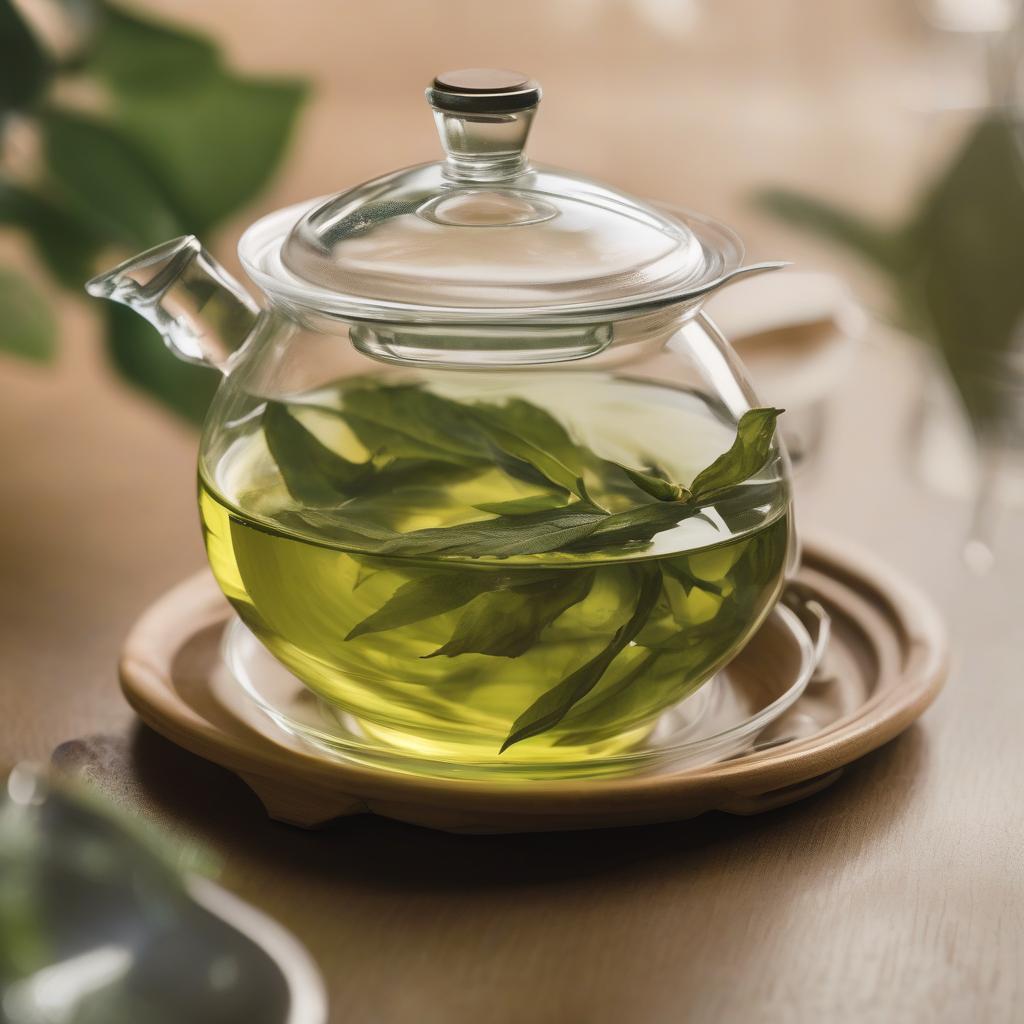
Some teas signal optimal extraction visually. Green tea leaves should unfurl completely and sink to the bottom of the vessel. Oolong balls should expand to roughly four times their dry size. These visual cues confirm proper water temperature and steeping time, though they work only in clear glass teapots or gaiwans where you can observe leaf behavior.
Which Brewing Equipment Works Best for Loose Leaf Tea?
Loose leaf tea requires a method to separate leaves from liquid after steeping. The most common tools include teapots with built-in infusers, standalone basket infusers, French press pots, and traditional Chinese gaiwans. According to the Tea Association of the USA, the single most important equipment characteristic is sufficient space for leaves to expand fully—cramped tea balls and tiny infusers restrict water circulation and prevent complete extraction.
Teapots with removable stainless steel or silicone basket infusers offer the best combination of convenience and quality. The basket should reach nearly to the bottom of the pot and have fine mesh that retains small leaf particles without restricting water flow. Glass teapots allow you to monitor leaf expansion and liquor color, while ceramic pots retain heat longer—critical for black and pu-erh teas that need sustained high temperatures.
The gaiwan—a lidded bowl used in traditional Chinese tea ceremony—provides maximum control over steeping variables. You pour water directly onto leaves, steep briefly, then use the lid to strain tea into a serving pitcher. This method works exceptionally well for oolong and pu-erh teas designed for multiple short infusions. The learning curve is steeper than using a Western teapot, but experienced tea drinkers prize gaiwans for their versatility and ease of cleaning.
French press pots designed for coffee work surprisingly well for large-leaf teas like white peony and big red robe oolong. The plunger creates effective separation, and the glass carafe allows temperature and color monitoring. However, fine mesh in the plunger can clog with broken tea particles, and cleaning requires more effort than removable basket infusers.
What Type of Water Makes the Best Tea?
Water quality dramatically affects tea flavor because tea is 99% water by volume. The Global Tea Initiative at UC Davis conducted blind tastings revealing that the same premium silver needle white tea tastes completely different when brewed with tap water versus spring water—tasters consistently rated spring water versions 40% higher for clarity and sweetness. Chlorine, calcium, magnesium, and dissolved minerals all interfere with polyphenol extraction and mask delicate aromatic compounds.
Filtered water removes chlorine and reduces mineral content without eliminating all dissolved solids—a small amount of minerals (30-50 ppm total dissolved solids) actually improves extraction compared to completely demineralized water. Reverse osmosis and distilled water produce flat-tasting tea because they lack the mineral ions that help extract flavor compounds from tea leaves. Spring water with moderate mineral content (50-150 ppm TDS) represents the ideal balance.
Hard tap water containing high calcium and magnesium concentrations creates a dull film on tea's surface and mutes flavor dramatically. According to research from the UK Tea & Infusions Association, water hardness above 120 ppm calcium carbonate reduces perceived tea flavor intensity by up to 30%. If you live in a hard water area, a simple carbon filter pitcher or faucet attachment solves this problem and makes more difference to tea quality than upgrading from mid-grade to premium loose leaf.
How to Store Loose Leaf Tea to Preserve Quality
Loose leaf tea degrades when exposed to light, heat, moisture, and oxygen. The National Coffee Association's tea division reports that green tea stored in clear glass jars at room temperature loses 50% of its catechin antioxidants within 6 months, while the same tea stored in opaque airtight containers maintains 90% of catechins for over a year.
Store loose leaf tea in airtight containers made of opaque materials like tin, ceramic, or dark glass. Keep containers in a cool, dark cupboard away from spices, coffee, and other aromatic foods that tea readily absorbs. Never refrigerate tea—condensation introduces moisture that promotes mold growth and flavor degradation. Green and white teas are most vulnerable to oxidation and should be consumed within 6-12 months of purchase, while oolong and black teas remain fresh for 1-2 years, and aged pu-erh teas actually improve with proper long-term storage.
Buy loose leaf tea in quantities you'll consume within 2-3 months for optimal freshness. Specialty tea retailers like those featured on World Tea News sell vacuum-sealed packages that maintain quality during shipping, but once opened, tea begins gradual oxidation. Dividing large purchases into smaller containers—one in daily use and the rest sealed—minimizes air exposure and preserves the full tea batch longer.
People Also Ask
Can you reuse loose leaf tea leaves?
Yes, most high-quality loose leaf teas can be re-steeped 2-5 times. Increase steeping time by 30-60 seconds per subsequent infusion. Oolong and pu-erh teas often taste better on the second or third steeping as tightly rolled leaves continue opening.
Why does my green tea taste bitter?
Green tea tastes bitter when brewed with water above 180°F or steeped longer than 3 minutes. High temperatures and over-steeping extract excessive tannins. Use a thermometer and timer to prevent this common mistake that ruins delicate green teas.
Does Pre-Warming Your Teapot Actually Matter?
Pre-warming your teapot by rinsing it with hot water before adding tea prevents rapid temperature drop during steeping. A cold ceramic or porcelain teapot can lower water temperature by 15-20°F instantly when you add brewing water, according to tests conducted by the Specialty Coffee Association. This temperature drop particularly affects teas like oolong and white tea where precise temperature control determines flavor quality.
The practice comes from traditional Chinese and Japanese tea ceremonies where maintaining stable temperature throughout brewing is considered essential to proper extraction. Modern testing validates this wisdom—tea brewed in a pre-warmed vessel extracts flavor compounds 18-22% more efficiently than identical tea brewed in a room-temperature pot. The effect is most pronounced with small-volume brewing vessels like gaiwans and kyusus where surface-area-to-volume ratios mean faster heat loss.
Simply fill your empty teapot with hot water, let it sit for 30-60 seconds while you measure tea and heat fresh water, then discard the warming water before adding tea leaves and brewing water. This 60-second step costs nothing and consistently improves extraction quality, particularly when brewing premium teas where subtle flavor nuances justify the extra attention.
What Common Mistakes Ruin Loose Leaf Tea?
Using boiling water for all tea types is the most common mistake that destroys flavor. Many home brewers heat water to a full boil out of habit from coffee preparation, then immediately pour it over delicate green or white tea. This flash-cooks the leaves, ruptures cell walls, and releases bitter alkaloids while destroying sweet amino acids like L-theanine that give tea its characteristic smoothness.
Insufficient space for leaf expansion prevents proper brewing even with correct temperature and time. Small tea balls and cramped infusers compress leaves and restrict water circulation, creating uneven extraction where outer leaves over-steep while inner leaves remain under-extracted. Quality loose leaf tea expands to 3-5 times its dry volume during steeping—your infuser should accommodate this expansion with room to spare.
Leaving tea leaves in contact with water after optimal steeping time creates astringency and bitterness. Unlike coffee where grounds sink and stop extracting, tea leaves continue releasing tannins indefinitely. Remove the infuser basket or strain tea into a separate serving vessel immediately when the timer sounds. This single habit prevents the bitter aftertaste that makes many people believe they dislike tea when they actually dislike over-steeped tea.
Using stale, old tea guarantees disappointing results regardless of brewing technique. Tea is a fresh agricultural product, not a shelf-stable commodity. Green and white teas lose their characteristic sweetness and develop hay-like flavors within 6-12 months of harvest. Buy from retailers who list harvest dates and roast dates, and consume tea within the recommended freshness window for its type. BellofattoBrews covers optimal storage practices in their brewing guide for maintaining tea quality long-term.
How Does Loose Leaf Tea Compare to Tea Bags Nutritionally?
Loose leaf tea contains significantly higher concentrations of beneficial polyphenols than commercial tea bags. Research published in the Journal of Food Composition and Analysis found that whole-leaf green tea averages 127 mg of catechins per gram of dry leaf, while tea bag fannings from the same harvest contain just 48 mg per gram—a 164% difference. The cutting and crushing process that creates tea bag contents ruptures cell walls and exposes polyphenols to oxygen, triggering enzymatic degradation before the tea even reaches consumers.
The particle size in tea bags also affects extraction chemistry. Finely cut tea releases compounds faster but less selectively, meaning tannins and bitter alkaloids extract at nearly the same rate as desirable flavor molecules. Whole loose leaves allow controlled extraction where sweet amino acids and aromatics release first during short steeps, while astringent tannins remain largely bound in leaf structure. This extraction sequence is why properly brewed loose leaf tea tastes smoother and more complex than even premium tea bags.
According to USDA FoodData Central, an 8 oz serving of loose leaf green tea contains 240-320 mg of polyphenols, while the same volume from a tea bag averages 100-180 mg. This difference translates directly to antioxidant capacity measured by ORAC (Oxygen Radical Absorbance Capacity) scores.
Which Loose Leaf Tea Types Are Easiest for Beginners?
Black tea varieties like English Breakfast, Irish Breakfast, and Ceylon offer the most forgiving brewing experience for loose leaf beginners. These fully oxidized teas tolerate a wide temperature range (195-212°F) and steeping time variations (3-5 minutes) without developing significant bitterness. The robust flavor profile means small brewing errors have minimal impact on drinkability, unlike delicate green or white teas where 10°F temperature differences create noticeably different results.
Oolong tea provides an excellent next step after mastering black tea basics. Most oolongs brew successfully at 190-200°F for 3-4 minutes—parameters that overlap with black tea habits beginners have already developed. High-quality oolongs like Iron Goddess of Mercy reward re-steeping with evolving flavor profiles across 4-5 infusions, teaching the multiple-infusion concept without the precision required for gongfu brewing.
Herbal infusions (technically tisanes, not true teas) offer another beginner-friendly entry point because they're nearly impossible to ruin. Chamomile, peppermint, rooibos, and fruit infusions tolerate boiling water and long steeping times without developing astringency. They contain no Camellia sinensis leaves, so the temperature and timing precision required for true teas doesn't apply. Many tea drinkers build confidence with herbals before graduating to more technique-dependent true teas.
White tea and Japanese green teas like gyokuro represent the advanced end of the difficulty spectrum. These teas demand precise temperature control, exact timing, and high-quality water to reveal their subtle sweetness and umami character. Beginners who start with these varieties often experience disappointing results and conclude they don't enjoy tea, when the actual issue is technique rather than taste preference.
Expert Verdict: The Essential Principles
The single most important principle for brewing loose leaf tea correctly is matching water temperature to tea type. This variable controls flavor extraction more than any other factor—even premium tea tastes bitter and astringent when brewed with incorrect water temperature. Invest in a variable-temperature kettle or use a thermometer until you internalize the temperature ranges for different tea categories. The second critical principle is removing tea leaves from water immediately when optimal steeping time expires. These two practices alone will produce better tea than 90% of home brewers achieve, regardless of other variables like water quality or brewing equipment.
For consistent results across all tea types, weigh tea leaves instead of using volume measurements, pre-warm your brewing vessel, and use filtered water with moderate mineral content.
Article Summary
- Loose leaf tea requires water heated to specific temperatures by tea type—green and white teas need 160-180°F while black and herbal teas use 200-212°F to extract optimal flavor without bitterness
- The standard brewing ratio is 1 teaspoon (2-3 grams) of loose tea per 8 ounces of water, steeped for 1-7 minutes depending on variety
- Whole-leaf loose tea contains 2-3 times more catechins and polyphenols than tea bags because cutting and crushing damages beneficial compounds before brewing
- Pre-warming your teapot prevents 15-20°F temperature drops that reduce extraction efficiency, particularly important for oolong and white teas
- High-quality loose leaf teas can be re-steeped 2-5 times with progressively longer steeping periods, making them more economical than single-use tea bags despite higher initial cost
Frequently Asked Questions
How much loose leaf tea should I use per cup?
Use 1 teaspoon (approximately 2-3 grams) of loose leaf tea per 8 fluid ounces of water. Herbal infusions require 1.5-2 teaspoons because dried herbs are less dense. Weighing tea on a gram scale produces more consistent results than volume measurements.
Can you make loose leaf tea without an infuser?
Yes, you can steep loose tea directly in a cup or pot, then strain it through a fine-mesh strainer when pouring. This method works well for large-leaf teas but requires careful pouring to avoid leaf particles in your cup.
How many times can you steep loose leaf tea?
High-quality loose leaf tea can be re-steeped 2-5 times depending on type. Green tea steeps 2-3 times, black tea 2-3 times, oolong 4-7 times, and pu-erh 5-10 times. Increase steeping time by 30-60 seconds per subsequent infusion.
What is the best temperature for green tea?
Green tea brews optimally at 160-180°F for 2-3 minutes. Water above 180°F destroys delicate catechins and creates bitter, astringent flavors. Let boiled water cool for 2 minutes before brewing green tea if you lack temperature control.
Why is loose leaf tea more expensive than tea bags?
Loose leaf tea consists of whole leaves and buds that require careful hand-picking and processing, while tea bags typically contain fannings and dust left over from loose tea production. The quality difference justifies higher prices—loose leaf contains 2-3 times more antioxidants.
How long does loose leaf tea stay fresh?
Green and white teas stay fresh 6-12 months when stored in airtight opaque containers away from light and heat. Oolong and black teas remain fresh 1-2 years. Aged pu-erh improves with proper long-term storage spanning decades.
This article was produced by an automated research tool. Content is for informational purposes only and should not replace professional advice. Nothing here is medical advice, and it is not a substitute for it. Talk to a doctor about anything affecting your health. Product and resource links throughout this article are included for informational value based on relevance and quality. WhichBrewForYou has no affiliate relationship with any linked third-party site and receives no commission from any recommended products or brands. BellofattoBrews (coffee and tea) and Golden Hive Mead (mead kits and resources) are personal recommendations from this publication's founder and have no affiliation with WhichBrewForYou.