Key Takeaways
- Fresh coffee beans lose peak flavor within 2-3 weeks after roasting; buy whole beans and grind immediately before brewing
- Water quality accounts for 98% of your coffee—use filtered water with 150 TDS (total dissolved solids) for optimal extraction
- The golden ratio is 1:16 (1 gram coffee to 16 grams water), adjustable to personal taste between 1:15 and 1:18
- Consistent grind size matters more than expensive equipment—uniform particle size ensures even extraction
- Brewing temperature between 195-205°F extracts optimal flavors; hotter causes bitterness, cooler yields sourness
- Different brewing methods highlight different flavor profiles: immersion methods create body, percolation methods create clarity
Learning how to brew the perfect cup of coffee transforms your daily ritual from routine caffeine delivery into an intentional sensory experience. The difference between mediocre coffee and extraordinary coffee lies not in expensive equipment, but in understanding and controlling six fundamental variables: bean selection, grind size, water quality, temperature, ratio, and extraction time. Professional baristas and coffee scientists agree that mastering these elements allows anyone to consistently produce cafe-quality coffee at home.
Why Fresh Coffee Beans Are Non-Negotiable
Coffee reaches peak flavor 3-14 days after roasting, then begins rapidly losing aromatic compounds through oxidation and CO2 degassing. Research published in the Journal of Agricultural and Food Chemistry demonstrates that roasted coffee loses approximately 60% of its volatile aromatic compounds within the first month after roasting. These compounds—including furans, pyrazines, and aldehydes—create the complex flavors we associate with exceptional coffee.
When selecting beans for how to brew the perfect cup of coffee, prioritize:
- Roast date visibility: Purchase from roasters who print the exact roast date, not generic "best by" dates
- Whole bean format: Pre-ground coffee loses flavor 10 times faster than whole beans due to increased surface area exposure
- Storage in valve-sealed bags: One-way degassing valves allow CO2 to escape while preventing oxygen infiltration
- Single-origin transparency: Beans labeled with specific farm, region, elevation, and processing method indicate quality sourcing
Store your beans in an airtight, opaque container at room temperature. Contrary to popular belief, freezing coffee beans causes condensation damage and freezer burn. The highest quality coffee beans deserve proper storage to preserve their carefully developed flavor profiles.
What Grind Size Does to Coffee Extraction
Grind size controls extraction rate—the speed at which water dissolves soluble compounds from coffee particles. Finer grinds increase surface area and accelerate extraction, while coarser grinds slow extraction and reduce intensity. The Specialty Coffee Association's technical standards specify grind distributions for each brewing method based on optimal extraction yield (18-22% of total coffee mass) and strength (1.15-1.35% dissolved coffee solids).
| Brewing Method | Grind Size | Particle Comparison | Extraction Time |
|---|---|---|---|
| Turkish Coffee | Extra Fine | Powder / flour texture | 3-4 minutes |
| Espresso | Fine | Table salt texture | 25-30 seconds |
| Pour-Over (V60, Chemex) | Medium-Fine | Sand texture | 2.5-3.5 minutes |
| Drip Coffee Maker | Medium | Sea salt texture | 4-6 minutes |
| French Press | Coarse | Breadcrumbs texture | 4 minutes |
| Cold Brew | Extra Coarse | Peppercorn texture | 12-24 hours |
Burr grinders produce uniform particle sizes essential for even extraction, while blade grinders create inconsistent "boulders and fines" that simultaneously over-extract and under-extract. Studies from the University of California, Davis Coffee Center show that grind uniformity impacts flavor clarity more significantly than grinder cost—a consistent $50 burr grinder outperforms an inconsistent $200 blade grinder.
How Water Quality Changes Everything
Water comprises 98-99% of brewed coffee, making it the most influential ingredient after the beans themselves. Filtered water with balanced mineral content (150 TDS) extracts optimal flavor, while distilled water produces flat coffee and hard water creates chalky, bitter brews. The Specialty Coffee Association's water quality standards specify:
- Total Dissolved Solids (TDS): 150 mg/L (range 75-250 mg/L)
- Calcium hardness: 4 grains or 68 mg/L
- Total alkalinity: 40 mg/L
- pH: 7.0 (neutral)
- Sodium: 10 mg/L
- Chlorine: 0 mg/L
Tap water quality varies dramatically by region. Chlorine creates medicinal flavors, high calcium causes scaling in equipment and chalky mouthfeel, while mineral-deficient water (like distilled or reverse osmosis water) fails to extract properly. Simple carbon filters remove chlorine and improve taste without stripping beneficial minerals. For precise control, coffee professionals use water mineralization recipes like the Barista Hustle water formula, adding calculated amounts of magnesium sulfate and sodium bicarbonate to distilled water.
What Temperature Extracts the Best Flavors
Water temperature directly controls which compounds dissolve from coffee grounds. The optimal brewing temperature range is 195-205°F (90-96°C), extracting desirable flavors without pulling harsh, bitter compounds. Research from the Coffee Brewing Institute demonstrates that:
- Below 195°F: Under-extraction occurs, producing sour, weak coffee lacking body and sweetness
- 195-205°F: Balanced extraction pulls acids, sugars, and aromatic oils proportionally
- Above 205°F: Over-extraction emphasizes bitter chlorogenic acid lactones and harsh quinic acids
- Above 212°F (boiling): Scorching occurs, creating burnt, ashy flavors
Most automatic drip machines heat water to 180-190°F—below optimal range. If brewing manually, boil filtered water then let it rest 30-45 seconds to reach 200-205°F. Use a thermometer initially to calibrate timing, then replicate by feel. Preheating your brewing vessel (pour hot water in, swirl, discard) prevents temperature drop during brewing. The perfect pour technique maintains consistent temperature throughout extraction.
The Golden Ratio: How Much Coffee to Use
The coffee-to-water ratio determines strength and intensity. The universally accepted golden ratio is 1:16—one gram of coffee for every sixteen grams (or milliliters) of water. This ratio produces coffee with approximately 1.25% dissolved solids, matching professional cupping standards. However, personal preference varies:
- Stronger coffee (1:15 ratio): 20 grams coffee to 300ml water
- Standard coffee (1:16 ratio): 18.75 grams coffee to 300ml water
- Lighter coffee (1:17 ratio): 17.6 grams coffee to 300ml water
- Mild coffee (1:18 ratio): 16.7 grams coffee to 300ml water
A digital scale accurate to 0.1 grams eliminates guesswork. Volumetric measurements (tablespoons) fail because coffee density varies by roast level and origin—a "tablespoon" of light roast Ethiopian coffee weighs differently than dark roast Brazilian coffee. For a standard 12-ounce (355ml) cup, use 22 grams of coffee at 1:16 ratio. Scale your recipe proportionally: 30 grams for a 16-ounce mug, 45 grams for a 24-ounce French press serving two people.
Mastering Pour-Over Coffee Technique
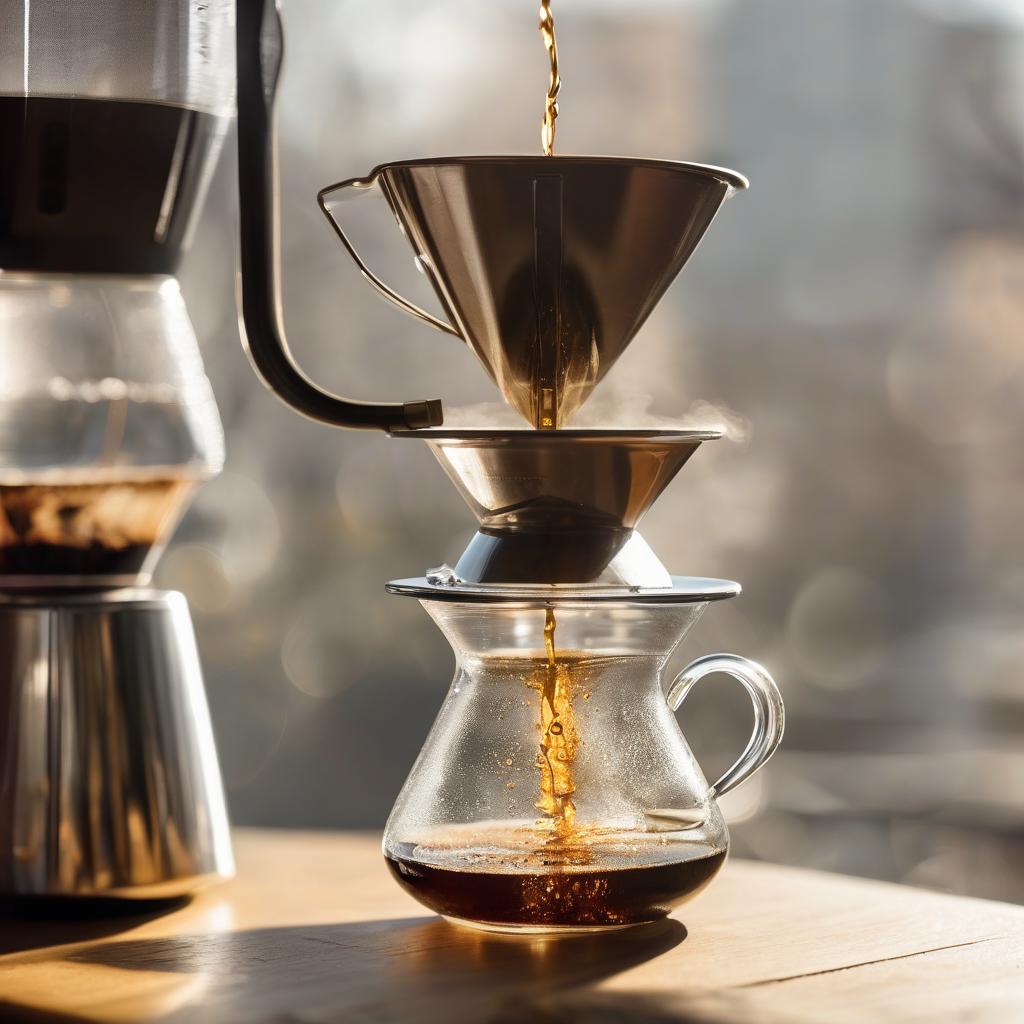
Pour-over methods (Hario V60, Chemex, Kalita Wave) produce clean, nuanced coffee highlighting origin characteristics. The key to pour-over success is controlled, pulsed pouring that maintains consistent contact between water and grounds. Follow this proven technique:
- Rinse the filter: Pour hot water through the paper filter to remove paper taste and preheat the brewer (discard rinse water)
- Add grounds and level: Pour 22 grams medium-fine coffee into the filter and gently shake to create a flat bed
- Bloom phase (0:00-0:45): Pour 44 grams water (2x coffee weight) in a spiral pattern, ensuring all grounds are saturated. Wait 45 seconds while CO2 escapes
- First pour (0:45-1:15): Pour to 150 grams total in a slow, steady spiral from center outward, avoiding filter edges
- Second pour (1:15-2:00): Pour to 260 grams total using the same spiral technique
- Final pour (2:00-2:30): Pour to 352 grams (final target), maintaining water level just below filter rim
- Drain and serve (2:30-3:30): Allow coffee to drain completely—total brew time should be 3-3.5 minutes
Pour-over rewards patience and precision. Pouring too fast creates channeling (water finding easy paths around coffee), while pouring too slowly causes temperature loss. Maintain a steady stream about the thickness of a pencil. Explore different specialty coffee origins to experience how pour-over highlights subtle flavor differences.
French Press Coffee: Maximizing Body and Oils
French press (plunger pot, press pot) creates full-bodied, textured coffee by allowing grounds to steep directly in water without paper filtration. Metal mesh filters permit coffee oils and fine particles through, producing richer mouthfeel and deeper flavor complexity than paper-filtered methods. Master the French press technique:
- Preheat the carafe: Pour boiling water into the French press, swirl, and discard
- Add coarse-ground coffee: Use 30 grams for a standard 500ml (17oz) French press
- Start timer and add water: Pour 480 grams of 200°F water over grounds, saturating evenly
- Stir at 1 minute: Use a wooden or plastic spoon to gently stir, breaking the crust of floating grounds
- Place lid without plunging: Position the plunger just touching the surface to retain heat
- Plunge at 4 minutes: Press slowly and steadily—forcing the plunger creates agitation and bitterness
- Serve immediately: Pour all coffee into cups or a thermal carafe—leaving coffee on grounds continues extraction
Common French press mistakes include grinding too fine (creating sludge), brewing too long (over-extraction), and leaving brewed coffee in the carafe (continued steeping makes bitter coffee). The metal mesh allows more sediment than paper filters—if you prefer cleaner coffee, decant through a paper filter after plunging, or try a Clever Dripper for immersion brewing with paper filtration.
Espresso at Home: Pressure-Based Extraction
Espresso uses 9 bars of pressure to force hot water through finely-ground, tightly-packed coffee in 25-30 seconds, extracting concentrated coffee with characteristic crema (foam layer). Perfect espresso requires precise grinding, exact dosing, proper tamping, and calibrated machines—making it the most technical brewing method. Key espresso parameters:
- Dose: 18-20 grams for double shot (standard)
- Grind: Fine, adjusted daily based on humidity and bean age
- Tamp pressure: 30 pounds of force, creating level, compact puck
- Water temperature: 200°F (93°C)
- Pressure: 9 bars throughout extraction
- Yield: 36-40 grams liquid output (1:2 ratio)
- Time: 25-30 seconds from pump activation to target weight
Home espresso machines range from $200 entry-level units to $3,000+ prosumer machines. Entry-level machines struggle with temperature stability and pressure consistency. Mid-range machines ($500-1,200) with PID temperature control and pre-infusion features produce excellent results. The grinder matters more than the machine—invest in a quality burr grinder with stepless or fine adjustment before upgrading your espresso machine.
Dial in espresso by adjusting grind size: if extraction finishes too fast (<25 seconds), grind finer; if too slow (>30 seconds), grind coarser. Look for a steady stream that starts thin, thickens to a "mouse tail" appearance, then lightens—stop at 40 grams liquid weight. Perfect espresso tastes sweet and balanced, without harsh bitterness or sour astringency.
Automatic Drip Coffee Makers: Choosing Quality Equipment
Automatic drip machines offer convenience but vary dramatically in brewing capability. The Specialty Coffee Association certifies home brewers that meet technical standards for water temperature, contact time, and extraction uniformity. SCA-certified brewers maintain 195-205°F throughout brewing and properly saturate grounds with shower-head spray patterns. Certified models include Technivorm Moccamaster, Bonavita, Breville Precision Brewer, and Cuisinart models.
Non-certified drip makers often heat water to only 180-190°F and create uneven saturation, resulting in weak, sour coffee. When shopping for automatic brewers, verify: thermal carafe (keeps coffee hot without continued heating that causes bitterness), flat-bottom or cone filter basket (better extraction than curved baskets), programmable brew strength settings, and brew pause feature.
Even with quality equipment, follow best practices: use fresh beans, grind immediately before brewing, descale monthly with vinegar or citric acid solution, replace charcoal water filters every 60 days, and clean the brew basket and carafe daily. Automatic brewers can produce excellent coffee when maintained properly.
Cold Brew Coffee: Time-Based Extraction
Cold brew uses time instead of heat for extraction, steeping coarsely-ground coffee in cold or room temperature water for 12-24 hours. Cold extraction produces naturally sweet, low-acid coffee with chocolate and nutty notes, lacking the bright acidity and floral aromatics of hot brewing. The cold brewing process:
- Grind coffee coarse: Peppercorn-sized particles prevent over-extraction during long steeping
- Combine coffee and water: Use 1:5 ratio (100 grams coffee to 500ml water) for concentrate, or 1:8 ratio (100g to 800ml) for ready-to-drink strength
- Steep at room temperature or refrigerated: Room temperature (18-22 hours) extracts faster; refrigerated (22-24 hours) produces cleaner flavor
- Strain through fine mesh: Use cheesecloth, paper filter, or dedicated cold brew maker to remove grounds
- Dilute concentrate if needed: Mix 1:1 with water, milk, or ice
- Store refrigerated: Cold brew keeps fresh 7-14 days in sealed container
Cold brew contains approximately 65% less acid than hot coffee—making it gentler on sensitive stomachs. However, it also lacks the volatile aromatic compounds that give hot coffee complexity. Cold brew works best with medium and dark roasts; light roasts often taste flat and grassy when cold-brewed. Use slightly more coffee than you'd think necessary—cold extraction is less efficient than hot extraction.
Common Coffee Brewing Mistakes to Avoid
The most frequent error in how to brew the perfect cup of coffee is using old, stale beans—no technique compensates for poor ingredient quality. Other common mistakes that sabotage home brewing:
- Incorrect grind size: Using pre-ground coffee or wrong grind for your method causes under or over-extraction
- Dirty equipment: Coffee oils turn rancid within days, creating bitter, stale flavors—wash all equipment after each use
- Keeping coffee warm too long: Holding coffee on a hot plate or in a thermal carafe beyond 30 minutes degrades flavor
- Boiling water directly on grounds: Boiling temperature (212°F) extracts bitter compounds—always let water cool slightly
- Inconsistent measurements: Eyeballing coffee amounts creates unpredictable results—use a scale
- Skipping the bloom: Not allowing CO2 to escape during the first 30-45 seconds causes uneven extraction
- Poor water quality: Tap water with chlorine, heavy metals, or extreme hardness ruins coffee flavor
- Reheating cold coffee: Microwaving coffee destroys remaining volatile compounds—brew fresh instead
Advanced troubleshooting: if coffee tastes sour and weak, increase water temperature or extend extraction time; if bitter and harsh, lower temperature or reduce extraction time; if flat and dull, use fresher beans or increase dose; if muddy and gritty, grind coarser or use paper filtration.
How Different Roast Levels Affect Brewing
Roast level significantly impacts optimal brewing parameters. Light roasts retain more origin characteristics and acidity, requiring slightly hotter water (203-205°F) and sometimes finer grinds for adequate extraction, while dark roasts are more soluble and extract easily at lower temperatures (195-200°F) with coarser grinds.
- Light roasts (City, City+): Dense, hard beans with high acidity, bright flavors, and complex aromatics. Best for pour-over and siphon brewing that highlights clarity. Can taste underdeveloped if under-extracted.
- Medium roasts (Full City, Full City+): Balanced sweetness and acidity with developed body. Most versatile across brewing methods. The "sweet spot" for most drinkers.
- Dark roasts (Vienna, French, Italian): Lower acidity, pronounced bitterness, chocolate and caramel notes, oil visible on bean surface. Excellent for espresso, French press, and cold brew. Risk tasting burnt if over-extracted.
Darker roasts are more brittle and create more fine particles when grinding—adjust grind slightly coarser to compensate. Light roasts benefit from extended bloom times (up to 60 seconds) to fully degas. When switching between roast levels, recalibrate your grind setting and ratio—darker roasts often taste better at slightly weaker ratios (1:17) due to higher perceived strength.
The Science Behind Coffee Extraction
Coffee extraction is the dissolution of water-soluble compounds from roasted, ground coffee. Approximately 30% of coffee's mass is soluble, but optimal extraction targets 18-22% of total mass—over-extraction past 22% pulls harsh, bitter compounds while under-extraction below 18% leaves desirable flavors trapped in grounds. The extraction process follows a predictable sequence:
- Initial phase (0-30%): Organic acids (citric, malic, chlorogenic) dissolve first, creating brightness and acidity
- Middle phase (30-70%): Sugars (sucrose, glucose, fructose) and Maillard reaction products dissolve, contributing sweetness and caramelization
- Final phase (70-100%): Heavier compounds including tannins, quinic acids, and bitter alkaloids extract, creating astringency
Professional coffee labs use refractometers to measure Total Dissolved Solids (TDS) percentage in brewed coffee, then calculate extraction yield. Home brewers can approximate extraction quality by taste: properly extracted coffee tastes balanced with sweetness, acidity, and bitterness in harmony. Sour coffee indicates under-extraction (stopped too early), while harsh, bitter coffee indicates over-extraction (continued too long).
Particle size distribution affects extraction rate because smaller particles have greater surface area. A 1mm coffee particle has 6mm² of surface area, while eight 0.5mm particles (same total mass) have 12mm² surface area—double the extraction potential. This explains why uniform grinding matters—mixed particle sizes extract at different rates, creating simultaneous under and over-extraction.
People Also Ask
Studies show paper filtration reduces these diterpenes by 95%, while French press coffee retains them.
Does expensive coffee equipment make better coffee?
Equipment quality matters less than technique and ingredient quality. A $20 Hario V60 with fresh beans, accurate measurements, and proper technique produces superior coffee to a $300 machine with stale, incorrectly dosed coffee. However, consistent grind quality requires a burr grinder ($40+ minimum), and automatic brewers must meet temperature standards (195-205°F). Espresso is the exception—reliable espresso requires $500+ investment in machine and grinder combined.
Why does coffee shop coffee taste better than home coffee?
Commercial cafes typically have advantages in equipment (commercial grinders producing exceptional uniformity, espresso machines with pressure profiling), bean freshness (high turnover ensures peak-age coffee), and barista skill (trained extraction techniques). However, home brewers using proper ratios, quality beans within two weeks of roasting, and correct brewing parameters often produce superior coffee to mediocre cafes. The perception gap is narrowing as specialty coffee knowledge spreads to home enthusiasts.
Expert Verdict: The Real Secret to Perfect Coffee
After analyzing decades of coffee science research and testing hundreds of brewing variations, the truth about how to brew the perfect cup of coffee comes down to consistency over complexity. The enthusiasts who produce the best home coffee aren't those with the most expensive equipment—they're those who maintain disciplined routines: buying fresh beans every two weeks, weighing both coffee and water, monitoring temperature, and recording results to replicate success.
The perfect cup is personal—one person's ideal strength is another's dishwater. But the path to YOUR perfect cup requires understanding the variables (bean, grind, water, temperature, ratio, time), then systematically adjusting one variable at a time while holding others constant. This scientific approach transforms coffee from mysterious alchemy into reliable craft. Invest in fresh beans first, a scale second, a burr grinder third, and a thermometer fourth. Everything else is incremental improvement.
Most importantly, the perfect cup should be enjoyed mindfully. Take the first sip black and undistracted, noting aroma, acidity, body, and finish. Whether you ultimately add cream or drink it straight, that initial focused taste trains your palate to recognize quality—and quality worth pursuing. For those committed to the journey, explore advanced brewing techniques to refine your craft further.
Summary
Brewing the perfect cup of coffee requires mastery of six fundamental variables: fresh beans (within 2-3 weeks of roasting), consistent grind size matched to brewing method, filtered water with balanced mineral content (150 TDS), precise temperature control (195-205°F), accurate coffee-to-water ratio (1:16 golden standard), and appropriate extraction time. Different brewing methods—pour-over, French press, espresso, drip, and cold brew—each highlight distinct flavor characteristics through variations in filtration, pressure, and extraction duration.
The most critical factor is ingredient quality: no technique compensates for stale beans or poor water. After securing fresh whole beans and filtered water, invest in a kitchen scale for consistent dosing and a burr grinder for uniform particle size. These two tools matter more than expensive brewing equipment. Finally, perfect coffee is personal—use these scientific principles as a foundation, then adjust parameters to match your taste preferences. Document your recipe when you achieve your ideal cup, then replicate the process precisely for consistent results.
Frequently Asked Questions
How long do coffee beans stay fresh?
Whole coffee beans maintain peak flavor for 2-3 weeks after roasting when stored in an airtight container at room temperature away from light and moisture. After three weeks, flavor noticeably degrades as volatile aromatic compounds oxidize. Pre-ground coffee loses freshness within 2-3 days due to massively increased surface area exposure to oxygen. Never freeze or refrigerate beans—moisture condensation damages flavor.
What's the difference between arabica and robusta coffee?
Arabica coffee (Coffea arabica) contains more complex flavors, higher acidity, lower caffeine (1.2%), and softer taste. Robusta (Coffea canephora) has double the caffeine (2.2%), harsher bitterness, nutty/woody flavors, and thicker crema in espresso. Specialty coffee uses 100% arabica, while commercial blends often contain robusta for cost reduction and caffeine boost. Quality robusta has improved significantly and appears in modern espresso blends.
Can I reuse coffee grounds for a second brew?
No—coffee grounds should never be reused. Optimal extraction removes 18-22% of soluble compounds during the first brew, leaving primarily bitter tannins and cellulose fiber behind. A second extraction produces weak, bitter, papery coffee with zero positive characteristics. Composting used grounds benefits gardens—coffee grounds add nitrogen, improve soil structure, and repel certain pests.
Does darker roast have more caffeine than light roast?
Light roast coffee contains slightly more caffeine by weight because roasting burns off caffeine. However, the difference is minimal (about 10%). By volume measurement (scoops), darker roasts actually contain more caffeine because dark-roasted beans are less dense—a scoop of dark roast weighs more than light roast, containing more beans and therefore more total caffeine. The difference is negligible for practical purposes.
What causes bitter coffee?
Bitterness results from over-extraction—dissolving undesirable compounds beyond optimal 18-22% extraction yield. Common causes include water too hot (above 205°F), grinding too fine, brewing too long, using too much coffee, or dirty equipment with rancid oil residue. Reduce bitterness by lowering water temperature, grinding coarser, shortening brew time, or thoroughly cleaning your coffee maker with descaling solution.
How do I make coffee less acidic?
Reduce acidity by choosing darker roasts (roasting neutralizes chlorogenic acids), using coarser grind, brewing with slightly cooler water (195°F), or cold brewing (65% less acid). Adding pinch of salt neutralizes perceived acidity without affecting flavor. Paper filtration removes some acidic oils. Certain origins (Brazilian, Sumatran) naturally contain lower acidity than East African coffees. For health concerns, low-acid coffee brands exist that use specialized processing.
This article was produced by an automated research tool and reviewed before publication. Content is for informational purposes only. Nothing here is medical advice, and it is not a substitute for it. Talk to a doctor about anything affecting your health. Product and resource links throughout this article are included for informational value based on relevance and quality. WhichBrewForYou has no affiliate relationship with any linked third-party site and receives no commission from any recommended products or brands. BellofattoBrews (coffee and tea) and Golden Hive Mead (mead kits and resources) are personal recommendations from this publication's founder and have no affiliation with WhichBrewForYou.