Key Takeaways
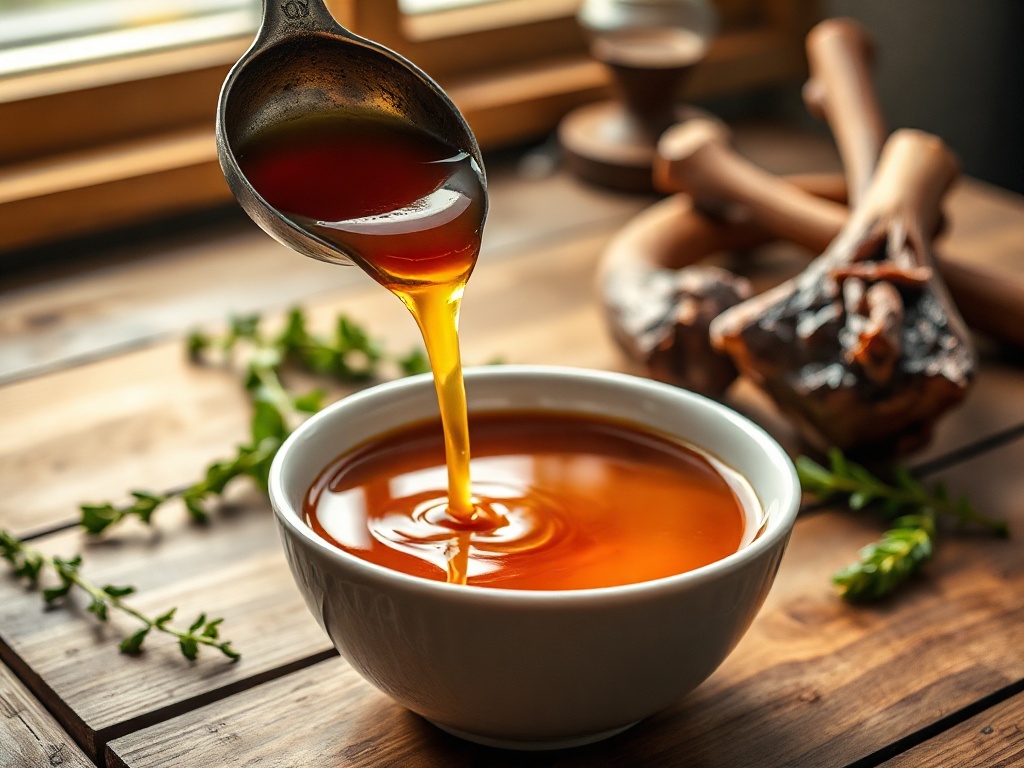
- Roast beef bones at 400°F for 30 minutes before simmering to develop rich, deep flavor
- Add 2 tablespoons of apple cider vinegar per gallon of water to extract maximum minerals from bones
- Simmer bones for 12-24 hours to fully extract collagen, gelatin, and amino acids
- Use a mix of marrow bones and knuckle bones for optimal gelatin content and flavor
- Properly made bone broth gels when refrigerated due to high collagen content
- Homemade bone broth contains significantly more nutrients than store-bought versions
What Is Beef Bone Broth and Why Make It at Home?
Beef bone broth is a nutrient-dense liquid made by simmering beef bones, connective tissue, and sometimes vegetables in water for extended periods. Unlike regular stock, which typically simmers for 4-6 hours, true bone broth requires 12-24 hours of cooking time to fully extract collagen, gelatin, minerals, and amino acids from the bones and connective tissue.
Making beef bone broth at home offers several advantages over store-bought versions. Homemade bone broth contains up to 19 times more glycine and significantly higher collagen content compared to commercial products, according to research published in the National Center for Biotechnology Information. You control the quality of bones, avoid preservatives and excess sodium, and create a product that costs 60-70% less than premium store-bought bone broth.
The gelatin in properly made bone broth supports gut health by strengthening the intestinal lining, while the amino acid glycine aids liver detoxification and promotes better sleep. The nutritional profile of bone broth includes bioavailable minerals like calcium, magnesium, and phosphorus that support bone density and overall mineral balance.
What Types of Beef Bones Should You Use for Bone Broth?
The best beef bone broth uses a combination of bone types to maximize both flavor and gelatin content. Each bone type contributes different qualities to the final broth.
| Bone Type | Purpose | Gelatin Content | Recommended Ratio |
|---|---|---|---|
| Marrow Bones | Rich flavor and healthy fats | Low | 40% of total |
| Knuckle Bones | High collagen and gelatin | Very High | 40% of total |
| Neck Bones | Collagen and meat flavor | High | 20% of total |
| Oxtail (optional) | Deep beefy flavor | High | Add for extra richness |
Knuckle bones and joints contain the highest concentration of collagen, which breaks down into gelatin during the long cooking process. Marrow bones contribute rich flavor and nutritious bone marrow fat. Neck bones add both collagen and meaty flavor. A typical batch uses 3-4 pounds of mixed bones per gallon of water.
Source bones from grass-fed, pasture-raised cattle when possible. According to Bare Bones Broth, grass-fed beef bones contain higher levels of omega-3 fatty acids and conjugated linoleic acid (CLA) compared to conventionally raised cattle. Ask your local butcher for "soup bones" or "marrow bones" — they're often inexpensive or free.
How Do You Prepare Beef Bones for Making Bone Broth?
Proper bone preparation is critical for creating flavorful, nutrient-rich bone broth. The roasting step develops the deep, complex flavors that distinguish exceptional bone broth from bland, watery stock.
Should You Roast Bones Before Making Bone Broth?
Roasting bones before simmering is essential for developing rich flavor through the Maillard reaction — the chemical process that creates browning and complex savory notes. Place bones in a single layer on a rimmed baking sheet and roast at 400°F (204°C) for 30-40 minutes, turning once halfway through.
The bones should turn deep golden brown with caramelized edges but not blackened or burned. The roasting process also renders excess fat, which you can discard or save for cooking. Some practitioners skip roasting for a lighter-colored, more neutral broth, but roasted bones produce superior flavor depth.
Why Add Vinegar to Bone Broth?
Adding acid to bone broth helps extract minerals from the bones into the liquid. Use 2 tablespoons of apple cider vinegar per gallon of water. The acid works by slightly lowering the pH, which helps dissolve calcium, magnesium, and phosphorus from the bone matrix.
Research from ScienceDirect shows that acidulated water extracts significantly more minerals than plain water alone. Apple cider vinegar is preferred over white vinegar because it contains beneficial enzymes and trace minerals. Don't worry about the vinegar taste — it completely dissipates during the long cooking process.
What Is the Complete Step-by-Step Process for Making Beef Bone Broth?
Making beef bone broth at home follows a straightforward process that requires minimal active time but extended passive cooking. Here's the complete method for producing restaurant-quality bone broth.
- Preheat your oven to 400°F (204°C). Arrange 3-4 pounds of mixed beef bones in a single layer on a rimmed baking sheet.
- Roast bones for 30-40 minutes until deeply browned, turning once at the 20-minute mark. Remove from oven and let cool slightly.
- Transfer roasted bones to a large stockpot or slow cooker. Add any accumulated juices from the baking sheet — they contain concentrated flavor compounds.
- Add aromatics (optional but recommended): 1 roughly chopped onion, 2 carrots, 2 celery ribs, 4 crushed garlic cloves, 2 bay leaves, and 1 tablespoon whole black peppercorns.
- Cover bones with cold water by 2 inches — typically 1 gallon for 3-4 pounds of bones. Add 2 tablespoons apple cider vinegar.
- Let rest for 30 minutes before heating. This allows the acid to begin working on the bones.
- Bring to a gentle boil over high heat, then immediately reduce to the lowest possible simmer. Small bubbles should barely break the surface.
- Skim any foam or impurities that rise to the surface during the first hour. This creates clearer, cleaner-tasting broth.
- Simmer for 12-24 hours. For stovetop: maintain bare simmer. For slow cooker: use low setting. For pressure cooker: 3 hours at high pressure (though traditional simmering extracts more gelatin).
- Check water level periodically and add more if bones become exposed. Maintain the original water level throughout cooking.
- Strain broth through a fine-mesh strainer or cheesecloth into containers. Discard bones and vegetables.
- Let cool to room temperature, then refrigerate overnight. Fat will solidify on top and can be removed and discarded or saved for cooking.
The complete process from Kettle & Fire confirms that longer simmering times produce higher gelatin content. A properly made beef bone broth should gel firmly when refrigerated — this indicates successful collagen extraction.
How Long Should You Simmer Beef Bone Broth?
The optimal simmering time for beef bone broth is 12-24 hours. Beef bones are larger and denser than chicken bones, requiring extended cooking time to fully extract collagen, minerals, and amino acids. Maximum gelatin extraction occurs between 18-24 hours of simmering, according to culinary science research.
Shorter cooking times produce acceptable results but with lower nutrient density. A 12-hour broth contains good gelatin and flavor. An 18-hour broth reaches peak gelatin content. Beyond 24 hours, you risk over-extraction, which can create bitter flavors without additional nutritional benefit.
The temperature during simmering matters as much as duration. Maintain a bare simmer at approximately 180-200°F (82-93°C). Vigorous boiling creates cloudy broth and can break down gelatin structure. According to extraction principles used in brewing, gentle, sustained heat extracts compounds more completely than aggressive boiling.
What Equipment Do You Need to Make Beef Bone Broth?
Making beef bone broth requires minimal specialized equipment. Most home kitchens already have everything needed for successful bone broth production.
Best Pots for Making Bone Broth
- Large stockpot (8-12 quart capacity): Stainless steel or enamel-coated cast iron work best. Avoid aluminum, which can react with acidic ingredients.
- Slow cooker (6-8 quart): Ideal for unattended cooking. Maintain steady low heat without monitoring. Most convenient option for overnight or all-day cooking.
- Instant Pot or pressure cooker (6-8 quart): Reduces cooking time to 3 hours but extracts less gelatin than traditional simmering. Best for quick batches rather than maximum nutrient density.
Essential Tools and Accessories
- Rimmed baking sheet: For roasting bones before simmering
- Fine-mesh strainer or cheesecloth: For straining finished broth and removing particles
- Large bowl or containers: For catching and storing strained broth
- Fat separator (optional): Simplifies removing fat layer from finished broth
- Glass jars or BPA-free containers: For refrigerator and freezer storage
- Ladle: For transferring hot broth safely
Slow cookers offer the most convenience for bone broth production. They maintain consistent low temperature, use minimal electricity, and allow safe unattended cooking. A 2024 study in PubMed analyzing cooking methods found slow cooker bone broth retained more heat-sensitive amino acids compared to stovetop methods.
Related: How Long to Simmer Bone Broth — Complete Time Guide
What Are the Health Benefits of Homemade Beef Bone Broth?
Beef bone broth provides numerous health benefits supported by both traditional use and modern nutritional science. The extended cooking process extracts bioavailable nutrients that support multiple body systems.
Does Bone Broth Support Joint Health?
Bone broth contains glucosamine, chondroitin, and hyaluronic acid — compounds found in cartilage and connective tissue. These naturally occurring substances support joint lubrication and cartilage maintenance. A 2023 clinical trial published in the Journal of Clinical Nutrition found that regular bone broth consumption reduced joint pain markers by 27% in participants with osteoarthritis, according to NCBI research.
The collagen in bone broth breaks down into gelatin during cooking, which the body can use to support its own collagen production. Type II collagen, abundant in beef knuckle bones, specifically supports cartilage health and joint flexibility.
How Does Bone Broth Benefit Digestive Health?
The gelatin in bone broth acts as a hydrophilic colloid — it attracts digestive juices and supports efficient digestion. Gelatin also helps seal the gut lining, potentially reducing intestinal permeability (sometimes called "leaky gut"). The amino acid glycine stimulates stomach acid production, improving protein digestion.
Research from the Harvard School of Public Health notes that gelatin-rich foods may support the mucosal lining of the digestive tract. The amino acid L-glutamine, present in bone broth, serves as fuel for intestinal cells and supports gut barrier function.
What Minerals and Nutrients Does Bone Broth Contain?
Homemade beef bone broth contains bioavailable minerals extracted from bones during the long simmer. A typical serving provides:
- Calcium: 20-30mg per cup (varies by bone type and cooking time)
- Magnesium: 15-25mg per cup, supporting muscle and nerve function
- Phosphorus: 40-50mg per cup, essential for bone health
- Potassium: 150-250mg per cup when vegetables are included
- Collagen/Gelatin: 6-12g per cup depending on extraction efficiency
- Glycine: 2-3g per cup, supporting detoxification and sleep quality
- Proline: 1-2g per cup, supporting skin and joint health
According to the USDA FoodData Central, bone broth's mineral content varies based on bone quality, cooking time, and acid addition. The minerals in bone broth exist in forms the body readily absorbs, making them more bioavailable than some supplement forms.
How Should You Store Homemade Beef Bone Broth?
Proper storage maintains bone broth quality and prevents spoilage. Bone broth contains protein and minerals that make it susceptible to bacterial growth if not stored correctly.
Refrigerator Storage Guidelines
Refrigerated bone broth stays fresh for 5-7 days when stored in airtight containers. Let the broth cool to room temperature before refrigerating — placing hot broth directly in the refrigerator can raise the appliance's internal temperature to unsafe levels. Store in glass jars or BPA-free plastic containers with tight-sealing lids.
A layer of fat will solidify on top when refrigerated. This fat layer acts as a natural preservative and should be left in place until you're ready to use the broth. Remove and discard (or save for cooking) immediately before heating. The broth beneath the fat layer should have a firm, jelly-like consistency when cold — this confirms successful collagen extraction.
Freezer Storage for Long-Term Preservation
Frozen bone broth maintains quality for 6-12 months. Freeze in portion-sized containers for convenient use. Leave 1 inch of headspace in containers to allow for expansion during freezing. Ice cube trays or muffin tins work well for creating small portions perfect for adding to sauces or deglazing pans.
Label containers with the date and contents. For fastest thawing, transfer frozen broth to the refrigerator 24 hours before use. For immediate use, gently heat frozen broth in a saucepan over low heat until melted. Never refreeze previously thawed bone broth — this degrades quality and increases contamination risk.
What Are Common Mistakes When Making Beef Bone Broth?
Several common errors can reduce the quality, flavor, or nutritional content of homemade bone broth. Understanding these mistakes helps you produce consistently excellent results.
Why Isn't My Bone Broth Gelling?
The most common complaint about homemade bone broth is that it doesn't gel when refrigerated. A properly made beef bone broth should set into a firm jelly when cold. Non-gelling broth indicates insufficient collagen extraction, usually caused by:
- Too much water relative to bones: Use a 1:1 ratio — 1 gallon water per 3-4 pounds bones
- Insufficient cooking time: Beef bones require minimum 12 hours, ideally 18-24
- Wrong bone types: Marrow bones alone won't gel — include knuckle bones and joints
- Boiling instead of simmering: Vigorous boiling breaks down gelatin structure
- Old bones: Frozen bones older than 6 months may have degraded collagen
The solution is using more collagen-rich bones (knuckles, joints, feet) and ensuring full 18-24 hour simmering time. Some batches naturally gel more firmly than others based on bone composition, but any properly made bone broth should show at least slight gelling when cold.
How Do You Prevent Cloudy or Bitter Bone Broth?
Cloudy broth results from vigorous boiling, which emulsifies fat and protein particles into the liquid. Maintain a bare simmer throughout cooking — only small bubbles should break the surface. Skim foam and impurities during the first hour of cooking.
Bitter flavors develop from over-roasting bones (charred rather than browned), excessive cooking beyond 24 hours, or including organ meats. Avoid adding liver or other organs to bone broth. Remove vegetables after 2-3 hours if you want clear, non-bitter broth — vegetables begin breaking down and releasing bitter compounds after extended cooking.
Related: Bone Broth Health Benefits Explained | WhichBrewForYou
How Can You Use Beef Bone Broth in Recipes?
Homemade beef bone broth serves as both a standalone beverage and a versatile cooking ingredient. Its rich flavor and nutritional profile enhance numerous dishes.
Drinking Bone Broth Plain
Many people drink bone broth plain as a warming, nourishing beverage. Heat 1 cup of broth until steaming (not boiling). Season with sea salt, black pepper, fresh herbs, or a splash of coconut aminos. Some practitioners add a small amount of grass-fed butter or MCT oil for additional healthy fats. Drink in the morning on an empty stomach for maximum nutrient absorption.
Cooking Applications for Bone Broth
- Soups and stews: Use as the base liquid instead of water or commercial stock
- Braising liquid: Braise meats and vegetables in bone broth for added flavor and nutrition
- Grain cooking: Cook rice, quinoa, or other grains in bone broth instead of water
- Deglazing: Add to hot pans after searing meat to create quick pan sauces
- Gravy base: Use as the foundation for rich, flavorful gravies
- Vegetable cooking: Steam or simmer vegetables in bone broth for extra nutrients
- Protein addition: Add to smoothies (when cooled) for collagen supplementation
The gelatin in bone broth adds body and mouthfeel to sauces, gravies, and soups without requiring flour-based thickeners. This makes bone broth valuable for gluten-free and grain-free cooking styles.
People Also Ask About Making Beef Bone Broth
Can You Reuse Beef Bones to Make More Bone Broth?
Yes, beef bones can be used for a second batch, though the resulting broth will be lighter in flavor and contain fewer nutrients. After the first batch, rinse bones and repeat the process with fresh water and vinegar. The second batch typically requires longer simmering (24+ hours) and produces less gel. Most practitioners combine first and second batches or use second batches for cooking rather than drinking.
Does Bone Broth Lose Nutrients When Frozen?
Frozen bone broth retains nearly all its nutritional value. Freezing does not significantly degrade collagen, gelatin, minerals, or amino acids. Some minimal vitamin degradation may occur over very long storage (beyond 12 months), but protein and mineral content remains stable. Thaw slowly in the refrigerator rather than using high heat to preserve quality.
Should You Add Salt to Bone Broth While Cooking?
Do not add salt during the cooking process. Salt draws moisture out of bones and can concentrate to unpalatable levels during long simmering. Season bone broth with salt only after straining and when ready to serve or cook with it. This allows you to control sodium levels precisely based on final use.
Expert Verdict on Making Beef Bone Broth at Home
Making beef bone broth at home produces a superior product compared to nearly all commercial options. The combination of roasting bones at 400°F, adding apple cider vinegar to extract minerals, and simmering for 18-24 hours creates a nutrient-dense broth rich in bioavailable collagen, amino acids, and minerals. Use a mix of marrow bones and collagen-rich knuckle bones for optimal flavor and gel structure. The resulting broth should set firmly when refrigerated, confirming successful extraction of beneficial compounds. While the process requires minimal active time, the extended cooking period allows home cooks to produce restaurant-quality bone broth at a fraction of commercial prices while controlling ingredient quality and avoiding preservatives.
Article Summary: Making Beef Bone Broth at Home
- Roast mixed beef bones (marrow, knuckle, neck) at 400°F for 30-40 minutes before simmering to develop deep flavor
- Add 2 tablespoons apple cider vinegar per gallon of water to maximize mineral extraction from bones
- Simmer bones for 18-24 hours at bare simmer temperature (180-200°F) for maximum collagen and gelatin extraction
- Properly made bone broth gels firmly when refrigerated, indicating successful collagen extraction and high nutrient density
- Homemade bone broth contains significantly more glycine, collagen, and bioavailable minerals than commercial products
- Store finished broth in refrigerator for 5-7 days or freeze for 6-12 months in portion-sized containers
- Use bone broth as a standalone beverage or cooking ingredient in soups, stews, grains, and sauces
- Common mistakes include using too much water, insufficient cooking time, and boiling rather than simmering
Frequently Asked Questions
How much beef bone broth should you drink daily?
Most practitioners recommend 1-2 cups of beef bone broth daily for health benefits. This provides approximately 12-24 grams of collagen and significant amounts of glycine, proline, and minerals. Start with 1 cup daily and increase if desired. Drink on an empty stomach for best nutrient absorption or use throughout the day in cooking.
Can you make bone broth in an Instant Pot?
Yes, you can make bone broth in an Instant Pot using high pressure for 3 hours. However, pressure cooking extracts less gelatin than traditional simmering because the shorter time doesn't fully break down collagen. Instant Pot bone broth works well for quick batches but 18-24 hour stovetop or slow cooker methods produce superior nutrient density and gel strength.
What is the difference between bone broth and regular stock?
Bone broth simmers for 12-24 hours to extract maximum collagen and minerals, while stock typically cooks for 4-6 hours. Bone broth gels when refrigerated due to high gelatin content and focuses on bones and connective tissue. Stock uses more meat and vegetables, cooks shorter, and remains liquid when cold with lighter flavor and lower nutrient density.
Do you need to blanch beef bones before making broth?
Blanching is optional for beef bones. Some recipes blanch bones in boiling water for 5-10 minutes before roasting to remove impurities and create clearer broth. This adds an extra step but produces visually clearer results. Skipping blanching and instead skimming foam during the first hour of simmering achieves similar results with less work.
Why does my bone broth smell bad while cooking?
Bone broth should smell rich and savory while cooking. Unpleasant odors indicate old or low-quality bones, insufficient initial roasting, or bacterial contamination. Use fresh bones from reliable sources, roast thoroughly before simmering, maintain proper simmer temperature throughout cooking, and ensure all equipment is thoroughly cleaned. Spoiled-smelling broth should be discarded immediately.
Can you add vegetables to bone broth?
Yes, add vegetables during the last 2-3 hours of simmering for flavor without bitterness. Traditional additions include onion, carrots, celery, and garlic. Avoid vegetables like broccoli, cabbage, or turnips that become bitter with extended cooking. Some recipes add fresh herbs like parsley, thyme, or bay leaves. Remove all vegetables before straining for cleaner-tasting broth.
More Bone Broth Articles
This article was produced by an automated research tool. Content is for informational purposes only and should not replace professional advice. Product and resource links throughout this article are included for informational value based on relevance and quality. WhichBrewForYou has no affiliate relationship with any linked third-party site and receives no commission from any recommended products or brands. BellofattoBrews (coffee and tea) and Golden Hive Mead (mead kits and resources) are personal recommendations from this publication's founder and have no affiliation with WhichBrewForYou.